
Get Answers
Measles Vaccination Coverage in the United Kingdom
Current Vaccination Statistics
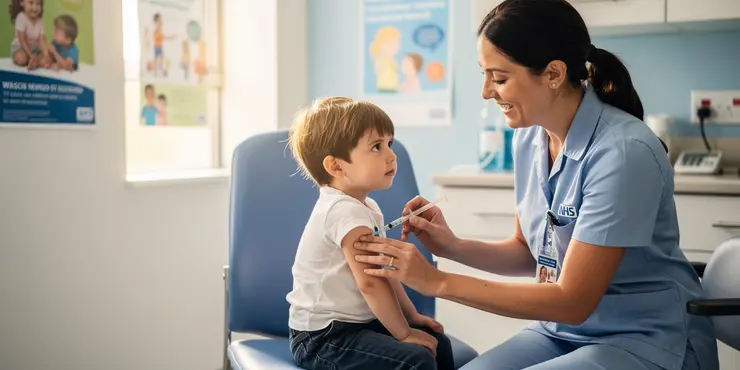
As of the latest available data in 2023, the measles vaccination coverage for children in the United Kingdom is a focal point for the National Health Service (NHS) and public health bodies. The UK aims for a high immunization rate to ensure herd immunity and control the spread of measles, an infectious viral disease that can have serious health implications. Currently, the coverage for the first dose of the Measles, Mumps, and Rubella (MMR) vaccine is around 90% for children by the age of two. However, this figure slightly drops for the second dose administered by school entry age, hovering around 86-89%. These rates indicate progress but also point to the necessity for continuous public health campaigns to improve uptake.
Challenges in Reaching Target Coverage
The recommended MMR vaccination rate by the World Health Organization (WHO) to prevent outbreaks is 95%. Despite the UK's infrastructure and public healthcare efforts, reaching this benchmark remains a complex challenge. Factors contributing to lower vaccination rates include vaccine hesitancy driven by misinformation, logistical barriers, and limited access in certain communities. It is crucial for healthcare providers to address these issues by fostering trust, providing accurate information, and simplifying access to vaccinations to maintain public health standards.
Public Health Efforts and Future Directions
The UK government, NHS, and various health organizations are actively working to enhance measles vaccination coverage. Campaigns aimed at increasing awareness, combating misinformation, and improving accessibility are central to these efforts. Schools and community health services play an integral role in these initiatives, ensuring that vaccination schedules are maintained and reminders are issued promptly. The introduction of digital health records also assists in monitoring coverage levels and identifying areas needing targeted interventions.
Importance of Maintaining High Vaccination Rates
Achieving and maintaining high measles vaccination coverage is essential to prevent potential outbreaks, protect vulnerable populations, and minimize healthcare costs associated with treating measles-related complications. The collective effort towards this goal not only safeguards individual health but also contributes to the overall well-being of the population. Continued public engagement, policy support, and resource allocation are vital to sustain these efforts, uphold public trust, and ultimately enhance the resilience of the health care system against preventable diseases.
Measles Vaccination Coverage in the United Kingdom
Current Vaccination Statistics
In 2023, many people care about how many children in the UK get the measles vaccine. Getting the vaccine helps stop measles from spreading. Measles is a virus that can make people very sick. Right now, about 90 out of 100 children get the first shot of the measles, mumps, and rubella (MMR) vaccine by the time they are two years old. When it is time for the second shot, before they start school, only 86 to 89 out of 100 children get it. We need more children to get both shots. Doctors and nurses are working hard to help more children get vaccinated.
Challenges in Reaching Target Coverage
The World Health Organization (WHO) says 95 out of 100 children need the MMR shots to stop measles from spreading. The UK is trying to reach this goal, but it is hard. Some parents are worried because they hear wrong information. Some families have a hard time getting to places where they can get vaccines. To fix this, doctors need to share good, clear information, make it easy to get vaccines, and help people feel safe and comfortable with vaccines.
Public Health Efforts and Future Directions
The UK government and health services are working to get more children vaccinated. They help by giving good information and making sure vaccines are easy to get. Schools and community health centers work together to remind everyone about vaccines. Digital health records can help see who needs vaccines and where help is needed most.
Importance of Maintaining High Vaccination Rates
Having many children vaccinated helps stop measles and keeps everyone safe, especially those who are very young or sick. It also saves money on healthcare. To reach this goal, everyone needs to work together. This means sharing good information, getting support from leaders, and making sure there are enough resources. When we do this, our health system stays strong and ready to protect us from diseases like measles.
Frequently Asked Questions
As of the latest data in 2023, the measles, mumps, and rubella (MMR) vaccination coverage in the UK for children receiving their first dose by the age of 2 is approximately 90%. The coverage for the second dose by age 5 is slightly lower at around 85%.
High measles vaccination coverage is essential to maintain herd immunity, which protects those who are unable to be vaccinated, such as infants and individuals with medical conditions that prevent vaccination.
Herd immunity occurs when a significant portion of a population becomes immune to a disease, thereby reducing its spread and protecting those who are not immune.
The measles vaccine is administered in the UK as part of the MMR vaccine, which protects against measles, mumps, and rubella. It is given in two doses, the first at around 1 year of age and the second before starting school, around age 3 to 4.
Symptoms of measles include high fever, cough, runny nose, red eyes, and a characteristic rash that usually appears a few days after the onset of symptoms.
Yes, the MMR vaccine is safe and highly effective. It has been used for many decades and is rigorously tested for safety. Side effects are generally mild.
If your child misses a scheduled MMR vaccination, contact your GP to arrange a catch-up vaccination. It's important that both doses are administered to ensure full protection.
Several factors can contribute to decreased vaccination coverage, including misinformation about vaccines, logistical challenges, and healthcare accessibility issues.
If measles vaccination coverage falls too low, it can lead to outbreaks of measles, which can result in serious complications and even death, especially in vulnerable populations.
The MMR vaccine is about 97% effective at preventing measles after two doses. It also effectively protects against mumps and rubella.
Yes, adults who have not been vaccinated or have not had measles, mumps, or rubella can receive the MMR vaccine. It's particularly important for adults in certain professions or traveling to areas with outbreaks.
Potential complications of measles include ear infections, diarrhoea, pneumonia, encephalitis, and death. Measles can be particularly severe in young children and those with weakened immune systems.
Measles is highly contagious and is spread through respiratory droplets when an infected person coughs or sneezes. It can also remain airborne for up to two hours in an enclosed space.
Eradicating measles is possible with high global vaccination coverage. However, it requires coordinated efforts and overcoming challenges like vaccine hesitancy and access barriers.
More information is available from the NHS website, Public Health England, or by talking to your GP.
In 2023, most children in the UK got their first MMR shot by the age of 2. About 90 out of every 100 kids got this shot. The second MMR shot, which kids get by age 5, was given to about 85 out of every 100 kids.
If you find it hard to remember the information, you can use pictures or write notes to help you. You can also ask someone to read the information with you or repeat it out loud.
Getting lots of people vaccinated for measles is really important. This helps keep everyone safe. It protects babies and people who can't get the vaccine because they're sick and the vaccine might not be safe for them.
Herd immunity happens when many people in a group can’t get sick from a disease anymore. This makes it harder for the disease to spread and helps keep people who can still get sick safe.
The measles vaccine is given in the UK as part of the MMR vaccine. The MMR vaccine helps keep you safe from three illnesses: measles, mumps, and rubella. You get the vaccine two times. The first time is when you are about 1 year old. The second time is before you start school, at about 3 to 4 years old.
Measles is a sickness. If you have it, you might feel very hot (fever). You might also cough, have a runny nose, and red eyes. You can get spots on your skin called a rash. The spots usually come a few days after the other things start, like the fever and cough.
If you need help reading, you can use tools like text-to-speech. This tool can read the words out loud for you.
Yes, the MMR vaccine is safe and works very well. It has been used for a long time and checked carefully to make sure it's safe. Most side effects are mild.
If you find reading hard, you can ask someone to read with you. You can also use tools that read text out loud.
If your child misses their MMR vaccine, call your doctor to set up another appointment. It's important to get both shots so your child is fully protected.
There are a few reasons why fewer people might get vaccines:
- Some people hear wrong information about vaccines.
- It can be hard for people to get to where they give vaccines.
- Some places do not have enough doctors or nurses to give vaccines.
If you find reading hard, here are some tips:
- Use pictures or videos to help understand.
- Ask someone to read with you.
- Highlight words you want to learn more about.
If not enough people get the measles vaccine, more people can catch measles. This can make people very sick, and some might even die, especially if they are already not very strong or healthy.
The MMR vaccine works really well. It can stop 97 out of 100 people from getting measles if they have two shots. It also keeps people safe from mumps and rubella.
Yes, grown-ups who have not had the shots or have not had measles, mumps, or rubella can get the MMR shot. It's really important for people who work in certain jobs or are going to places where these sicknesses are spreading.
Measles is a sickness that can cause problems. These problems might be ear infections, diarrhea, lung infection (pneumonia), brain swelling (encephalitis), or even death. It can be very serious for young kids and people whose bodies can't fight germs well.
Measles is a sickness that spreads easily. It spreads when a sick person coughs or sneezes. Tiny drops in the air carry the germs. These drops can stay in the air for two hours in a closed room.
Here are some tips to help understand:
- Wear a mask to stop germs.
- Wash your hands often.
- Stay away from sick people.
- Open windows to let in fresh air.
We can get rid of measles if everyone around the world gets vaccinated. This needs people to work together and solve problems like people being scared to get the vaccine and not being able to get it easily.
You can find more help on the NHS website. You can also talk to Public Health England. If you want, you can ask your doctor too.

Ergsy Search Results
This website offers general information and is not a substitute for professional advice.
Always seek guidance from qualified professionals.
If you have any medical concerns or need urgent help, contact a healthcare professional or emergency services immediately.
Some of this content was generated with AI assistance. We've done our best to keep it accurate, helpful, and human-friendly.
- Ergsy carefully checks the information in the videos we provide here.
- Videos shown by Youtube after a video has completed, have NOT been reviewed by ERGSY.
- To view, click the arrow in centre of video.
- Most of the videos you find here will have subtitles and/or closed captions available.
- You may need to turn these on, and choose your preferred language.
- Go to the video you'd like to watch.
- If closed captions (CC) are available, settings will be visible on the bottom right of the video player.
- To turn on Captions, click settings.
- To turn off Captions, click settings again.