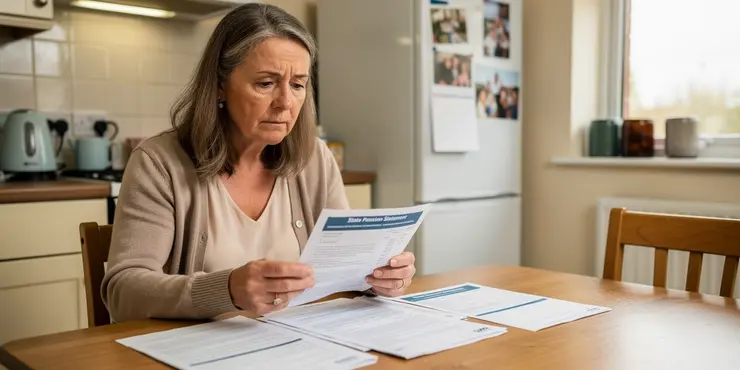

Speak To An Expert
Get clear, personalised advice for your situation.
Jot down a few questions to make the most of your conversation.
Will I Qualify for the New State Pension?
Understanding the New State Pension
The new State Pension is a regular payment from the UK government designed to ensure individuals have a steady income when they reach the state pension age. Introduced for people retiring on or after April 6, 2016, it relies on your National Insurance record to determine eligibility and the amount you'll receive. This system modernizes pension entitlements in the UK and replaces the previous Basic and Additional State Pensions.
National Insurance Contributions
Your eligibility for the new State Pension largely depends on your National Insurance (NI) contributions. To receive the full new State Pension amount, you typically need 35 qualifying years of NI contributions. However, to receive any State Pension, a minimum of 10 qualifying years is required. These years need not be consecutive, and they can be built up throughout your working life. You earn these qualifying years by being in employment or through voluntary contributions, and in some cases, by receiving certain benefits such as Jobseeker’s Allowance or Child Benefit for a child under 12.
Checking Your State Pension Forecast
To find out if you will qualify and how much you’re likely to get, you can use the UK government's online service to check your State Pension. It provides a forecast based on your current NI record, showing what you might receive, when you can claim it, and how to increase it if possible. Regularly checking your forecast enables you to make informed decisions about additional retirement savings or required NI contributions.
What Happens If You've Lived or Worked Abroad?
If you have spent part of your career in other countries, your eligibility can still be positively impacted. The UK has agreements with several countries to ensure your contributions made elsewhere may count towards your State Pension. It’s advisable to check with the Department for Work and Pensions (DWP) to understand how overseas contributions might affect your pension benefits.
Conclusion
Determining your eligibility for the new State Pension requires understanding your National Insurance record and potentially international contributions. Stay proactive by checking your pension forecast regularly, and ensure you reach the minimum contribution threshold to secure your financial future post-retirement.
Will I Get the New State Pension?
What is the New State Pension?
The new State Pension is money from the UK government. It helps you when you stop working because you are old enough. People who stop working after April 6, 2016, can get this money. The amount you get depends on your National Insurance record. This new system is for everyone and replaces older pension systems.
National Insurance Contributions
To get the new State Pension, you need to pay National Insurance (NI). To get the full amount, you need to pay NI for 35 years. But, to get any pension at all, you need to have at least 10 years of NI payments. These years do not have to be in a row. You can add them up over your whole working life. You can earn these years by working, paying voluntarily, or sometimes by getting benefits like Jobseeker’s Allowance or Child Benefit for a child under 12.
How to Check Your State Pension
You can see if you will get the State Pension and how much by using an online tool from the UK government. It helps you see how much you might get and when you can get it. It also tells you how to get more pension if possible. Checking your forecast helps you plan for your future.
If You Lived or Worked Abroad
If you lived or worked in other countries, you might still get the State Pension. The UK has deals with other countries. This means what you paid in those countries might count for your UK State Pension. It is a good idea to ask the Department for Work and Pensions (DWP) about how this works.
What You Should Do
To get the new State Pension, you need to know about your National Insurance and any work abroad. Keep checking your pension amount. Try to reach the number of years needed. This will help you have money when you are older and stop working.
Tip: Ask a friend or family member to help you use the online tools if you need support.
Frequently Asked Questions
The new State Pension is a regular payment from the government that you can claim when you reach State Pension age if you are eligible.
You are eligible for the new State Pension if you are a man born on or after 6 April 1951 or a woman born on or after 6 April 1953.
You need 35 qualifying years of National Insurance contributions or credits to get the full new State Pension.
You need at least 10 qualifying years on your National Insurance record to get any new State Pension.
The full new State Pension is £203.85 per week from April 2023. This amount is regularly reviewed and can change.
Yes, you can receive your new State Pension and continue to work. Your income from work will not affect your State Pension.
If you have gaps in your record, you may be able to pay voluntary National Insurance contributions to cover these.
You can check your National Insurance record online through the UK government's website to see if there are any gaps in your contributions.
In some cases, you might be able to inherit your spouse or civil partner’s additional State Pension.
Your State Pension age depends on your date of birth. The UK government provides an online calculator to check your exact State Pension age.
You will not get your new State Pension automatically. You have to claim it when you reach State Pension age by applying online, through the phone, or by post.
If you have lived or worked in another country, this may affect your State Pension. You may be eligible for pension credits or payments from other countries.
Yes, you can defer your new State Pension. If you defer, you could receive a higher weekly amount when you do claim it.
No, receiving a personal or workplace pension does not affect your entitlement to the State Pension.
You can find more details on the new State Pension on the UK government’s official website or seek guidance from a financial adviser.
The new State Pension is money you get from the government. You get it when you are old enough, and if you qualify for it.
You can get the new State Pension if you are a man born on or after 6 April 1951 or a woman born on or after 6 April 1953.
If reading is hard, you can use a helper tool like a text-to-speech app. These tools read out loud for you. You can also ask an adult to help explain the text.
You need to have paid or been given National Insurance for 35 years to get all of the new State Pension money.
You need at least 10 years of paying National Insurance to get any new State Pension.
The full State Pension is £203.85 each week from April 2023. This amount is checked often and might change.
Yes, you can get your new State Pension and keep working. The money you earn from your job will not change your State Pension.
If there are missing parts in your National Insurance record, you might be able to pay extra money to fix these gaps.
You can look at your National Insurance record on the UK government’s website. This helps you see if you have missed any payments.
Sometimes, when a husband, wife, or civil partner dies, you might get more money from their State Pension.
Your State Pension age is the age when you can start getting your State Pension money. This age depends on when you were born. The UK government has a website where you can check the age you can start getting your State Pension. You just need to enter your date of birth.
You do not get your new State Pension automatically. You have to ask for it when you reach State Pension age. You can apply online, call on the phone, or send a letter by post.
If you have lived or worked in a different country, this could change your State Pension. You might get extra pension money or credits from those countries.
Yes, you can wait to get your new State Pension. If you wait, you might get more money each week when you start to receive it.
No, getting a personal or workplace pension does not change your right to get the State Pension.
You can find more information about the new State Pension on the UK government’s website. You can also ask a financial adviser for help.

Ergsy Search Results
This website offers general information and is not a substitute for professional advice.
Always seek guidance from qualified professionals.
If you have any medical concerns or need urgent help, contact a healthcare professional or emergency services immediately.
Some of this content was generated with AI assistance. We've done our best to keep it accurate, helpful, and human-friendly.
- Ergsy carefully checks the information in the videos we provide here.
- Videos shown by Youtube after a video has completed, have NOT been reviewed by ERGSY.
- To view, click the arrow in centre of video.
- Most of the videos you find here will have subtitles and/or closed captions available.
- You may need to turn these on, and choose your preferred language.
- Go to the video you'd like to watch.
- If closed captions (CC) are available, settings will be visible on the bottom right of the video player.
- To turn on Captions, click settings.
- To turn off Captions, click settings again.