
Speak To An Expert
Get clear, personalised advice for your situation.
Jot down a few questions to make the most of your conversation.
Understanding Woodland and Natural Burials
Woodland and natural burials are becoming an increasingly popular choice in the United Kingdom as people seek more environmentally friendly and economical options for their final resting place. These types of burials aim to have minimal environmental impact and provide a more sustainable alternative to traditional burial methods.
What are Woodland Burials?
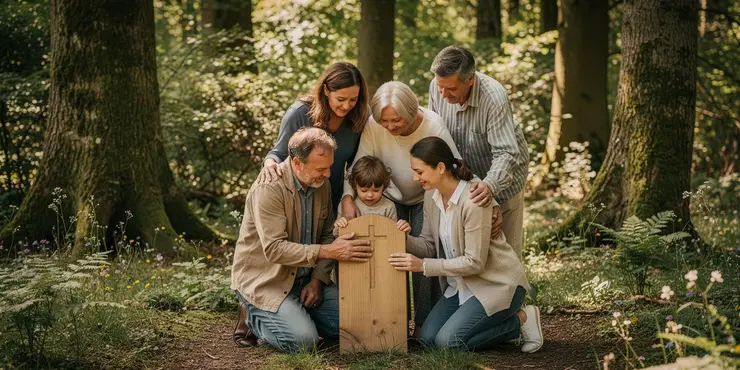
Woodland burials, also known as green burials, are conducted in natural settings such as meadows or established woodland areas. The goal is to allow the body to decompose naturally and become part of the landscape. In these plots, traditional headstones are typically replaced with a simple wooden marker or a planted tree, promoting the growth of the natural habitat. This type of burial ensures a minimal carbon footprint while supporting local ecosystems.
Benefits of Natural Burials
Natural burials offer numerous benefits, both environmentally and personally. From an environmental perspective, they prevent the use of toxic embalming fluids and can reduce the large carbon footprint associated with conventional casket manufacturing and cremation. Furthermore, natural burials typically take place in areas that contribute to the preservation and regeneration of natural habitats. For loved ones, this option often provides a more serene and beautiful setting to visit, surrounded by nature’s tranquility.
Legal Considerations in the UK
In the United Kingdom, the regulations governing burial primarily concern the rights to land use and ensuring proper public health standards. Most woodland burial sites are purposefully designed to conform to these requirements, maintaining legal compliance while providing high-quality ecological care. It is advisable for individuals interested in this type of burial to consult with specific burial sites and discuss their offerings, as practices may vary.
Choosing a Woodland Burial Site
When choosing a woodland burial site, it is essential to consider factors such as location, the cost involved, the type of memorial allowed, and the long-term management plan of the site. Many sites within the UK offer tailored services to reflect personal preferences, providing peace of mind that loved ones will rest in a place that aligns with family values and environmental commitments.
Understanding Woodland and Natural Burials
Woodland and natural burials are a popular choice in the UK. People like them because they are better for the environment and cost less money. These burials try to be gentle on nature and give a green option instead of traditional burials.
What are Woodland Burials?
Woodland burials, also called green burials, happen in places like fields or forests. The idea is to let the body break down and become part of nature. Instead of stone headstones, people use wooden markers or plant a tree. This helps nature grow and keeps the area green. It also helps the earth because it leaves a small carbon footprint and supports local animals and plants.
Benefits of Natural Burials
Natural burials have many good points. They don't use harmful chemicals like those in normal burials. They are also better for the planet because they don’t need big, carbon-heavy coffins or cremation. Natural burial sites help keep nature healthy. These places are peaceful and beautiful for families to visit.
Legal Considerations in the UK
In the UK, rules about burials focus on land use and public health. Most woodland burial grounds follow these rules. This makes sure the sites care for nature while also being legal. If you want this type of burial, it's good to talk to the burial site. They can tell you what they offer because different places might do things differently.
Choosing a Woodland Burial Site
When picking a woodland burial site, think about location, cost, what kind of memorial you can have, and how the site is cared for long-term. Many UK sites offer special services so you can choose what's important to your family. This means your loved one can rest in a place that matches family values and helps the environment.
Frequently Asked Questions
A woodland burial is an environmentally-friendly form of interment where the body is laid to rest in a natural woodland setting, often with a biodegradable coffin or shroud, allowing it to decompose naturally.
While both involve environmentally-friendly burials, 'woodland burial' specifically refers to burials in a forested or wooded setting. 'Natural burial' is a broader term that includes any burial that minimises environmental impact, and may include meadows or other natural landscapes.
Yes, woodland burials are legal in the UK. There are several designated woodland burial sites across the country where such burials can take place.
No, a coffin is not required for a natural burial. Many people choose biodegradable options like shrouds, wicker baskets, or simple wooden coffins to allow for natural decomposition.
Planting a tree is a common part of woodland burials. Many sites offer the option to plant a native tree or wildflowers in memory of the deceased, which contributes to the natural environment.
The cost of a woodland burial can vary depending on the location and services chosen, but it is often comparable to or less expensive than traditional burials. Prices typically range from £1,000 to £4,000.
Yes, ashes can often be scattered in woodland burial sites. It's best to check with the specific site for their policy on scattering ashes.
Yes, woodland burials are designed to be environmentally friendly by using biodegradable materials and minimizing the impact on the natural landscape.
Embalming is generally discouraged in natural burials due to the chemicals involved, which are not environmentally friendly. Natural burial sites usually require that the body be interred without prior embalming.
Yes, many woodland burial sites allow for funeral ceremonies to be held either on-site or at a nearby venue.
Choosing a site involves considering location, accessibility, environmental ethos, and the specific services offered. Visiting potential sites and discussing options with staff can help in making an informed decision.
Yes, most woodland burial sites allow you to pre-purchase a burial plot. This can provide peace of mind knowing your wishes will be fulfilled.
Memorials in woodland sites are usually natural or discreet in nature, such as trees, wildflowers, or small plaques. Larger traditional headstones are generally not permitted to maintain the natural appearance.
Once a woodland site is full, it is typically allowed to revert back to a natural state. Organisations running the sites are generally responsible for maintaining the land as a protected area.
In general, anyone can be buried in a woodland site, although there may be specific requirements or limitations set by the site, such as residency requirements or religious considerations.
A woodland burial is a way to say goodbye to someone in a natural area with lots of trees. The body is buried in a special box or cloth that breaks down easily in the ground. This helps the environment because the body goes back to nature.
Both 'woodland burial' and 'natural burial' are good for the environment.
'Woodland burial' means someone is buried in a forest or woods.
'Natural burial' means someone is buried in a way that's good for nature. This can be in a meadow or any natural place.
Tools like picture books or videos can help you understand more about these kinds of burials.
Yes, you can have a woodland burial in the UK. There are special places in the woods where you can be buried.
Here's a tip: If you need help reading, try using tools like text-to-speech apps. They can read the words out loud for you. Or you can ask someone you trust to help you.
No, you do not need a coffin for a natural burial. Some people pick choices that break down in nature, like cloth wraps, baskets made from plants, or basic wood boxes. This helps the body go back to nature.
When someone has a woodland burial, people often plant a tree. You can choose a tree or flowers that grow in the wild to remember the person who died. This helps nature and the environment.
The cost of being buried in a woodland can change based on where it is and what you choose. It is usually similar to or cheaper than traditional burials. It can cost between £1,000 and £4,000.
Here are some tips to help understand:
- - Use a ruler or finger to follow each line of text.
- - Break down long words into smaller parts.
- - Take your time and read slowly.
- - Ask for help if you need it.
Yes, you can usually spread ashes in forest burial places. But, you should ask the place first about their rules for spreading ashes.
Yes, woodland burials are good for the environment. They use materials that can break down naturally and try not to hurt nature.
Embalming is usually not recommended for natural burials. This is because embalming uses chemicals that are not good for the environment. Most natural burial places ask that bodies be buried without using embalming first.
Yes, many places where people are buried in the woods let you have the funeral there. You can also have it at a nearby place.
Picking a place means thinking about where it is, how easy it is to get to, how it cares for the environment, and what things you can do there. Visiting the places and talking to the people who work there can help you decide.
Yes, you can usually buy a burial plot in advance at most woodland burial places. This can help you feel calm knowing your wishes will be taken care of.
Memorials in woodland places are usually natural. They can be trees, wildflowers, or small signs. Big stone headstones are not usually allowed. This is to keep the place looking natural.
When a woodland area is full, people let it go back to being natural. Groups in charge of the site take care of the land to keep it safe.
Almost anyone can be buried in a woodland place. But, there might be some rules. Some places may have rules about where you live or your religion.

Ergsy Search Results
This website offers general information and is not a substitute for professional advice.
Always seek guidance from qualified professionals.
If you have any medical concerns or need urgent help, contact a healthcare professional or emergency services immediately.
Some of this content was generated with AI assistance. We've done our best to keep it accurate, helpful, and human-friendly.
- Ergsy carefully checks the information in the videos we provide here.
- Videos shown by Youtube after a video has completed, have NOT been reviewed by ERGSY.
- To view, click the arrow in centre of video.
- Most of the videos you find here will have subtitles and/or closed captions available.
- You may need to turn these on, and choose your preferred language.
- Go to the video you'd like to watch.
- If closed captions (CC) are available, settings will be visible on the bottom right of the video player.
- To turn on Captions, click settings.
- To turn off Captions, click settings again.