
Get Answers
Introduction to Virtual Wards
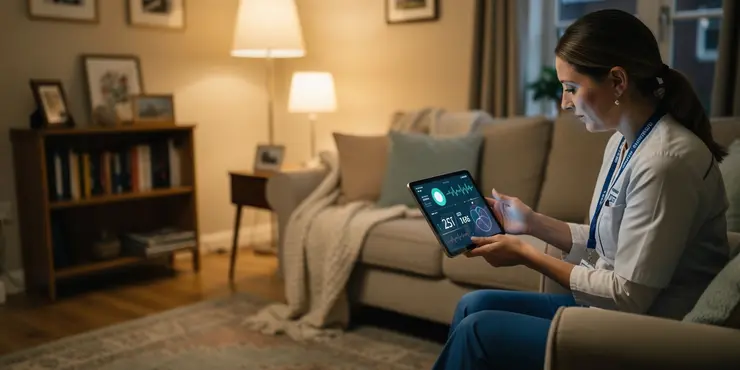
Virtual wards are an innovative approach to healthcare, aiming to support patients at home while providing hospital-level care. This model allows for the continuous monitoring and management of patients by healthcare professionals using digital tools. Through a combination of technology and clinical oversight, patients receive timely medical attention without the need for a hospital stay.
In the UK, virtual wards are becoming increasingly popular as they help alleviate pressure on physical hospitals. By managing certain conditions remotely, they aim to improve patient outcomes and hospital capacity. The model capitalises on advances in telehealth and remote monitoring technologies.
Emergency Protocols in Virtual Wards
Handling emergencies in virtual wards requires robust protocols to ensure patient safety. Healthcare professionals monitoring patients remotely must be trained to identify signs of deterioration quickly. Should an emergency occur, predefined escalation procedures are activated.
The use of technology facilitates rapid detection of critical changes in a patient’s condition. For instance, wearable devices can alert clinicians to abnormal vital signs, prompting immediate action. This technological integration is essential for timely interventions.
Communication and Coordination
Effective communication is key in managing emergencies within virtual wards. Healthcare teams communicate seamlessly through digital platforms to coordinate care and make informed decisions. This communication is often facilitated by dedicated software systems.
Coordination with local emergency services is also crucial. Virtual ward systems integrate with NHS resources to ensure that emergency responses can be mobilised quickly if needed. This ensures that patients receive the appropriate level of care promptly.
Role of Technology in Emergency Response
Technology plays a vital role in managing emergencies in virtual wards. From predictive analytics to real-time monitoring, digital tools help healthcare professionals anticipate potential health crises. These tools contribute to preventative care, reducing the likelihood of emergencies.
In cases where urgent care is required, technology assists in mobilising resources efficiently. For example, telemedicine consultations can provide immediate expert opinion, guiding further action. This ensures that patients receive timely and adequate medical attention.
Challenges and Future Directions
Despite the advantages, managing emergencies in virtual wards presents challenges. Technical issues, such as connectivity problems, can hinder effective monitoring. Therefore, robust infrastructure is essential to support uninterrupted service delivery.
As virtual ward models continue to evolve, ongoing improvements in technology and training are needed. Investing in these areas will enhance emergency response capabilities, ultimately improving patient safety and healthcare outcomes. The future of virtual wards looks promising as they continue to integrate innovative solutions for emergency management.
Frequently Asked Questions
A virtual ward is a service that allows patients to receive medical care remotely using digital tools and technologies, simulating the medical attention they would receive in a hospital.
Medical emergencies are detected through continuous monitoring devices that alert healthcare providers to any abnormal readings or signs of distress from a patient.
When an emergency is detected, healthcare providers are immediately alerted, and a protocol is initiated, which may include contacting the patient, dispatching an ambulance, or providing real-time guidance to caregivers at the patient's location.
Yes, most virtual wards offer 24/7 monitoring to ensure that patients are always connected and that any emergencies can be promptly addressed.
Yes, family members or designated contacts are typically notified if a significant emergency arises, depending on the patient's consent and the policies of the virtual ward service.
While virtual wards can triage and monitor patients, life-threatening emergencies often require immediate in-person medical attention and are typically handled by dispatching emergency services.
Virtual wards can manage and respond to a variety of emergencies, including those related to chronic conditions, sudden changes in vital signs, or escalations that require clinical evaluation.
Patients receive real-time support through telehealth services, where healthcare providers can offer guidance, assess the situation, and decide the necessary course of action.
Virtual wards utilize technologies such as wearables, connected health devices, telecommunication platforms, and AI-driven alerts to manage and respond to emergencies effectively.
Patients can report emergencies through telehealth platforms, dedicated hotlines, or by using emergency buttons on their monitoring devices, which directly alert healthcare personnel.
Yes, virtual wards ensure patient data security through encrypted communication channels and comply with data protection regulations.
Emergencies are addressed as soon as they are detected, with protocols in place to ensure rapid response, typically within minutes depending on the situation.
Healthcare professionals assess, monitor, and manage patient care, communicate with patients and their families, and coordinate with emergency medical services when needed.
Effectiveness is measured by response times, patient outcomes, feedback from patients and families, and ongoing data analysis to improve protocols and technology.
Yes, tailored protocols are in place for different emergencies, such as cardiac events or infections, to ensure precise and effective management.
Staff are trained through simulations, continuous education on the latest technologies, and adherence to established medical guidelines for emergency care.
Limitations include the inability to provide physical intervention, reliance on technology which may sometimes fail, and the need for immediate physical medical support in critical cases.
Virtual wards often have protocols for liaising with local emergency services to dispatch emergency medical teams when conditions necessitate physical intervention.
Follow-ups are managed through scheduled telehealth consultations, home visits if necessary, or referrals to in-person care to ensure patient recovery and stability.
While virtual wards focus on monitoring and early detection, which can prevent some emergencies, not all emergencies can be foreseen or prevented due to their unpredictable nature.

Ergsy Search Results
This website offers general information and is not a substitute for professional advice.
Always seek guidance from qualified professionals.
If you have any medical concerns or need urgent help, contact a healthcare professional or emergency services immediately.
Some of this content was generated with AI assistance. We've done our best to keep it accurate, helpful, and human-friendly.
- Ergsy carefully checks the information in the videos we provide here.
- Videos shown by Youtube after a video has completed, have NOT been reviewed by ERGSY.
- To view, click the arrow in centre of video.
- Most of the videos you find here will have subtitles and/or closed captions available.
- You may need to turn these on, and choose your preferred language.
- Go to the video you'd like to watch.
- If closed captions (CC) are available, settings will be visible on the bottom right of the video player.
- To turn on Captions, click settings.
- To turn off Captions, click settings again.