
Get Answers
Introduction to Virtual Wards
Virtual wards represent a shift in how healthcare is delivered in the UK. They allow patients to receive hospital-level care remotely. This approach leverages technology to enhance patient outcomes and reduce hospital overcrowding.
Virtual wards are particularly beneficial for those with chronic conditions. They ensure continuous monitoring and support while patients remain in the comfort of their own homes.
Remote Patient Monitoring
A key component of virtual wards is remote patient monitoring. This involves the use of devices that track vital signs and other health metrics. Examples include blood pressure monitors and pulse oximeters.
Data from these devices is usually transmitted to healthcare providers in real-time. This allows for rapid intervention if a patient's condition changes. Such technologies have the potential to significantly improve response times.
Telehealth and Video Consultations
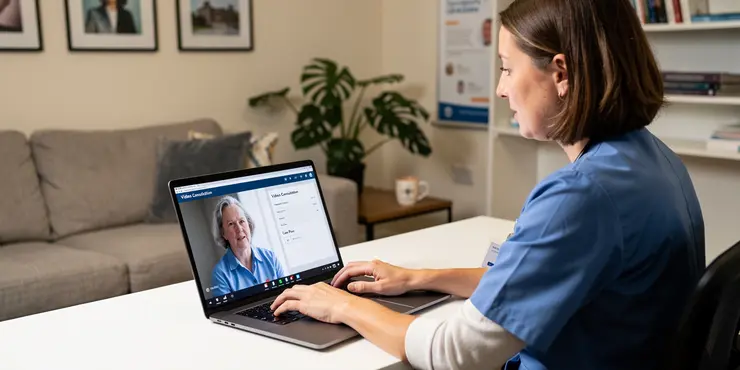
Telehealth platforms are essential for communication in virtual wards. They enable patients to consult with healthcare professionals via video or phone. This interaction helps to ensure that patients receive timely medical advice.
Video consultations provide a more personal touch compared to phone calls. They help maintain a connection between patients and clinicians, ensuring a holistic approach to patient care.
Medical Apps and Platforms
Medical apps play a vital role in virtual wards by offering convenience and immediate access to health resources. Patients use these applications to log symptoms, access educational content, or track their medications.
Platforms are usually integrated into the healthcare provider's systems. This ensures a seamless flow of information and allows healthcare providers to tailor care plans to individual needs.
Artificial Intelligence and Data Analytics
Artificial intelligence (AI) and data analytics help in interpreting the large amounts of data generated by remote monitoring devices. AI algorithms can detect patterns and predict potential health issues before they occur.
This proactive approach enables clinicians to make informed decisions. The application of AI in virtual wards is a promising area that could transform preventive healthcare.
Challenges and Future Prospects
While virtual wards offer numerous advantages, they also face challenges such as data privacy concerns and technology access disparities. Ensuring data security and fairness is critical in their widespread adoption.
Looking forward, technological advancements are likely to further enhance virtual ward capabilities. Continuous research and investment will be crucial in overcoming current limitations, paving the way for more efficient and equitable healthcare delivery.
Frequently Asked Questions
A virtual ward is a healthcare service model that provides care to patients in their own homes through the use of technology, allowing for remote monitoring and management of health conditions.
Common technologies include remote patient monitoring devices, telehealth platforms, mobile health apps, electronic health records (EHRs), and communication tools like video conferencing.
These devices collect health data such as vital signs, glucose levels, and heart rate from patients in real time and transmit the data to healthcare providers for monitoring and analysis.
Telehealth platforms facilitate remote consultations between patients and healthcare providers via video calls, secure messaging, and virtual check-ins.
EHRs provide a centralized digital record of a patient's medical history and current treatment plans, enabling seamless data access and sharing among healthcare providers involved in virtual care.
Communication tools like secure messaging and video conferencing allow patients to maintain contact with healthcare providers, facilitating timely interventions and personalized care.
Mobile health apps allow patients to track their health metrics, receive reminders for medication and appointments, and access health information, thereby playing a crucial role in patient self-management.
Yes, AI can be utilized in virtual wards to analyze patient data, predict health trends, personalize treatment plans, and improve decision-making by healthcare providers.
IoT connects various health monitoring devices to the internet, enabling continuous data collection and real-time monitoring of patients' health conditions.
Cloud computing provides scalable storage and computing resources for managing and analyzing large volumes of health data, supporting applications and video consultations.
Security measures include data encryption, secure login/authentication protocols, regular security audits, and compliance with healthcare data protection regulations.
5G technology offers high-speed data transmission and low latency, improving the quality of video consultations and enabling real-time data transfer from monitoring devices.
Electronic prescribing allows healthcare providers to send prescriptions directly to pharmacies, improving efficiency and reducing medication errors.
Wearable devices like smartwatches and fitness trackers can monitor vital signs, activity levels, and other health metrics, transmitting this data to healthcare providers for continuous monitoring.
Data analytics can process large volumes of health data to identify trends, predict risks, and optimize care plans for better health outcomes.
Machine learning algorithms can analyze patient data to suggest diagnoses, personalize treatments, and improve decision-making by identifying patterns and predicting outcomes.
Interoperability ensures that different healthcare systems and technologies can communicate and exchange data effectively, enhancing coordination and continuity of care.
Cybersecurity protects patient data from unauthorized access and breaches, ensuring confidentiality, integrity, and availability of health information.
Blockchain can be used to secure patient data and transaction records, providing an immutable and transparent ledger that enhances trust and security in data management.
Virtual assistants or chatbots can provide quick responses to patient queries, guidance on health management, and reminders for medications, enhancing patient engagement and support.

Ergsy Search Results
This website offers general information and is not a substitute for professional advice.
Always seek guidance from qualified professionals.
If you have any medical concerns or need urgent help, contact a healthcare professional or emergency services immediately.
Some of this content was generated with AI assistance. We've done our best to keep it accurate, helpful, and human-friendly.
- Ergsy carefully checks the information in the videos we provide here.
- Videos shown by Youtube after a video has completed, have NOT been reviewed by ERGSY.
- To view, click the arrow in centre of video.
- Most of the videos you find here will have subtitles and/or closed captions available.
- You may need to turn these on, and choose your preferred language.
- Go to the video you'd like to watch.
- If closed captions (CC) are available, settings will be visible on the bottom right of the video player.
- To turn on Captions, click settings.
- To turn off Captions, click settings again.