
Get Answers
Understanding Emergency NHS Dental Appointments
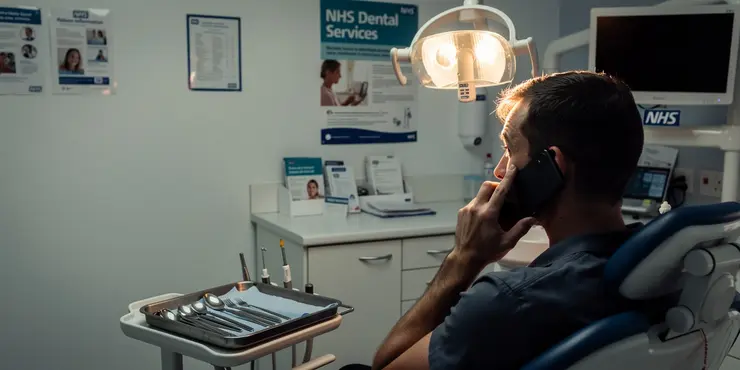
In the United Kingdom, dental emergencies can arise unexpectedly, causing discomfort and concern. It is crucial to know how to access emergency NHS dental care when you are in urgent need of dental assistance. The NHS provides dental services to handle a wide range of emergency situations, ensuring you receive necessary care as promptly as possible.
What Constitutes a Dental Emergency?
Recognizing what qualifies as a dental emergency is the first step in determining whether you need an emergency NHS dental appointment. Common examples of dental emergencies include severe toothache, dental abscesses, a knocked-out or broken tooth, and significant bleeding following a dental procedure. If you are experiencing extreme pain, swelling, or any situation that involves damage to the mouth, jaw, or teeth that needs immediate attention, you should seek emergency dental care.
How to Get an Emergency NHS Dental Appointment
If you require an emergency NHS dental appointment, the process involves a few essential steps. Firstly, during regular office hours, contact your dental practice and explain your situation. Many dental practices set aside time for emergency cases and will try to see you as quickly as possible.
If you do not have a regular dentist, you can use the NHS urgent dental care service. During working hours, call NHS 111 for assistance in finding a local dental practice that can offer emergency treatment. NHS 111 is a free-to-use service available 24/7, where trained advisers will direct you to the appropriate local services.
What to Expect at an Emergency Dental Appointment
During an emergency NHS dental appointment, the dentist will assess your condition to provide the necessary treatment. The primary goal is to alleviate pain and address any immediate concerns. Depending on the severity of the issue, further appointments may be scheduled. Fees for emergency treatment vary, and it is advisable to check the latest NHS dental charges.
Preventing Dental Emergencies
While not all dental emergencies are avoidable, maintaining good oral hygiene can significantly reduce the risk of sudden dental issues. Routine check-ups and dental cleanings can help identify and treat potential problems before they become emergencies. Additionally, using a mouthguard during sports activities and avoiding chewing hard objects can protect your teeth from trauma.
Conclusion
In cases where dental emergencies occur, understanding how to access NHS services is vital. Knowing what steps to take, who to contact, and what to expect can relieve some stress in an emergency situation. Regular dental care and preventive measures can also play a significant role in minimizing the risk of emergencies. When in doubt, never hesitate to reach out to NHS services for guidance and care.
Understanding Emergency NHS Dental Appointments
In the UK, sometimes teeth problems can happen suddenly. It can hurt a lot and make you worry. It's important to know how to get help from the NHS when you have a tooth emergency. The NHS can help with many different teeth problems quickly.
What is a Dental Emergency?
Knowing what a dental emergency is can help you decide if you need help fast. Here are some common emergencies: a really bad toothache, an abscess (which is a painful swelling), a tooth that is knocked out or broken, or a lot of bleeding after seeing a dentist. If you have a lot of pain, swelling, or any mouth, jaw, or tooth damage that needs urgent help, you should see an emergency dentist.
How to Get an Emergency NHS Dental Appointment
If you need to see a dentist urgently, here are some steps. First, call your dentist during their office hours and tell them your problem. Many dentists can see you quickly if you have an emergency.
If you don't have a dentist, you can use the NHS urgent dental care service. During the day, call NHS 111. They can help you find a dentist nearby who can help you with emergencies. NHS 111 is a free service you can call anytime, day or night. The people there will help guide you to the right place.
What to Expect at an Emergency Dental Appointment
When you go to an emergency NHS dental appointment, the dentist will check your problem and try to help you feel better. Their main job is to stop the pain and fix any urgent problems. Sometimes you might need to come back for more visits. The cost of the treatment can change, so it's good to check the latest NHS dental prices.
Preventing Dental Emergencies
Not all emergencies can be stopped, but taking care of your teeth can help a lot. Regular dentist visits can find problems early. Brushing and flossing your teeth are important. Also, use a mouthguard if you play sports and try not to chew on hard things to keep your teeth safe.
Conclusion
If you have a dental emergency, knowing how to use NHS services can help a lot. Knowing what to do, who to call, and what will happen can make things less stressful. Regular dental care and being careful can help stop emergencies before they happen. If you're not sure, don't wait to contact NHS for help and care.
Frequently Asked Questions
Severe pain, bleeding, or infection that requires immediate attention typically qualifies as a dental emergency.
You can contact NHS 111 for guidance on accessing emergency dental care.
Yes, emergency dental services are covered, but there may be a standard NHS charge unless you’re exempt.
Call NHS 111 to find an out-of-hours emergency dental service.
You may need to pay a Band 1 NHS charge unless you're eligible for free treatment.
A&E should only be used for dental emergencies if they're life-threatening or if you're advised to go there by NHS 111.
Wait times can vary, but NHS 111 will help prioritize cases based on urgency.
Provide details of your symptoms, any medications you're taking, and any recent dental work.
Routine dental issues like small cavities or non-urgent check-ups typically do not qualify.
If your dentist is unavailable, call NHS 111 for advice on finding emergency care.
Yes, you can still access emergency dental services via NHS 111 even if you're not registered.
Yes, private dental services may offer quicker or more flexible options, but they will come at a cost.
Bring any identification, details of any medication you're taking, and payment method for any charges.
You can access emergency dental care anywhere in the UK through NHS 111.
Yes, children can receive emergency dental care through the NHS.
Severe pain, swelling, trauma, or dental abscess may require emergency care.
The dentist will assess your condition and provide necessary treatment or advice.
It depends on the severity of your issue; follow-up may be needed.
If the issue persists, seek further advice from your dentist or NHS 111.
Yes, a dentist can prescribe medication to help manage pain or infection.
If you have very bad pain, bleeding, or an infection, you need to see a dentist right away. This is called a dental emergency.
You can call NHS 111 for help if you need a dentist in a hurry.
Yes, you can get help for a dental emergency. You might have to pay the usual NHS fee unless you do not need to because of special reasons.
Call NHS 111 to find a dentist for emergencies at night or weekends.
You might need to pay a Band 1 NHS charge unless you can get free treatment.
Go to A&E only if your tooth problem is very bad and could be dangerous to your life, or if NHS 111 tells you to go.
Sometimes you might have to wait, but NHS 111 will decide who needs help first based on how serious the problem is.
Tell the doctor how you feel. Say if you take any medicine. Tell them if you went to the dentist lately.
Simple tooth problems like tiny holes in teeth or regular dentist visits usually do not count.
If your dentist can't help you, call NHS 111. They can tell you how to get emergency help.
Yes, you can get emergency dental help with NHS 111, even if you're not signed up with a dentist.
Yes, private dentists might be faster or more flexible, but you will have to pay more.
Bring some ID, a list of any medicine you take, and money or a card to pay for anything.
You can get emergency dental help anywhere in the UK by calling NHS 111.
Yes, children can get emergency dental care with the NHS if they need it.
If you have really bad pain, swelling, or if you hurt your tooth, you might need to see a doctor fast. If you have a big sore in your mouth, you should also get help quickly.
The dentist will check your teeth to see what you need. They will help you by giving the right treatment or advice.
It depends on how bad your problem is. You might need to see the doctor again.
If the problem does not go away, talk to your dentist. You can also call NHS 111 for help.
Yes, a dentist can give you medicine to help with pain or to stop an infection.

Ergsy Search Results
This website offers general information and is not a substitute for professional advice.
Always seek guidance from qualified professionals.
If you have any medical concerns or need urgent help, contact a healthcare professional or emergency services immediately.
Some of this content was generated with AI assistance. We've done our best to keep it accurate, helpful, and human-friendly.
- Ergsy carefully checks the information in the videos we provide here.
- Videos shown by Youtube after a video has completed, have NOT been reviewed by ERGSY.
- To view, click the arrow in centre of video.
- Most of the videos you find here will have subtitles and/or closed captions available.
- You may need to turn these on, and choose your preferred language.
- Go to the video you'd like to watch.
- If closed captions (CC) are available, settings will be visible on the bottom right of the video player.
- To turn on Captions, click settings.
- To turn off Captions, click settings again.