
Get Answers
What is a virtual ward?
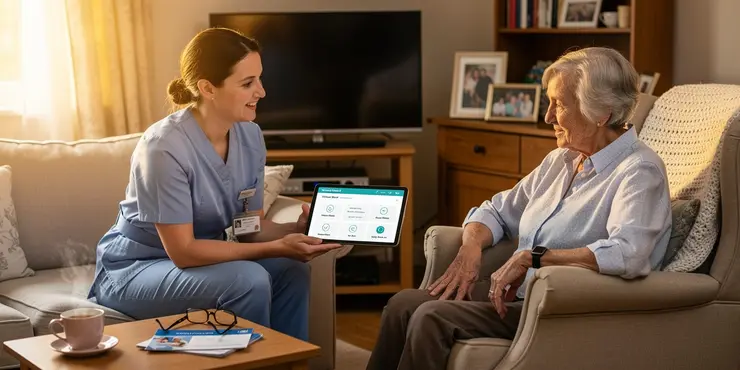
A virtual ward is a way of monitoring and supporting patients at home instead of keeping them in hospital. People are given the right equipment, advice, and follow-up so their condition can be checked remotely.
This approach is used for a range of illnesses, including some respiratory conditions, infections, and recovery after treatment. It aims to give patients hospital-level care without a physical bed on a ward.
Better comfort for patients
One of the main advantages of virtual wards is that patients can recover in familiar surroundings. Being at home can reduce stress and help people feel more relaxed during treatment.
It can also mean that patients sleep better, eat more normally, and keep closer to their daily routines. For many people, this can support a smoother recovery.
Reduced pressure on hospitals
Virtual wards can help free up hospital beds for patients who need urgent face-to-face care. This is especially valuable during busy winter periods or when NHS services are under pressure.
By managing suitable patients at home, hospitals may be able to reduce delays in admissions and discharges. This can improve patient flow across the wider NHS.
Safer and more convenient monitoring
Patients on virtual wards are often given tools such as pulse oximeters, blood pressure monitors, or apps to share readings. This allows clinicians to keep an eye on their condition without requiring constant hospital visits.
If symptoms change, the care team can act quickly and arrange further treatment if needed. This can help spot deterioration earlier than waiting for the next routine appointment.
Support for independence
Virtual wards can help people stay more independent while still receiving close medical support. This is particularly useful for older adults or people with ongoing conditions who do not need to be in hospital all the time.
It can also involve family members or carers more directly in the recovery process. That can give reassurance to everyone involved and make care feel more joined up.
Potential benefits for the NHS
From an NHS point of view, virtual wards may help use resources more efficiently. Treating appropriate patients at home can lower the need for inpatient beds and reduce unnecessary hospital stays.
They may also cut travel for follow-up appointments and make it easier to deliver care across large or rural areas. In the right cases, virtual wards offer a practical way to expand capacity while keeping patient care central.
Frequently Asked Questions
Virtual wards advantages include hospital-level monitoring at home, earlier discharge, lower infection risk, better patient comfort, and more efficient use of beds and staff time.
Virtual wards advantages improve recovery by allowing patients to rest in familiar surroundings while receiving regular clinical review, which can support comfort, adherence, and timely intervention if symptoms worsen.
Virtual wards advantages are important because they can free up inpatient beds for people who need intensive care, helping hospitals manage demand more effectively.
Virtual wards advantages support safer early discharge by combining remote monitoring, structured follow-up, and clear escalation pathways so patients can leave hospital sooner without losing clinical oversight.
Virtual wards advantages reduce infection risk because patients spend less time in busy hospital settings, lowering exposure to hospital-acquired infections and other cross-infection risks.
Virtual wards advantages help teams monitor patients remotely through devices, digital check-ins, and clinical review, making it easier to track symptoms, vital signs, and deterioration trends.
Virtual wards advantages make care more convenient by reducing travel, waiting times, and time away from home, while still providing access to professional oversight.
Virtual wards advantages can improve satisfaction because many patients prefer receiving care in their own homes, where they often feel more comfortable, independent, and reassured.
Virtual wards advantages matter for older adults and frail patients because they can reduce the stress of hospital stays, limit mobility-related harms, and provide closer monitoring without unnecessary admission.
Virtual wards advantages help with chronic condition management by enabling regular review, early detection of changes, and coordinated support for conditions such as heart failure, COPD, and diabetes.
Virtual wards advantages can improve communication by making it easier for patients to report symptoms quickly and for clinicians to give timely advice, adjustments, or escalation instructions.
Virtual wards advantages contribute to cost efficiency by reducing avoidable admissions, shortening hospital stays, and using resources more effectively across inpatient and community services.
Virtual wards advantages support better triage by helping clinicians identify which patients can safely stay at home, which need close monitoring, and which require urgent in-person care.
Virtual wards advantages assist families and caregivers by keeping loved ones at home when appropriate, reducing travel to hospital, and offering clearer updates and support from clinical teams.
Virtual wards advantages are useful during seasonal surges because they help hospitals manage higher patient volumes without overwhelming wards, emergency departments, or staff.
Virtual wards advantages improve continuity by linking hospital treatment to ongoing remote follow-up, so patients do not experience a sudden drop in support once they leave inpatient care.
Virtual wards advantages can help detect deterioration earlier through regular observations, symptom tracking, and prompt review of abnormal readings or reported changes.
Virtual wards advantages reduce travel by decreasing the need for repeated hospital visits, which can also lower transport-related costs and environmental impact.
Virtual wards advantages help make healthcare more person-centered by allowing treatment plans to fit around a patient’s home life, routines, preferences, and support network.
Virtual wards advantages combine technology and clinical care by using digital tools to collect information and connect patients with clinicians who can assess, advise, and intervene when needed.

Ergsy Search Results
This website offers general information and is not a substitute for professional advice.
Always seek guidance from qualified professionals.
If you have any medical concerns or need urgent help, contact a healthcare professional or emergency services immediately.
Some of this content was generated with AI assistance. We've done our best to keep it accurate, helpful, and human-friendly.
- Ergsy carefully checks the information in the videos we provide here.
- Videos shown by Youtube after a video has completed, have NOT been reviewed by ERGSY.
- To view, click the arrow in centre of video.
- Most of the videos you find here will have subtitles and/or closed captions available.
- You may need to turn these on, and choose your preferred language.
- Go to the video you'd like to watch.
- If closed captions (CC) are available, settings will be visible on the bottom right of the video player.
- To turn on Captions, click settings.
- To turn off Captions, click settings again.