
Get Answers
What is a virtual ward?
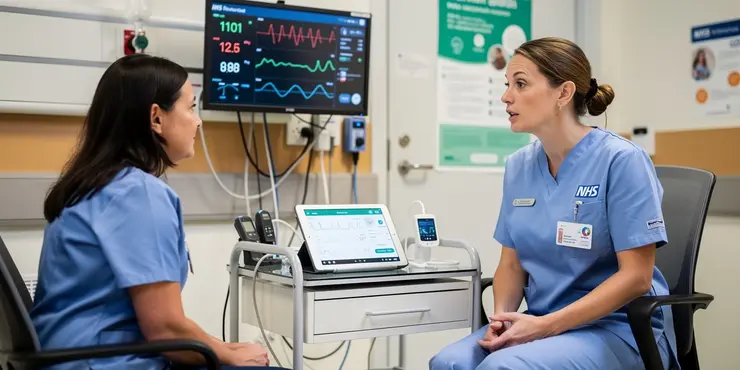
A virtual ward is a way of giving people hospital-level care at home, supported by NHS staff and digital monitoring tools. It is often used for patients who need close observation but do not always need to stay in a hospital bed.
Patients may be given equipment such as blood pressure monitors, pulse oximeters or tablets to report symptoms. Clinicians then check the results remotely and decide if any action is needed.
More comfort at home
One of the biggest advantages of a virtual ward is that people can recover in the comfort of their own home. This can reduce stress, especially for older adults, children and people with long-term conditions.
Being at home also allows patients to keep familiar routines, sleep better and spend time with family. For many people, this can make recovery feel less disruptive and more manageable.
Safer use of hospital beds
Virtual wards can help free up hospital beds for people who need urgent face-to-face treatment. This is particularly important during busy winter periods, when NHS services are under pressure.
By caring for suitable patients at home, hospitals can reduce crowding on wards and improve patient flow. This may also help lower the risk of delays in admissions and discharges.
Closer monitoring and earlier support
Patients on a virtual ward are often monitored more frequently than they would be after a standard discharge. This means changes in their condition can be spotted earlier, before they become more serious.
Remote checks can help clinicians respond quickly with advice, medicines or an in-person review if needed. For some patients, this can reduce the chance of a return to hospital.
Better independence and reassurance
Virtual wards can help people stay independent while still receiving professional support. This can be especially helpful for those who want to avoid a longer hospital stay but still need regular oversight.
Many patients and families also find reassurance in knowing that help is available without having to travel to hospital. Regular contact with NHS staff can give confidence that recovery is being carefully watched.
Potential benefits for the NHS
For the NHS, virtual wards may offer a more efficient way to use staff and resources. They can support care closer to home, which is often what patients prefer when it is clinically appropriate.
They may also reduce pressure on emergency departments and inpatient services. Over time, this can help the health service provide more timely care to more people.
Frequently Asked Questions
Virtual wards advantages include delivering hospital-level monitoring and support at home, which can improve patient comfort, reduce unnecessary admissions, and help clinicians respond earlier to changes in a patient’s condition.
Virtual wards advantages improve patient experience by allowing people to recover in familiar surroundings, maintain more of their normal routine, and avoid the stress and disruption of a hospital stay when appropriate.
Virtual wards advantages help reduce hospital bed pressure by moving suitable patients out of inpatient beds sooner and supporting them safely at home, freeing capacity for those who need intensive hospital care.
Virtual wards advantages are important for early intervention because remote monitoring and regular clinical review can identify deterioration sooner, enabling faster treatment and reducing the chance of emergency escalation.
Virtual wards advantages support recovery at home by combining observation, advice, and follow-up care with the comfort of home, which can promote rest, independence, and a more natural recovery environment.
Virtual wards advantages for older adults include reduced exposure to hospital-related risks, such as deconditioning and infections, while still providing close oversight and timely support when needed.
Virtual wards advantages improve access to care by bringing services to patients who may have mobility issues, transport challenges, or difficulty attending frequent in-person appointments.
Virtual wards advantages for chronic disease management include closer tracking of symptoms and vital signs, more timely medication adjustments, and fewer avoidable flare-ups that could lead to hospital admission.
Virtual wards advantages benefit carers and families by reducing the need for prolonged hospital visits, keeping loved ones closer to home, and providing clearer communication with the care team about the patient’s progress.
Virtual wards advantages improve patient safety by combining structured monitoring, professional oversight, and clear escalation pathways, which can detect problems early and reduce avoidable complications.
Virtual wards advantages support hospital discharge planning by allowing clinically appropriate patients to leave hospital sooner while continuing recovery under remote supervision and planned follow-up.
Virtual wards advantages for healthcare staff include better use of clinical time, more targeted intervention for patients who need it most, and improved coordination across multidisciplinary teams.
Virtual wards advantages reduce the risk of hospital-acquired infections by decreasing the amount of time patients spend in hospital, which lowers exposure to germs and other inpatient-related risks.
Virtual wards advantages for mental wellbeing include staying in a familiar environment, preserving privacy and autonomy, and avoiding some of the anxiety and isolation that can come with hospital admission.
Virtual wards advantages help health system efficiency by supporting more patients outside hospital, improving flow through urgent care services, and enabling resources to be focused where they are most needed.
Virtual wards advantages associated with remote monitoring technology include continuous or frequent data collection, quicker recognition of worsening symptoms, and more informed clinical decision-making.
Virtual wards advantages compared with traditional inpatient care include greater convenience, lower exposure to hospital-related harms, and the ability to deliver appropriate oversight without requiring a physical bed.
Virtual wards advantages support personalised care by allowing clinicians to tailor monitoring frequency, treatment plans, and escalation thresholds to the patient’s specific condition and circumstances.
Virtual wards advantages are useful for preventing readmission because patients can be monitored after discharge, problems can be addressed quickly, and deterioration may be managed before it becomes severe enough to require hospital return.
Virtual wards advantages make them suitable for modern healthcare because they combine digital tools, home-based support, and clinical oversight to deliver flexible, patient-centred care that can adapt to changing service demands.

Ergsy Search Results
This website offers general information and is not a substitute for professional advice.
Always seek guidance from qualified professionals.
If you have any medical concerns or need urgent help, contact a healthcare professional or emergency services immediately.
Some of this content was generated with AI assistance. We've done our best to keep it accurate, helpful, and human-friendly.
- Ergsy carefully checks the information in the videos we provide here.
- Videos shown by Youtube after a video has completed, have NOT been reviewed by ERGSY.
- To view, click the arrow in centre of video.
- Most of the videos you find here will have subtitles and/or closed captions available.
- You may need to turn these on, and choose your preferred language.
- Go to the video you'd like to watch.
- If closed captions (CC) are available, settings will be visible on the bottom right of the video player.
- To turn on Captions, click settings.
- To turn off Captions, click settings again.