
Get Answers
Understanding EU Emergency Numbers
In the event of a medical emergency while in the EU, the first thing you need to know is the emergency contact number: 112. This number is free of charge and works throughout the EU for any emergency assistance you may require.
If you need an ambulance or immediate medical help, dialing 112 will put you through to the local emergency services. Keep this number accessible at all times when traveling.
Using Your GHIC or EHIC
Before you travel, ensure you have a Global Health Insurance Card (GHIC) or a European Health Insurance Card (EHIC). These cards allow you to access state-provided healthcare in EU countries at reduced costs or sometimes free of charge.
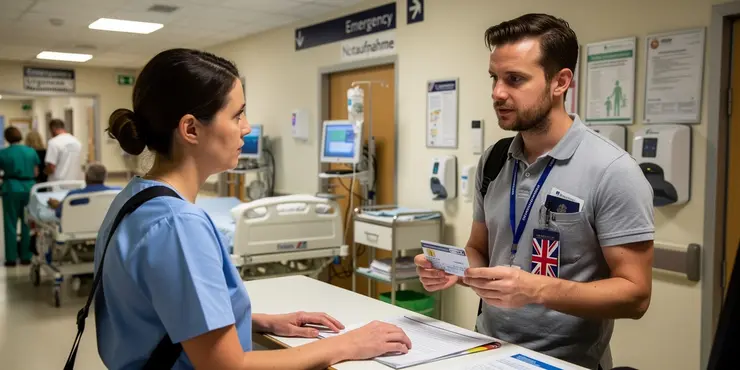
Present your card at the medical facility when seeking treatment. Remember that your GHIC or EHIC covers medical care that is necessary until your planned return to the UK.
Arranging Medical Treatment
Once you have made contact with emergency services, they may direct you to the nearest hospital or send an ambulance. If your condition allows, you may proceed directly to the nearest hospital with emergency care facilities.
Always carry some form of identification and your GHIC or EHIC card, as you will need these for the hospital's admissions process.
Contacting Your Travel Insurance Provider
In addition to using your GHIC or EHIC, it's essential to contact your travel insurance provider as soon as possible. They can offer guidance on further steps and help facilitate any additional care you may need.
Your policy might cover expenses not included under the GHIC/EHIC scheme, such as air ambulance or repatriation to the UK, so ensure you know what coverage your policy offers.
Communicating with Local Authorities
Most medical facilities will have English-speaking staff, but it's advantageous to know basic phrases in the local language. A language barrier should not deter you from seeking help promptly.
If needed, contact the nearest British embassy or consulate. They can provide support and advice, especially if you encounter difficulties navigating the local healthcare system.
Planning Ahead and Staying Prepared
It's always wise to have a plan in place before traveling. Keep a list of emergency contacts and relevant documentation like your GHIC/EHIC and travel insurance policy easily accessible.
Consider keeping a small medical kit and note down any essential medical information like allergies and current medications you are taking. Preparedness can make all the difference in an emergency.
Frequently Asked Questions
The universal emergency phone number in the EU is 112.
Immediately call 112 for any medical emergencies to get assistance from local emergency services.
Provide your location, the nature of the emergency, the number of people involved, and any known medical conditions.
Use a map app on your smartphone to locate nearby hospitals or ask local authorities for directions.
Yes, 112 operators generally speak multiple languages, including English.
Emergency medical care is often available to everyone, but non-residents may need to cover the costs. It's advisable to have travel insurance.
Carry your passport, travel insurance details, and European Health Insurance Card (EHIC) if applicable.
The EHIC gives you access to medically necessary state-provided healthcare during a temporary stay in the EU at reduced cost or sometimes for free.
Yes, the EHIC is valid in all EU and EEA countries as well as Switzerland.
You should contact your travel insurer for assistance or prepare to pay for services and claim reimbursement later.
Most pharmacies will require a prescription for medication, but some emergency medications can be obtained after consulting a pharmacist or doctor.
Yes, pharmacies are widely available in most EU cities and often recognizable by a green cross sign.
Yes, but check regulations for controlled substances, and carry prescriptions and a doctor's note if necessary.
Many larger hospitals have translation services. You can also use phone translation apps or contact your embassy for assistance.
Medical staff may not speak your language, but hospitals often provide translation services or have staff who speak English.
Ambulance services may incur a fee depending on the country and circumstances, so it's best to have travel insurance.
Public hospitals are generally recommended for emergency care as they are more likely to accept EHIC. Private hospitals might require upfront payment.
If you have a medical bracelet, wear it. Ensure that your phone has backup contacts who can be reached in emergencies.
Share your itinerary with someone and keep emergency contacts updated on your phone. Also, keep your phone fully charged.
Get all documentation of your treatment, inform your travel insurer, and follow up with your doctor when you return home.

Ergsy Search Results
This website offers general information and is not a substitute for professional advice.
Always seek guidance from qualified professionals.
If you have any medical concerns or need urgent help, contact a healthcare professional or emergency services immediately.
Some of this content was generated with AI assistance. We've done our best to keep it accurate, helpful, and human-friendly.
- Ergsy carefully checks the information in the videos we provide here.
- Videos shown by Youtube after a video has completed, have NOT been reviewed by ERGSY.
- To view, click the arrow in centre of video.
- Most of the videos you find here will have subtitles and/or closed captions available.
- You may need to turn these on, and choose your preferred language.
- Go to the video you'd like to watch.
- If closed captions (CC) are available, settings will be visible on the bottom right of the video player.
- To turn on Captions, click settings.
- To turn off Captions, click settings again.