
Get Answers
Understanding Children's Health Screenings
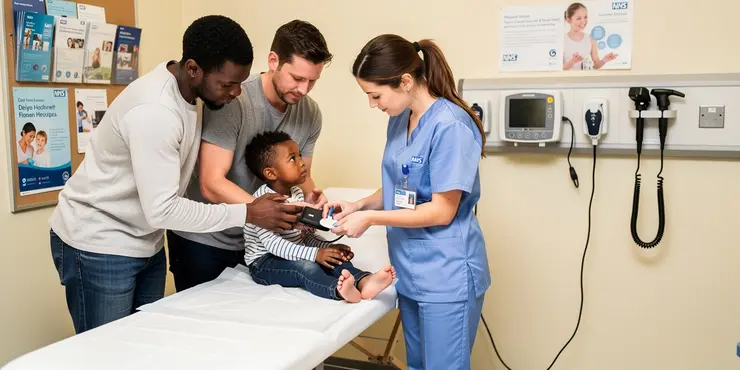
Health screenings are essential for monitoring your child's development and identifying any potential issues early. They are often performed during routine health check-ups. These assessments are generally non-invasive and designed to be as comfortable as possible for children.
The NHS provides various screening programmes targeted at different age groups. These aim to safeguard children's health and well-being throughout their early years and adolescence.
Are Health Screenings Painful?
Most health screenings that children undergo are not painful. For example, vision and hearing tests involve observing the child’s ability to see letters or hear tones, which are neither painful nor uncomfortable.
Some procedures, such as blood tests, may cause brief discomfort, similar to a pinprick. However, healthcare professionals are skilled at ensuring these are as quick and painless as possible.
Getting your child accustomed to routine check-ups can help reduce anxiety. This makes the experience more pleasant for both the child and the parent.
Are Screenings Risky?
Health screenings posed minimal risk and are carefully designed to be safe for children. The procedures and equipment used are thoroughly tested and maintained to meet safety standards.
For screenings involving radiation, such as X-rays, the exposure is kept to the lowest possible level. The benefits of detecting health issues early far outweigh these minimal risks.
If you have concerns about a particular screening, it is best to discuss them with your child's healthcare provider. They can provide detailed information specific to your child's needs.
Helping Your Child Through the Process
Parents can play a vital role in making health screenings a positive experience for their child. Explaining the process in simple terms can help reduce any fear or anxiety.
Accompanying your child during the screening offers them reassurance. Smaller children can be distracted with toys or stories to make the visit more pleasant.
If your child has special needs, inform the healthcare professional in advance. This ensures the screening is tailored to accommodate them as comfortably as possible.
Conclusion
Health screenings are a critical part of maintaining your child’s health. They are generally neither painful nor risky.
By engaging positively with these screenings, parents can help ensure their child’s health is monitored effectively. Early detection can lead to better health outcomes, offering reassurance for the future.
Frequently Asked Questions
Most screening tests are not painful or invasive and are designed to ensure your child's comfort.
Some screenings, such as blood tests, may cause minor and brief discomfort, but most children handle them well.
Screening procedures are generally safe, but as with any medical procedure, there may be minimal risks involved. These are very rare and usually minor.
You can prepare your child by explaining the process in simple terms and ensuring they are calm and relaxed before the appointment.
Let the medical staff know about your child's fear so they can employ strategies to make the experience as comfortable as possible.
Parents are often allowed to be present during screenings to provide comfort and support to their child.
Sedation is rarely needed for screening tests, but if necessary, it will be done with your consent and carefully monitored.
Screening tests are designed to be accurate and reliable, though follow-up testing may be needed to confirm results.
Inform the medical staff immediately so they can address your child's discomfort and adapt their approach as needed.
Some screenings have non-invasive alternatives, which your healthcare provider can discuss with you depending on the test.
Most screening procedures are quick, often completed in a few minutes, minimizing any discomfort.
Common screenings include vision and hearing tests, developmental assessments, and certain blood tests for conditions like anemia.
Some screening tests may require follow-up if results are abnormal or unclear, to ensure accurate diagnosis.
Parents have the right to refuse any screening test, but it is important to discuss potential risks and benefits with your healthcare provider.
Screening starts at different ages depending on the test; consult with your child's doctor to determine an appropriate schedule.
Screening tests generally have no aftereffects. If a blood test is done, there might be minor bruising at the puncture site.
Your child's doctor can recommend screenings based on age, health history, family history, and existing health guidelines.
If results are abnormal, the healthcare provider will discuss next steps, which may include additional testing or treatment.
Some tests require fasting or may be affected by medications; always follow the preparation instructions provided by your doctor.
Explain the purpose of screenings in age-appropriate language to help your child understand they are part of staying healthy.

Ergsy Search Results
This website offers general information and is not a substitute for professional advice.
Always seek guidance from qualified professionals.
If you have any medical concerns or need urgent help, contact a healthcare professional or emergency services immediately.
Some of this content was generated with AI assistance. We've done our best to keep it accurate, helpful, and human-friendly.
- Ergsy carefully checks the information in the videos we provide here.
- Videos shown by Youtube after a video has completed, have NOT been reviewed by ERGSY.
- To view, click the arrow in centre of video.
- Most of the videos you find here will have subtitles and/or closed captions available.
- You may need to turn these on, and choose your preferred language.
- Go to the video you'd like to watch.
- If closed captions (CC) are available, settings will be visible on the bottom right of the video player.
- To turn on Captions, click settings.
- To turn off Captions, click settings again.