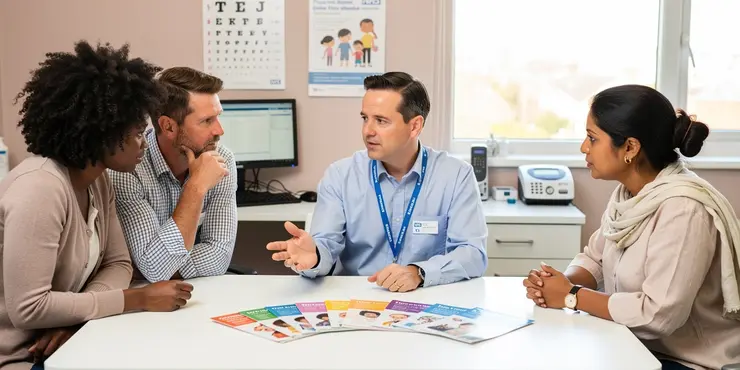

Speak To An Expert
Get clear, personalised advice for your situation.
Jot down a few questions to make the most of your conversation.
Understanding Type 1 Diabetes Screening
Type 1 diabetes is an autoimmune condition that can appear in children and young adults. Early diagnosis is crucial to managing the condition effectively. Screening can help identify those at higher risk before symptoms arise.
Currently, there is no routine screening program for type 1 diabetes in the UK. However, there are some studies and pilot screenings that parents may consider.
Consulting with Your GP
Your General Practitioner (GP) should be your first point of contact if you suspect your child is at risk for type 1 diabetes. They can provide advice and might suggest tests if symptoms are present.
While routine screening is not commonly available, your GP can help assess risk based on family history and other factors. They might also provide referrals to specialists if necessary.
University and Research Programmes
Some UK universities and hospitals run research programmes that include screening trials. These research opportunities can detect type 1 diabetes markers in children.
Participation in such studies might be limited to families with a history of type 1 diabetes. Information about ongoing studies can often be found through hospitals or university websites.
Screening Pilot Initiatives
Pilot initiatives focused on screening for type 1 diabetes periodically emerge. These pilot schemes aim to develop strategies for early detection.
Details of these initiatives can sometimes be found through diabetes charities and health foundations. Staying informed allows quick action if such opportunities arise.
Role of Diabetes Charities
Diabetes UK and similar organisations are key resources for parents. They offer information about potential screenings and support for affected families.
These charities might also provide updates on research and pilot screening programmes. Reaching out can help connect you with support networks and possible screening opportunities.
Private Healthcare Options
If public healthcare screenings are not available, private healthcare might offer more immediate access. Some private clinics may perform risk assessments for type 1 diabetes.
Ensure the clinic follows approved protocols for any testing. Weighing the cost against potential benefits is crucial before proceeding.
Conclusion
Screening for type 1 diabetes in children is not standard in the UK but can often be accessed through research and private channels. Consulting your GP and exploring resources through charities are excellent starting points.
Staying informed about future developments and pilot programmes can increase opportunities for early detection, potentially improving outcomes for at-risk children.
Frequently Asked Questions
Type 1 diabetes is a chronic condition where the pancreas produces little or no insulin, which is necessary for converting sugars into energy.
Early screening helps in early detection and management, reducing the risk of complications associated with the condition.
You can have your child screened at your pediatrician's office, specialized diabetes centers, or through public health programs.
This depends on your healthcare provider and insurance policy. Check with your pediatrician or insurance company.
There is no specific age, but screening is important if there are symptoms or a family history of diabetes.
Yes, symptoms include excessive thirst, frequent urination, weight loss, extreme hunger, and fatigue.
While there are home glucose monitoring kits, proper diagnosis should be done by a healthcare professional.
The screening involves a simple blood test, which might cause mild discomfort similar to any other blood draw.
Results can vary, but typically you may receive them within a few days to a week from your healthcare provider.
Regular screening isn't typically necessary unless symptoms develop or if there's a family history of type 1 diabetes.
Coverage depends on your insurance plan. Check with your insurance provider for specific details.
Tests may include a blood glucose test, hemoglobin A1c, and autoantibody screening.
The cost can vary depending on several factors, including location, insurance, and the facility providing the service.
Risk factors include genetic predisposition, family history, and certain viral infections.
Autoantibodies are proteins directed against the body's own tissues. Their presence may indicate an autoimmune response related to type 1 diabetes.
Generally, schools do not provide diabetes screening. However, they can support children with diabetes management needs.
If results indicate diabetes, it is important to consult a pediatric endocrinologist for further evaluation and management.
Type 1 diabetes is largely genetic and not preventable through lifestyle changes, unlike type 2 diabetes.
Yes, there are many support groups and resources, such as the JDRF, that provide support for families managing type 1 diabetes.
Genetics plays a significant role, as having a family member with type 1 diabetes increases the risk for children.

Ergsy Search Results
This website offers general information and is not a substitute for professional advice.
Always seek guidance from qualified professionals.
If you have any medical concerns or need urgent help, contact a healthcare professional or emergency services immediately.
Some of this content was generated with AI assistance. We've done our best to keep it accurate, helpful, and human-friendly.
- Ergsy carefully checks the information in the videos we provide here.
- Videos shown by Youtube after a video has completed, have NOT been reviewed by ERGSY.
- To view, click the arrow in centre of video.
- Most of the videos you find here will have subtitles and/or closed captions available.
- You may need to turn these on, and choose your preferred language.
- Go to the video you'd like to watch.
- If closed captions (CC) are available, settings will be visible on the bottom right of the video player.
- To turn on Captions, click settings.
- To turn off Captions, click settings again.