
Get Answers
What is a Skin Cancer Screening?
Skin cancer screening is a medical examination aimed at identifying skin cancer at an early, more treatable stage. This screening involves a thorough check of the skin's surface conducted by a healthcare professional, often a dermatologist. The screening is intended to detect any unusual moles, lesions, or changes in the skin that might indicate cancer. Early detection is crucial in increasing the success rate of treatment, particularly for dangerous forms of skin cancer such as melanoma.
Why is Skin Cancer Screening Important?
Skin cancer is one of the most common forms of cancer in the UK. Detecting it early is vital as it typically allows for more treatment options and a better prognosis. Regular screenings can help in identifying skin cancer before symptoms become more pronounced. Individuals at higher risk, such as those with fair skin, a history of frequent sun exposure or sunburns, or a family history of skin cancer, are strongly advised to undergo regular screenings.
What to Expect During a Skin Cancer Screening
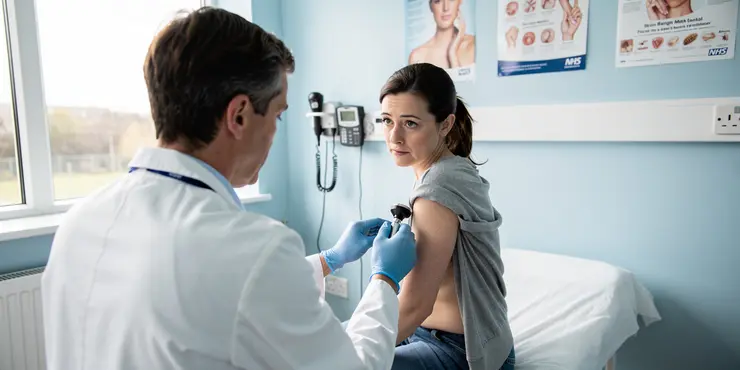
A skin cancer screening usually takes about 15 to 30 minutes. During the examination, the dermatologist will inspect your skin from head to toe, looking for any signs of skin cancer. The doctor may use a dermatoscope, a special magnifying tool, to take a closer look at suspicious-looking spots. If any area looks concerning, the dermatologist may recommend a biopsy, where a small sample of skin is removed for further analysis.
How to Prepare for a Skin Cancer Screening
Before attending a skin cancer screening, it is advisable to remove any nail polish and makeup, as these can obscure the dermatologist’s view of your skin. It may also be helpful to conduct a self-examination of your skin in advance, taking note of any changes or spots that concern you. Bringing a list of these observations to your appointment can aid the dermatologist in focusing on potential issues. Wearing loose-fitting clothes is also recommended to facilitate a full-body examination.
Who Should Get Screened for Skin Cancer?
Everyone can benefit from regular skin cancer screenings, but they are particularly important for individuals with an increased risk of developing skin cancer. Those with a large number of moles, a personal or family history of skin cancer, or a tendency to burn easily should consider more frequent screenings. The British Association of Dermatologists suggests adults perform monthly skin self-examinations and seek professional screening annually or as advised by their doctor.
Conclusion
Skin cancer screening is an essential preventive measure that can help detect skin changes early, thereby offering a greater chance of successful treatment. By understanding the benefits and process of a skin cancer screening, individuals can take proactive steps in managing their skin health. Regular screenings, coupled with awareness and protective measures against excessive sun exposure, can significantly reduce the risks associated with skin cancer.
What is a Skin Cancer Check?
A skin cancer check is when a doctor looks at your skin to see if you have any signs of skin cancer. The doctor will check for unusual spots or changes on your skin. This is important because it can help find skin cancer early, when it is easier to treat. Doctors who do this are often called dermatologists. Finding skin cancer early is very important, especially for serious types like melanoma.
Why is a Skin Cancer Check Important?
Skin cancer is one of the most common types of cancer in the UK. It is important to find it early because it is easier to treat. Getting your skin checked regularly can help find cancer before it gets worse. People who are more likely to get skin cancer should have more checks. This includes people with light skin, those who often go in the sun, get sunburned, or have family members with skin cancer.
What Happens During a Skin Cancer Check?
A skin cancer check usually takes 15 to 30 minutes. The dermatologist will look at your skin from head to toe. They look for spots that might be cancer. The doctor might use a special tool called a dermatoscope to see spots better. If they find something that looks like cancer, they might take a small piece of skin. This is called a biopsy, and it helps them learn more about the spot.
How to Get Ready for a Skin Cancer Check
Before you go to your skin check, take off any nail polish and makeup. This helps the doctor see your skin better. You can look at your skin yourself before the appointment. Write down any spots that worry you, and tell the doctor about them. Wear loose clothes so it is easier for the doctor to check your whole body.
Who Should Get a Skin Cancer Check?
Everyone can benefit from skin checks, but they are very important for people who have a higher chance of getting skin cancer. This includes people with many moles, those who have had skin cancer before, and people who get sunburns easily. The British Association of Dermatologists says adults should check their skin themselves every month. They should also see a doctor for a check each year or as their doctor advises.
Conclusion
Having regular skin checks is important to help find any changes early. This gives the best chance for treatment to work. By knowing about the benefits of skin checks, you can take care of your skin health. Regular checks and being careful in the sun can lower the risk of skin cancer.
Frequently Asked Questions
A skin cancer screening is a visual examination of your skin by a healthcare professional to check for signs of skin cancer.
A skin cancer screening is usually performed by a dermatologist, a doctor specialized in skin conditions.
Skin cancer screening is important for early detection and treatment of skin cancers, which can improve outcomes and survival rates.
It depends on your risk factors, but typically once a year is recommended for most people.
During a skin cancer screening, the examiner will visually inspect your skin for any unusual moles, spots, or growths.
No special preparation is needed, but you should remove any makeup and nail polish before the exam.
No, a skin cancer screening is not painful. It involves a visual examination without any invasive procedures.
A skin cancer screening typically takes about 10 to 20 minutes, depending on the extent of the examination.
Coverage varies, so it's best to check with your insurance provider to determine if skin cancer screenings are covered.
The examiner looks for asymmetry, border irregularity, color variation, diameter, and evolving changes in moles.
Yes, a skin cancer screening can help detect melanoma along with other types of skin cancers if the signs are visible.
If something suspicious is found, a biopsy may be recommended to determine if it is cancerous.
There are no risks associated with the screening itself, as it is a non-invasive procedure.
Yes, regular self-exams can be beneficial for early detection, but they do not replace professional screenings.
It's recommended to start in your 20s or 30s, especially if you have a family history or high risk, but consult your doctor for personalized advice.
A dermatoscope may be used for closer examination of moles and skin lesions.
While not all skin cancer can be prevented, reducing sun exposure and using sunscreen can significantly lower the risk.
Even with limited sun exposure, screenings are important as skin cancer can develop for reasons other than sun exposure.
Screenings can detect basal cell carcinoma, squamous cell carcinoma, and melanoma, among others.
Yes, they are an effective method for early detection and can lead to successful treatment of skin cancer.
When a doctor looks at your skin to see if you might have skin cancer, this is called a skin cancer check. The doctor just looks at your skin to spot any signs of skin cancer.
A skin cancer check is done by a skin doctor. This doctor is good at looking after skin.
Checking your skin for cancer is important. It helps doctors find cancer early, which makes it easier to treat. This can help people get better and live longer.
How often you need a check-up depends on your health. Most people should see a doctor once a year.
When you have a skin cancer check, the doctor or nurse will look at your skin. They will check for any strange moles, spots, or bumps.
You do not need to do anything special to get ready. But you should take off any makeup and nail polish before the test.
No, a skin cancer check does not hurt. The doctor just looks at your skin. They do not use any needles or cut your skin.
A skin check by a doctor usually takes about 10 to 20 minutes. It can be shorter or longer depending on how much they need to check.
Different insurances cover different things. It's a good idea to ask your insurance company if they pay for skin cancer checks.
The person checking your skin will look at moles. They check if the shape is different on each side. They look at the edges to see if they are not smooth. They check if the color is not the same all over. They measure how big it is. They will also see if the mole changes over time.
You can use a magnifying glass to see moles up close. Ask someone you trust to help check places you can't see, like your back.
Yes, a skin check can help find melanoma and other skin cancers if you can see the signs.
If doctors find something that doesn't look right, they might do a test called a biopsy to see if it's cancer.
The screening is safe. It does not carry any risks because it is a simple checkup.
Yes, checking yourself regularly can help you find problems early. But it's still important to go to a doctor for proper check-ups.
It's good to start in your 20s or 30s. This is important if some family members were sick or if you are at high risk. Talk to your doctor to get advice just for you.
A special tool called a dermatoscope helps doctors look closely at spots on your skin.
We can't stop all skin cancer, but we can help prevent it. Staying out of the sun and using sunscreen can make it less likely.
It is important to check your skin for cancer even if you don't spend much time in the sun. Skin cancer can happen for other reasons too.
Screenings can find different types of skin cancer like basal cell, squamous cell, and melanoma.
Yes, they are good for finding skin cancer early. This means doctors can treat it better.

Ergsy Search Results
This website offers general information and is not a substitute for professional advice.
Always seek guidance from qualified professionals.
If you have any medical concerns or need urgent help, contact a healthcare professional or emergency services immediately.
Some of this content was generated with AI assistance. We've done our best to keep it accurate, helpful, and human-friendly.
- Ergsy carefully checks the information in the videos we provide here.
- Videos shown by Youtube after a video has completed, have NOT been reviewed by ERGSY.
- To view, click the arrow in centre of video.
- Most of the videos you find here will have subtitles and/or closed captions available.
- You may need to turn these on, and choose your preferred language.
- Go to the video you'd like to watch.
- If closed captions (CC) are available, settings will be visible on the bottom right of the video player.
- To turn on Captions, click settings.
- To turn off Captions, click settings again.