
Get Answers
Introduction to Low-Dose CT Scans for Lung Cancer
A low-dose computed tomography (CT) scan is a medical imaging technique used for screening individuals at high risk of lung cancer. In the UK, this non-invasive procedure aims to detect lung cancer at an early, more treatable stage, thereby increasing the chance of successful treatment and survival.
How Low-Dose CT Scans Work
A low-dose CT scan utilises X-ray technology to create detailed images of the lungs. Unlike traditional chest X-rays, which produce a single flat image, CT scans compile multiple images taken from different angles to create a three-dimensional image of the lung tissue. This allows for a more thorough examination, helping to identify abnormalities that may not be visible on a standard X-ray.
Importance in Lung Cancer Screening
Early detection of lung cancer significantly improves survival rates, and low-dose CT scans have been shown to be effective in identifying signs of lung cancer before symptoms manifest. This screening method is particularly relevant for individuals who are at a high risk of lung cancer, such as long-term smokers or those with a significant history of smoking.
Benefits of Low-Dose CT Scans
The primary advantage of a low-dose CT scan is its ability to detect lung cancer at an early stage, where it is more likely to be curable. Additionally, this type of CT scan uses a lower amount of radiation compared to standard CT scans, reducing the potential risk associated with radiation exposure.
Who Should Consider a Low-Dose CT Scan?
The NHS and other health bodies recommend low-dose CT scans for individuals aged 55 to 74 who have a history of heavy smoking or have quit smoking within the last 15 years. Discussions with healthcare providers are essential to determine eligibility and frequency of the scans based on individual risk factors.
Procedure and What to Expect
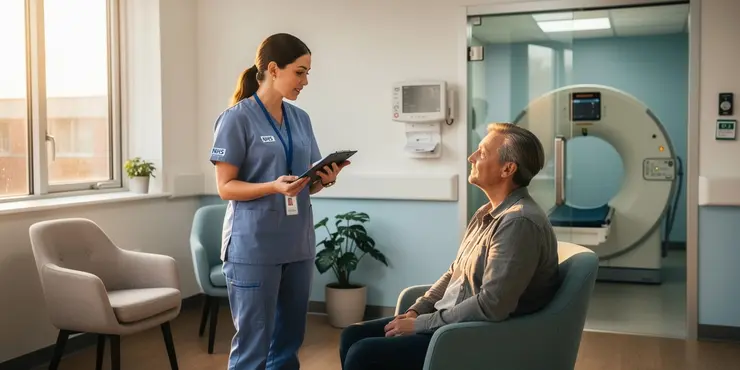
The procedure for a low-dose CT scan is straightforward. Patients lie on a table that slides into the CT machine, and the scan typically takes less than 30 minutes. No special preparation is needed, and patients can resume normal activities immediately after the scan. Results are usually reviewed by a specialist, and any abnormal findings may lead to further testing.
Conclusion
Low-dose CT scans are a valuable tool in the early detection and management of lung cancer, offering a safer screening option for individuals at increased risk. By identifying lung cancer early, this procedure can significantly enhance treatment outcomes and improve quality of life for patients. Consultation with healthcare professionals can help determine the appropriateness of these scans for individual circumstances.
What is a Low-Dose CT Scan for Lung Cancer?
A low-dose CT scan is a special test doctors use to look inside your lungs. It helps find lung cancer early when it might be easier to treat. This way, more people get better from lung cancer. It is a safe test that helps people at high risk, like those who used to smoke a lot.
How Do Low-Dose CT Scans Work?
A low-dose CT scan uses X-rays to take detailed pictures of your lungs. Instead of just one picture, it takes many pictures from different angles. These pictures make a 3D image of your lungs. This makes it easier for doctors to see any problems that might not show up in regular X-rays.
Why Are Low-Dose CT Scans Important?
Finding lung cancer early can help people live longer. Low-dose CT scans are good at finding lung cancer signs even before you feel sick. They help find cancer early, especially if you smoke or used to smoke a lot.
Benefits of Low-Dose CT Scans
Low-dose CT scans can find lung cancer when it is small and easier to treat. They use less radiation than regular CT scans, making them safer for you.
Who Should Get a Low-Dose CT Scan?
People aged 55 to 74 who smoke or used to smoke should think about getting a low-dose CT scan. Talk to your doctor to see if it’s right for you. Your doctor can help decide how often you need the scan.
How is the Scan Done?
For a low-dose CT scan, you lie on a table that moves into a machine. The scan takes less than 30 minutes. You don’t need to do anything special to get ready. You can go back to doing normal things right after the scan. A special doctor looks at the pictures to see if there are any problems.
In Conclusion
Low-dose CT scans help find lung cancer early, which means better treatment and health for people at risk. Talk to your doctor to see if this scan is a good idea for you. It can help you stay healthy and have a better life.
Frequently Asked Questions
A low-dose CT scan for lung cancer is a screening test used to detect lung cancer in its early stages using a computed tomography scan with reduced radiation exposure.
It is called a 'low-dose' CT scan because it uses lower amounts of radiation compared to a standard CT scan, reducing the potential risk of radiation-related effects.
People aged 50 to 80 who have a history of heavy smoking, are current smokers, or have quit within the past 15 years are recommended to consider screening with a low-dose CT scan.
The frequency of screening can vary, but typically, annual screening is recommended for those at high risk.
During a low-dose CT scan, the patient lies on a table that moves through a CT scanner, where low doses of x-rays are used to create detailed images of the lungs.
The primary benefit is the early detection of lung cancer, which can lead to earlier treatment and improved survival chances.
While the radiation dose is lower than that of a standard CT, there is still some risk, along with the possibility of false positives that may lead to additional testing.
No, a low-dose CT scan is not painful. It’s a non-invasive procedure that only requires the patient to remain still for a few minutes during the scan.
The actual scanning process takes only a few minutes, though the overall appointment may last between 15 to 30 minutes.
While it is effective at detecting many lung cancers, particularly at earlier stages, not all cases may be identified through a low-dose CT scan.
If a scan shows a suspicious nodule, further evaluation with additional imaging or a biopsy may be recommended to determine if it is cancer.
Most insurance plans, including Medicare, cover low-dose CT lung cancer screening for eligible high-risk populations.
The recommended age range for low-dose CT screening is typically between 50 and 80 years old for high-risk individuals.
Usually, no special preparation is needed. You may be asked to refrain from eating or drinking a few hours before the scan.
While the primary purpose is to screen for lung cancer, the scans may also incidentally detect some other conditions in the chest area.
The main difference is in radiation exposure, with the low-dose CT using less radiation to reduce the risk associated with frequent scans.
Yes, a low-dose CT scan is more effective than a chest x-ray in detecting early-stage lung cancer, leading to more early interventions.
Some limitations include false positives, incidental findings, and the small risk associated with radiation exposure.
Low-dose CT is currently the preferred method for lung cancer screening in high-risk groups but may be used in conjunction with other tests if necessary.
Low-dose CT scans are available at many hospitals, imaging centers, and clinics. It’s best to consult with your healthcare provider for recommendations and referrals.
A low-dose CT scan is a special picture test. It looks for lung cancer early. It uses a machine called a CT scan, which has less radiation to keep you safe.
A 'low-dose' CT scan is a special kind of test. It uses less radiation than a regular CT scan. This makes it safer for your body.
If you are between 50 and 80 years old and have smoked a lot in the past, you should talk to a doctor about getting a special test. This test is called a low-dose CT scan. It is good for people who still smoke or who stopped smoking in the last 15 years.
Tips:
- Ask your doctor about the low-dose CT scan.
- Use a calendar to remember your health check-ups.
- It can help to bring a friend or family member with you to the doctor.
How often you get checked can be different for everyone. But usually, it is good to get checked once a year if you are more likely to have a problem.
When getting a low-dose CT scan, you lie down on a table. The table moves through a machine called a CT scanner. This machine uses a small amount of x-rays to take detailed pictures of your lungs.
The main good thing is finding lung cancer early. This means people can get help sooner and have a better chance of getting better.
The amount of radiation is less than a regular CT scan. But there is still a small risk. Sometimes, the test can show something wrong when it's not. This might mean more tests are needed.
No, a low-dose CT scan does not hurt. It is a simple test where you just need to stay still for a few minutes while the machine takes pictures.
The scan only takes a few minutes. But the whole appointment can be about 15 to 30 minutes long.
A low-dose CT scan can find lung cancer early. This is good because it helps doctors treat it sooner. But sometimes, the scan might not find all lung cancers.
If a scan finds a lump that looks strange, the doctor might want to take more pictures or do a test called a biopsy to check if it could be cancer.
Most health insurance, like Medicare, helps pay for a test called a low-dose CT to check for lung cancer in people who have a higher chance of getting it.
If you are between 50 and 80 years old and might be at risk, doctors say it is a good idea to get a low-dose CT scan. This helps to check your health.
You usually don’t need to do anything special to get ready. But sometimes, you might need to stop eating or drinking a few hours before the scan.
The main reason for the scan is to check for lung cancer. But the scan might also find other things in the chest area by accident.
The big difference is the amount of radiation. A low-dose CT uses less radiation, so it's safer if you need lots of scans.
Yes, a low-dose CT scan is better than a chest x-ray at finding lung cancer early. This means doctors can help sooner.
There are some problems we need to watch out for. Sometimes, the test might say there is something wrong when there isn't. This is called a 'false positive.' The test might also find something that doesn't really matter, which is an 'incidental finding.' Also, there is a tiny risk from the radiation used in the test.
Using picture books can help explain these ideas. You can also use apps or videos to learn more. It’s okay to ask someone to help you understand.
Doctors use a special scan called a low-dose CT scan to check for lung cancer in people who are at high risk. Sometimes, they might use other tests too, if needed.
You can get low-dose CT scans at many hospitals, imaging centers, and clinics. It’s a good idea to talk to your doctor. They can tell you where to go and help you get an appointment.

Ergsy Search Results
This website offers general information and is not a substitute for professional advice.
Always seek guidance from qualified professionals.
If you have any medical concerns or need urgent help, contact a healthcare professional or emergency services immediately.
Some of this content was generated with AI assistance. We've done our best to keep it accurate, helpful, and human-friendly.
- Ergsy carefully checks the information in the videos we provide here.
- Videos shown by Youtube after a video has completed, have NOT been reviewed by ERGSY.
- To view, click the arrow in centre of video.
- Most of the videos you find here will have subtitles and/or closed captions available.
- You may need to turn these on, and choose your preferred language.
- Go to the video you'd like to watch.
- If closed captions (CC) are available, settings will be visible on the bottom right of the video player.
- To turn on Captions, click settings.
- To turn off Captions, click settings again.