
Get Answers
Introduction to AI-Assisted Robotic Systems in Lung Cancer Surgery
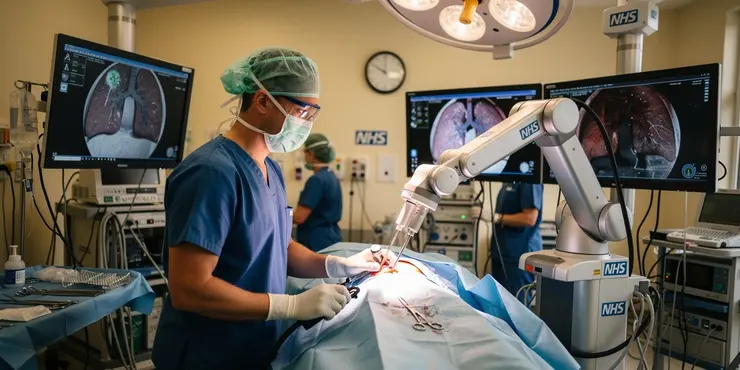
AI-assisted robotic systems are increasingly being integrated into lung cancer surgeries. This technology combines artificial intelligence with robotics to assist surgeons during complex procedures. The UK healthcare system is adopting these innovations to improve clinical outcomes.
Robotic systems provide enhanced precision, flexibility, and control in surgical tasks. This adoption is seen as a way to improve the efficiency and success rates of lung cancer surgeries.
Enhancing Precision and Accuracy
AI-assisted robotic systems enable surgeons to perform lung cancer surgeries with greater precision. The AI algorithms analyze data in real time, providing surgeons with instant feedback.
Robots can assist in making exact incisions and navigating complex anatomical structures. This precision reduces the risk of damage to surrounding healthy tissues.
Improving Surgical Outcomes
Surgical outcomes are often improved with the use of AI-assisted technologies. The likelihood of complications is reduced, and recovery times for patients are shortened.
In the UK, hospitals employing these systems have seen a decrease in post-operative issues. Patients benefit from less invasive procedures and quicker discharges.
Reducing Surgeon Fatigue
AI-assisted robotic systems help alleviate the physical demands on surgeons. The robotic arms take over repetitive tasks, allowing surgeons to focus on critical decisions.
By reducing fatigue, surgeons can maintain their concentration throughout lengthy surgeries. This results in a higher level of care and increased patient safety.
Optimising Resource Utilisation
Incorporating AI-assisted robotics helps streamline the use of resources in hospitals. Procedures can often be completed quicker, freeing up surgical theatres for more cases.
This efficiency is particularly important for the NHS, where resources are limited and patient demand is high. Improved surgical throughput can lead to reduced waiting times.
Training and Skill Development
AI-assisted systems serve as excellent training tools for new surgeons. They provide insights and guidance that help in skill acquisition and development.
With the assistance of these systems, less experienced surgeons can enhance their skills during lung cancer surgeries, fostering confidence and competence.
Conclusion: The Future of Lung Cancer Surgery
The integration of AI-assisted robotic systems in lung cancer surgeries is revolutionising the field. The technology offers numerous benefits, from precision and efficiency to enhanced surgical outcomes.
As these systems become more prevalent in the UK, the broader healthcare system stands to gain significantly. The ongoing evolution of this technology promises continued advancements in cancer care.
Frequently Asked Questions
AI-assisted robotic systems in lung cancer surgeries are technological solutions that integrate artificial intelligence with robotic surgical tools to assist surgeons in performing precise and minimally invasive procedures.
AI improves precision by analyzing real-time data and images to assist robotic systems in making precise movements and decisions during surgery, thereby reducing human error and increasing targeting accuracy of cancerous tissues.
AI-assisted robots can perform tasks such as making small incisions, navigating complex anatomical regions, assisting with tumor removal, and providing real-time imaging and analytical feedback to surgeons.
Yes, these systems can streamline surgical procedures and enhance the efficiency of tasks, potentially reducing the time required for operations while maintaining high safety and efficacy standards.
AI systems analyze large datasets, including patient history, imaging, and intraoperative data, to provide evidence-based recommendations and predictive analytics to support surgeons' decision-making processes.
These systems monitor vital signs continuously, detect potential anomalies, and alert surgeons to any deviations, thereby enhancing patient safety. They also aid in precise cuts and movements, reducing the risk of complications.
While both methods have their advantages, AI-assisted robotic surgeries often offer increased precision, reduced invasiveness, and potentially quicker recovery times. However, many factors contribute to effectiveness, including the complexity of the case and surgeon expertise.
AI-assisted systems can lead to better post-operative outcomes by ensuring precise tumor removal, minimizing tissue damage, reducing infection risks, and supporting faster patient recovery through minimally invasive techniques.
AI enhances visualization by processing and integrating real-time imaging data, like CT and MRI scans, to provide detailed 3D models and augmented reality views of the surgical area, aiding in precise navigation and intervention.
AI algorithms are trained using vast datasets, including surgical recordings, medical imaging, and clinical outcomes, allowing them to recognize patterns, predict outcomes, and suggest interventions based on historical data and real-time inputs.
Yes, surgeons need specialized training to effectively utilize AI-assisted robotic systems, which includes learning to interpret AI recommendations and understand the technology's capabilities and limitations.
Ethical considerations include data privacy, ensuring informed consent, transparency in AI decision-making processes, and addressing potential biases in AI algorithms affecting patient care.
AI systems can provide real-time alerts or recommendations based on data analysis to help manage complications, such as suggesting alternative actions or highlighting anomalies that require immediate attention.
Crucial data includes medical imaging, patient history, intraoperative metrics, surgical outcomes, and real-time physiological monitoring, which help the AI system provide accurate and relevant insights during surgery.
These systems can tailor surgical techniques and interventions to individual patient anatomy and condition by analyzing personalized data, thus enhancing the precision of treatment and improving overall outcomes.
Limitations may include high costs, technical complexities, reliance on data quality, potential malfunctions, and the need for skilled operators to manage AI-suggested interventions effectively.
AI systems improve through machine learning, where they continuously update algorithms by learning from each operation, accumulating knowledge from new data, and refining techniques based on successful outcomes and identified errors.
Patients undergoing AI-assisted robotic surgeries may experience shorter recovery times due to reduced invasiveness, more precise operations, and quicker healing facilitated by advanced surgical techniques.
AI systems can streamline coordination by providing centralized data analysis and insights, facilitating communication, and aiding in synchronized decision-making among surgeons, anesthesiologists, and support staff.
AI-assisted robotic systems are designed to support, not replace, human surgeons by enhancing surgical precision, decision-making, and outcomes. Human expertise is still essential for interpretation and judgment during surgery.

Ergsy Search Results
This website offers general information and is not a substitute for professional advice.
Always seek guidance from qualified professionals.
If you have any medical concerns or need urgent help, contact a healthcare professional or emergency services immediately.
Some of this content was generated with AI assistance. We've done our best to keep it accurate, helpful, and human-friendly.
- Ergsy carefully checks the information in the videos we provide here.
- Videos shown by Youtube after a video has completed, have NOT been reviewed by ERGSY.
- To view, click the arrow in centre of video.
- Most of the videos you find here will have subtitles and/or closed captions available.
- You may need to turn these on, and choose your preferred language.
- Go to the video you'd like to watch.
- If closed captions (CC) are available, settings will be visible on the bottom right of the video player.
- To turn on Captions, click settings.
- To turn off Captions, click settings again.