
Get Answers
The Role of AI in Lung Cancer Detection
Artificial intelligence (AI) is revolutionising the medical field, particularly in the early detection of lung cancer. It utilises complex algorithms to analyse imaging data.
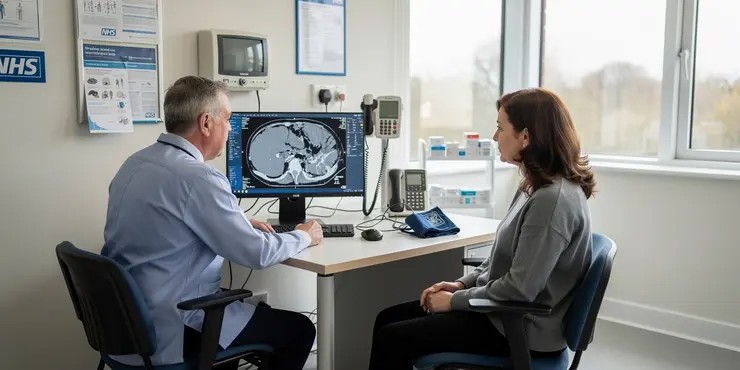
AI systems are capable of reading CT scans with impressive accuracy. They can identify potential lung tumours earlier than traditional methods, benefiting patients through earlier diagnoses.
These AI models are trained on vast datasets, allowing them to discover patterns in imaging that may elude human radiologists. The primary advantage is reduced diagnostic errors, offering better outcomes for patients.
Robotic Assistance in Diagnostic Procedures
Robots are increasingly used to perform precise and minimally invasive procedures. In lung cancer detection, robotic systems can assist in procedures like bronchoscopy.
These robotic systems enhance the accuracy of biopsy procedures, enabling doctors to obtain tissue samples accurately from hard-to-reach areas of the lungs. This precision reduces the risk and discomfort for patients.
Robotic assistance in these procedures also contributes to shorter recovery times and improved surgical outcomes. This operational improvement provides significant benefits to NHS resources as well.
Collaboration Between AI and Healthcare Professionals
AI acts as a powerful tool to support healthcare professionals rather than replace them. Radiologists and oncologists collaborate with AI to ensure the best possible patient care.
AI systems provide second opinions by cross-referencing massive databases of imaging and historical data, helping to validate or challenge human findings. This collaboration leads to a multi-faceted approach to lung cancer detection.
By integrating AI with human expertise, the accuracy and efficiency of lung cancer diagnoses improve, providing patients with a higher level of care.
Challenges and Future Prospects
Despite the promise, there are challenges in AI and robotic systems for lung cancer detection. Ensuring data privacy and ethical standards remain paramount.
The technology must be validated through rigorous clinical trials before widespread adoption. The NHS and UK researchers are actively engaged in these ongoing developments.
As technology progresses, the integration of AI and robotics in healthcare is likely to expand further. This evolution holds the promise of better early detection and patient outcomes in the UK and globally.
The Role of AI in Lung Cancer Detection
AI, or artificial intelligence, is helping doctors find lung cancer early. It looks at pictures from scans using smart computer programs.
AI can read CT scans very well. It can find signs of lung cancer earlier than doctors can alone. This helps people get treated sooner.
AI learns from lots of scan pictures. It sees things that might be hard for doctors to notice. This means doctors make fewer mistakes, and patients get better help.
Robotic Assistance in Diagnostic Procedures
Robots help doctors do very careful medical tests. They can help with a test called bronchoscopy, which checks for lung cancer.
Robots can help doctors take small pieces of lung tissue to test for cancer. They can reach areas that are hard to get to. This makes the test safer and less painful.
Using robots means people can get better quicker after their test. It also helps the NHS save time and resources.
Collaboration Between AI and Healthcare Professionals
AI works with doctors to give patients great care. It doesn't replace doctors but helps them.
AI checks lots of information from scans and helps doctors decide if they see the right things. This teamwork makes finding lung cancer better.
Combining AI with doctors' knowledge helps find lung cancer faster and more accurately.
Challenges and Future Prospects
There are still problems to solve with AI and robots in finding lung cancer. Keeping people's information safe is very important.
These technologies need to be tested a lot to be sure they work well. The NHS is helping make these technologies better.
As we learn more, AI and robots will help even more in finding lung cancer early and helping patients in the UK and around the world.
Frequently Asked Questions
AI is used to analyze medical imaging data such as CT scans to identify early signs of lung cancer.
AI algorithms use machine learning models trained on large datasets to identify patterns and anomalies indicative of lung cancer.
While robots themselves don't perform screenings, robotic systems can assist in lung cancer procedures like biopsies and surgical interventions.
AI can process vast amounts of imaging data quickly and accurately, potentially detecting cancer earlier than traditional methods.
AI typically analyzes CT (computed tomography) scans and sometimes chest X-rays for detecting lung cancer.
Many AI systems have undergone clinical trials and have been validated for accuracy and effectiveness in detecting lung cancer.
Yes, AI systems are designed to improve specificity, thereby reducing false positives through better characterization of benign versus malignant lesions.
AI aids in rapid and accurate diagnosis, while robotic systems can assist in precise surgical procedures, streamlining and improving healthcare delivery.
Yes, there are AI models that assess patient risk based on medical records, genetic data, and lifestyle factors.
Yes, AI models typically require extensive datasets to learn effectively and generalize well to new cases.
They provide enhanced precision, reduce invasiveness, and can lead to improved surgical outcomes and faster recovery.
AI can be used to track changes in tumor size and growth over time through successive imaging, aiding in treatment planning.
AI systems are typically used as a supplementary tool alongside radiologists, offering a second opinion or confirming findings.
Adoption varies, but many leading hospitals are incorporating AI systems into their diagnostics for improved accuracy and efficiency.
Challenges include ensuring data privacy, managing biases in training data, and integrating seamlessly into existing healthcare systems.
By enabling earlier detection, more accurate diagnoses, and personalized treatment plans, AI can significantly improve patient outcomes.
Through analysis of multiple data points, AI models can help predict survival rates and tailor treatment strategies accordingly.
Yes, issues such as data privacy, algorithmic bias, and informed consent are important ethical considerations.
AI has the potential to reduce costs by increasing efficiency and reducing unnecessary tests through more accurate initial screenings.
The future likely involves more integrated AI solutions that combine diagnostics, treatment planning, and outcome tracking, along with robotic assistance in surgeries.
AI helps doctors look at pictures from CT scans to find lung cancer early.
Smart computers look at a lot of information to learn about patterns and changes that can show if someone might have lung cancer.
Robots do not check for lung cancer. But they can help doctors do things like take tiny pieces of lung to test (biopsies) and help with surgery.
AI is like a smart computer. It can look at a lot of pictures really fast. This helps to find cancer sooner than other ways doctors use.
AI looks at special pictures like CT scans and sometimes chest X-rays to find lung cancer.
Lots of AI tools have been tested in medical studies. They are good at finding lung cancer and work well.
Yes, AI systems help doctors tell the difference between harmless and harmful lumps. This way, there are fewer mistakes.
AI helps doctors find out what is wrong quickly and correctly. Robots can help doctors do surgery very carefully. This makes getting healthcare faster and better.
Yes, computers can help doctors understand if someone might get sick. They look at your medical history, your genes, and how you live your life to do this.
AI, or robots that think, need a lot of information to learn. This helps them know things better and work well with new stuff.
They help doctors be more accurate, make surgeries less painful, and help people get better faster.
AI helps doctors look at pictures to see if a tumor is growing or shrinking. This helps doctors decide the best way to help treat it.
AI helps doctors who look at X-rays. It gives them another view and helps them be sure about what they see.
Different hospitals use AI in different ways, but many top hospitals use AI to help doctors find out what's wrong with you. This makes things faster and more accurate.
There are some things that can be hard. We need to keep people's data private, make sure our training data is fair, and fit well with the healthcare systems we have now.
AI can help doctors find health problems sooner, understand them better, and create special care plans just for you. This can help you get better faster.
AI can look at lots of information to help doctors guess who might get better. It also helps doctors choose the best way to help people who are sick.
Yes, there are important problems like keeping personal data safe, making sure computer programs are fair, and getting permission in a way people understand.
AI, which means smart computer programs, can help save money. It does this by working better and not needing to do extra tests. It can catch things early, so doctors don't have to guess as much.
In the future, we will use smart computers called AI more. They will help doctors find out what's wrong, plan the best treatments, and keep track of how patients are doing. Robots may also help in surgeries. This means surgeries could be quicker and safer.

Ergsy Search Results
This website offers general information and is not a substitute for professional advice.
Always seek guidance from qualified professionals.
If you have any medical concerns or need urgent help, contact a healthcare professional or emergency services immediately.
Some of this content was generated with AI assistance. We've done our best to keep it accurate, helpful, and human-friendly.
- Ergsy carefully checks the information in the videos we provide here.
- Videos shown by Youtube after a video has completed, have NOT been reviewed by ERGSY.
- To view, click the arrow in centre of video.
- Most of the videos you find here will have subtitles and/or closed captions available.
- You may need to turn these on, and choose your preferred language.
- Go to the video you'd like to watch.
- If closed captions (CC) are available, settings will be visible on the bottom right of the video player.
- To turn on Captions, click settings.
- To turn off Captions, click settings again.