
Get Answers
Introduction to AI in Healthcare
Artificial intelligence is revolutionising many sectors, including healthcare. Its potential to analyse complex data quickly is transforming diagnostics. In the UK, lung cancer detection is one area benefiting from AI innovations.
Lung cancer is a leading cause of cancer-related deaths. Early detection is crucial for improving survival rates, making AI's role in diagnostics invaluable.
AI's Impact on Lung Cancer Detection
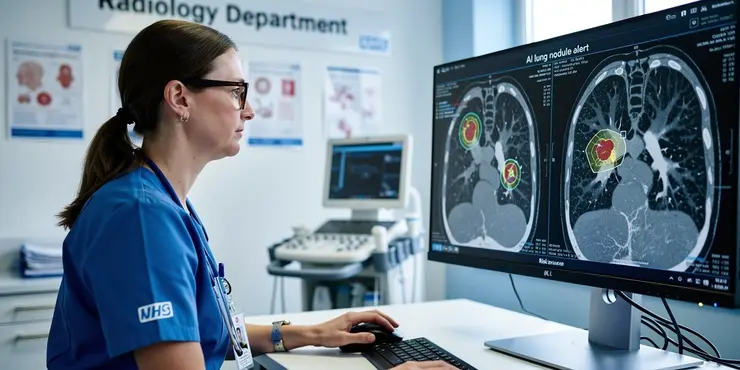
AI algorithms can process medical images with impressive speed and accuracy. These technologies assist radiologists by highlighting areas of concern in scans. This capability leads to quicker diagnoses and can reduce human error.
AI systems are trained using large datasets of medical images. They learn to identify patterns and abnormalities that may indicate the presence of cancer. This training makes AI a powerful tool in identifying early-stage lung cancer.
Benefits of AI in the UK Healthcare System
The UK healthcare system is leveraging AI to enhance patient outcomes. With AI, lung cancer detection becomes more efficient, helping to allocate resources effectively. This efficiency is crucial given the demands on the NHS.
AI assists in reducing the workload for healthcare professionals. By automating routine analysis, clinicians can focus on more complex cases. This streamlining is key to delivering high-quality care amidst increasing patient numbers.
Challenges and Considerations
While AI offers significant benefits, challenges remain in its implementation. Ensuring data privacy and security is paramount. The integration of AI systems into clinical workflows also requires careful planning.
Another consideration is the need for ongoing training and updates. AI models should regularly be improved to keep up with new medical findings and practices. This ensures they remain accurate and relevant.
The Future of AI in Lung Cancer Detection
The future of AI in lung cancer detection looks promising. Continued advancements in machine learning and data processing will likely enhance its capabilities. As these technologies evolve, they should become more widespread and accessible.
In the UK, the aim is to further integrate AI into routine clinical practice. This integration could lead to earlier detection rates and improved patient survival outcomes. AI represents a hopeful frontier in the battle against lung cancer.
Frequently Asked Questions
AI assists in lung cancer detection by analyzing imaging data, such as CT scans, to identify potential cancerous lesions with high accuracy and efficiency.
AI improves accuracy by using machine learning algorithms to detect patterns and anomalies in imaging data that may be missed by human radiologists.
Yes, AI has the potential to detect lung cancer at an earlier stage by identifying subtle changes and early signs in lung imaging that are indicative of cancerous development.
AI technologies used include deep learning, neural networks, and computer vision, which process and analyze medical imaging to identify cancerous regions.
AI can enhance traditional methods by providing faster, more consistent analyses and reducing false positives and negatives through automated and objective assessment.
Currently, AI is used as an adjunct to human expertise, assisting radiologists in interpreting imaging results rather than replacing their judgment.
AI can streamline the screening process, lower costs, and increase throughput by quickly and efficiently analyzing large volumes of imaging data.
AI can help reduce unnecessary biopsies by providing more accurate assessments of suspicious lesions, thus aiding in the decision-making process.
AI systems are trained to minimize false positives through extensive datasets and continuous learning, improving their specificity and overall accuracy.
Challenges include ensuring data diversity, handling variability in imaging quality, and integrating AI systems into clinical workflows effectively.
AI integrates by providing decision support tools that augment radiologist analyses and streamline the workflow with automated pre-screening and diagnostic suggestions.
Future prospects include enhanced accuracy, personalized detection protocols, and leveraging AI to predict treatment responses and patient outcomes.
Yes, AI tools for lung cancer detection need regulatory approval to ensure they meet safety, efficacy, and quality standards for clinical use.
AI provides radiologists with a second opinion, highlighting areas of concern and offering quantitative data to support clinical decision-making.
AI can be trained on various datasets to recognize different types of lung cancer, improving its ability to accurately differentiate among types.
AI-enhanced detection can lead to early diagnosis, improved treatment planning, and better patient management, ultimately improving patient outcomes.
Data is crucial as it trains AI models, allowing them to learn from previous cases to enhance accuracy and develop predictive capabilities.
AI contributes by analyzing individual patient data to suggest personalized treatment options and predict responses based on detected cancer characteristics.
Explainability ensures that AI's decisions are transparent and interpretable, allowing clinicians to understand and trust AI's diagnostic outputs.
AI algorithms are trained using large datasets of labeled medical images, allowing them to learn distinguishing features of cancerous versus non-cancerous tissues.

Ergsy Search Results
This website offers general information and is not a substitute for professional advice.
Always seek guidance from qualified professionals.
If you have any medical concerns or need urgent help, contact a healthcare professional or emergency services immediately.
Some of this content was generated with AI assistance. We've done our best to keep it accurate, helpful, and human-friendly.
- Ergsy carefully checks the information in the videos we provide here.
- Videos shown by Youtube after a video has completed, have NOT been reviewed by ERGSY.
- To view, click the arrow in centre of video.
- Most of the videos you find here will have subtitles and/or closed captions available.
- You may need to turn these on, and choose your preferred language.
- Go to the video you'd like to watch.
- If closed captions (CC) are available, settings will be visible on the bottom right of the video player.
- To turn on Captions, click settings.
- To turn off Captions, click settings again.