
Get Answers
Introduction
Bowel cancer, also known as colorectal cancer, is a common form of cancer in the UK affecting the colon and rectum. Early diagnosis is crucial for effective treatment and a better chance of recovery. Understanding how bowel cancer is diagnosed can help individuals seek timely medical advice and potentially improve outcomes.
Symptoms Prompting Diagnosis
Bowel cancer diagnosis often begins with recognising symptoms such as persistent changes in bowel habits, blood in stools, abdominal pain, and unexplained weight loss. While these symptoms can be indicative of other conditions, it is important not to ignore them and seek medical advice.
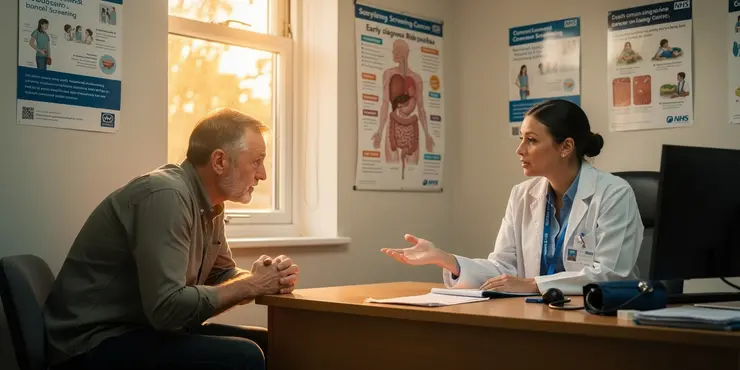
Initial Consultation with a GP
If bowel cancer is suspected, the first step is to consult a General Practitioner (GP). During the consultation, the GP will enquire about symptoms, medical history, and family history of cancer. They may perform a physical examination and assess if further tests are needed. In some cases, lifestyle and dietary advice may be offered if symptoms suggest a non-cancerous condition.
Screening Tests
The NHS Bowel Cancer Screening Programme offers routine tests for early detection of bowel cancer in people aged 60 to 74. The main test used is the Faecal Immunochemical Test (FIT), which checks for traces of blood in a stool sample, a potential indicator of bowel cancer or polyps. If the FIT result is positive, further diagnostic tests may be required.
Diagnostic Tests
When bowel cancer is suspected, several diagnostic tests may be undertaken:
Colonoscopy
A colonoscopy is a procedure where a thin, flexible tube with a camera (colonoscope) is inserted into the rectum to examine the entire colon. It allows for the detection and biopsy of abnormal areas, such as polyps or cancerous growths.
Flexible Sigmoidoscopy
This procedure is similar to a colonoscopy but only examines the lower part of the colon and rectum. It is less comprehensive but may still detect suspicious areas that warrant further investigation.
CT Colonography
Also known as a virtual colonoscopy, this imaging test uses a CT scan to produce detailed pictures of the colon and rectum, helping to identify growths or abnormalities without needing a full colonoscopy initially.
Pathology Analysis
If polyps or abnormal tissue are found during a colonoscopy or sigmoidoscopy, a biopsy may be taken for pathology analysis. This involves examining tissue samples under a microscope to look for cancerous cells and confirm a diagnosis.
Conclusion
Diagnosing bowel cancer involves a combination of symptom assessment, screening tests, and various diagnostic procedures. Early detection through these methods can significantly improve treatment success and survival rates. It is essential for individuals to participate in screening programmes and seek medical advice promptly if they experience any concerning symptoms.
Introduction
Bowel cancer is a type of cancer that can occur in the large intestine (known as the bowel). Many people in the UK get this kind of cancer. It is important to find it early so that it can be treated quickly and effectively. If you know how doctors find bowel cancer, you can get help sooner and have a better chance of getting better.
Symptoms Prompting Diagnosis
To find bowel cancer, look out for changes in your toilet habits that last a long time, blood in your poo, tummy pain, or losing weight for no reason. These signs can mean other things too, but don’t ignore them. Talk to a doctor if you notice any of these signs.
Initial Consultation with a GP
If you think you might have bowel cancer, see your doctor, known as a GP. The GP will ask you about your signs, your health history, and if cancer runs in your family. They might check you physically and decide if you need more tests. If it seems like it’s not cancer, the doctor might give you advice on your diet and lifestyle.
Screening Tests
In the UK, there’s a special test for people aged 60 to 74. It can find bowel cancer early. This test is called the Faecal Immunochemical Test (FIT). You use it to see if there is any blood in your poo, which might mean bowel cancer. If the test shows blood, more tests will be needed.
Diagnostic Tests
If the doctor thinks you might have bowel cancer, you might have these tests:
Colonoscopy
This test lets the doctor look inside your bowel using a thin tube with a camera. It helps the doctor find and take samples from any strange areas.
Flexible Sigmoidoscopy
This is like a colonoscopy but checks only part of your bowel. It also helps find problem areas.
CT Colonography
This test is called a virtual colonoscopy. It uses a scan to create pictures of your bowel to help find anything unusual.
Pathology Analysis
If the doctor finds something unusual during a colonoscopy or sigmoidoscopy, they might take a small sample to check for cancer. This sample helps to confirm if there is cancer.
Conclusion
Finding bowel cancer involves checking for signs, using screening tests, and doing other checks. Early detection is very important because it helps the chances of successful treatment. It's important to do the screening tests when offered and to see a doctor if you have any of these symptoms.
Frequently Asked Questions
The first step often involves a visit to a doctor, who will take a detailed medical history and perform a physical examination.
A colonoscopy is a procedure where a long, flexible tube with a camera is inserted into the rectum to examine the inside of the colon and rectum for signs of cancer.
A fecal occult blood test (FOBT) checks for hidden blood in the stool, which can be a sign of bowel cancer.
During a colonoscopy, if any suspicious areas are found, a biopsy may be taken, where a small sample of tissue is removed for examination under a microscope to check for cancer cells.
Imaging tests such as CT scans, MRIs, and PET scans can be used to determine if cancer has spread to other areas of the body.
Blood tests cannot diagnose bowel cancer but can help assess overall health and detect specific markers that may indicate cancer.
A flexible sigmoidoscopy is a procedure similar to a colonoscopy but only examines the lower part of the colon and rectum.
Stool DNA tests check for genetic markers of cancer in the stool and can be quite accurate, but they are typically used as a screening tool rather than a definitive diagnostic test.
A barium enema is an X-ray test that can highlight abnormalities in the colon and rectum, often used if a colonoscopy is not possible.
A CT colonography, or virtual colonoscopy, uses CT imaging to create a detailed view of the colon and rectum, looking for polyps and cancer.
Symptoms such as changes in bowel habits, blood in the stool, abdominal pain, and unexplained weight loss might prompt testing for bowel cancer.
A digital rectal exam can feel for abnormalities in the rectum and sometimes detect cancer but is not a definitive diagnostic tool.
Genetic testing may be recommended if there is a family history of bowel cancer to assess the risk of developing the disease.
Ultrasound is not typically used to diagnose bowel cancer, but it can help to determine the extent of cancer spread, particularly to the liver.
A tumor marker test measures specific substances in the blood, such as CEA (carcinoembryonic antigen), which may be elevated in bowel cancer.
A double-contrast barium enema uses air in addition to barium to provide a clearer X-ray image of the colon and rectum.
MRI is more commonly used to evaluate the extent of bowel cancer rather than initial diagnosis, particularly for cancers in the rectum.
Screening recommendations depend on age, family history, and risk factors, but generally start at age 45-50 and are repeated periodically based on test results.
The pathologist examines tissue samples from biopsies to identify cancer cells, determining the presence and type of bowel cancer.
Lifestyle factors such as diet, exercise, and smoking history can inform risk assessments and influence the decision to test for bowel cancer.
The first step is to go to the doctor. The doctor will ask questions about your health and look at your body to check how you are.
A colonoscopy is a special check-up. The doctor uses a long, bendy tube with a camera. They put it into your bottom to look inside your belly. They check for any signs of sickness, like cancer.
A fecal occult blood test (FOBT) looks for hidden blood in your poop. Finding blood that you cannot see might mean you have bowel cancer.
During a colonoscopy, doctors look inside your tummy with a small camera. If they see anything strange, they might take a tiny piece of it. This small piece is called a biopsy. They check it under a special tool called a microscope to see if there are any bad cells that can cause cancer.
Pictures of the inside of the body, like CT scans, MRIs, and PET scans, can help doctors see if cancer has moved to other parts.
Blood tests can't tell if someone has bowel cancer. But they can check how healthy a person is and look for signs that might mean cancer is there.
A flexible sigmoidoscopy is a medical test. It is like a colonoscopy, but it only looks at the lower part of the large intestine and the bottom part called the rectum.
Here’s a tip: If you find reading hard, try using an app with a voice that can read the text to you. Some people also find it helpful to look at pictures or videos about the procedure to understand it better.
Stool DNA tests look for changes in the stool that might show cancer. They are very good at finding these changes. But doctors usually use them to check if you might have cancer, not to say for sure that you do.
A barium enema is a special X-ray test. It helps doctors see inside the bottom part of your tummy, called the colon and rectum. Doctors use this test if they can't do another test called a colonoscopy.
A CT colonography is a special test. It is also called a virtual colonoscopy. This test uses a machine to take pictures inside your belly. It looks at your colon and rectum. The test checks for little bumps called polyps and looks for cancer.
If you notice any changes in how often you go to the toilet, see blood in your poo, have a tummy ache, or if you lose weight without trying, you should see a doctor. These could be signs that you need to check for bowel cancer.
A digital rectal exam is a type of check-up. The doctor uses a finger to feel inside the bottom. This exam can find things that might be different or wrong. Sometimes, it can help find cancer. But it is not always right for finding cancer.
If others in your family have had bowel cancer, doctors might want to check your genes to see if you could get it too.
Ultrasound is not usually used to find bowel cancer. But it can help doctors see how far the cancer has spread, especially if it has gone to the liver.
A tumor marker test checks for certain things in the blood. One of these things is called CEA. If CEA is high, it might mean there is bowel cancer.
A double-contrast barium enema is a special test to look at the inside of the large intestine. It uses a liquid called barium and air to take clear pictures.
Doctors use MRI more often to see how far bowel cancer has spread. It helps especially with cancers in the rectum. It is not used first to find the cancer.
When you should get checked depends on your age, your family's health history, and things that might make you more at risk.
Most people should start getting checked when they are 45 to 50 years old.
After your first check, you'll need to do it again from time to time. How often you need to go depends on the results of your tests.
If this information is hard to remember, you can use a calendar or set reminders on your phone to help you. You can also ask someone you trust to remind you.
The doctor looks at small pieces of body tissue under a microscope. They check if there are any cancer cells. This helps them find out if someone has bowel cancer and what kind it is.
How you live can change your risk of bowel cancer. Things like what you eat, how much you move, and if you smoke are important. These can help doctors see if you need tests for bowel cancer.

Ergsy Search Results
This website offers general information and is not a substitute for professional advice.
Always seek guidance from qualified professionals.
If you have any medical concerns or need urgent help, contact a healthcare professional or emergency services immediately.
Some of this content was generated with AI assistance. We've done our best to keep it accurate, helpful, and human-friendly.
- Ergsy carefully checks the information in the videos we provide here.
- Videos shown by Youtube after a video has completed, have NOT been reviewed by ERGSY.
- To view, click the arrow in centre of video.
- Most of the videos you find here will have subtitles and/or closed captions available.
- You may need to turn these on, and choose your preferred language.
- Go to the video you'd like to watch.
- If closed captions (CC) are available, settings will be visible on the bottom right of the video player.
- To turn on Captions, click settings.
- To turn off Captions, click settings again.