
Get Answers
What is a CT Colonography?
CT colonography, also known as virtual colonoscopy, is a modern imaging procedure used to examine the large intestine (colon) for polyps, cancer, and other abnormalities. This test uses computed tomography (CT) scanning to obtain an internal view of the colon and is considered a less invasive alternative to traditional colonoscopy. It is particularly beneficial for patients who may be at risk from the sedation required in conventional colonoscopy or those who simply prefer a non-invasive option.
How Does CT Colonography Work?
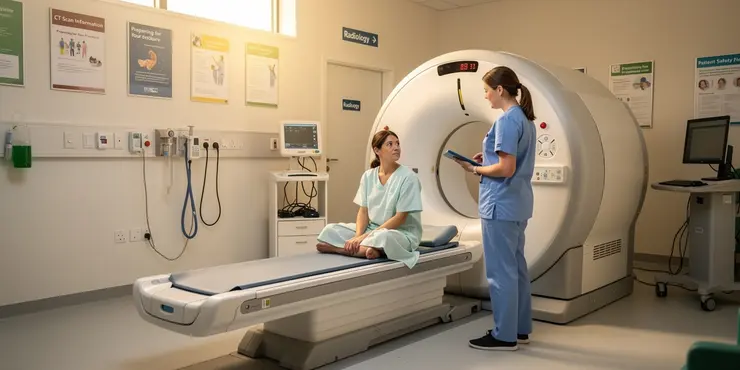
During a CT colonography, the patient lies on a motorized table that moves through a CT scanner. A small tube is inserted into the rectum to inflate the colon with air or carbon dioxide, which helps to produce clearer images. The CT scanner then takes a series of x-ray images from various angles. These images are processed by a computer to create detailed, two-dimensional and three-dimensional images of the colon and rectum. The procedure typically takes about 20 minutes and does not require sedation, allowing patients to resume normal activities shortly afterwards.
Preparation for the Procedure
In the days leading up to a CT colonography, patients are usually required to follow a special diet and take a laxative to cleanse the colon. This preparation is crucial as it helps ensure that images are free from stool, which can obscure findings. Patients are often encouraged to drink plenty of fluids and may need to refrain from eating solid foods the day before the procedure. It is vital for patients to follow these instructions carefully to guarantee the accuracy of the test results.
Who Should Consider CT Colonography?
CT colonography may be recommended for individuals over the age of 50 as part of routine colorectal cancer screening. It is also considered for patients who cannot undergo a traditional colonoscopy due to health conditions or when standard colonoscopy reveals an incomplete view of the colon. People with a strong family history of colorectal cancer or polyps may also consider this procedure. However, CT colonography is not suitable for everyone, and its appropriateness should be determined in consultation with a healthcare provider.
Advantages and Limitations
One of the main advantages of CT colonography is its non-invasive nature, which can make it more comfortable for patients. It also poses fewer risks of perforation compared to conventional colonoscopy and does not require sedation. However, there are limitations; CT colonography may not detect very small polyps and, if any suspicious findings are noted, a traditional colonoscopy might still be necessary for biopsy or removal. Additionally, it involves exposure to low doses of radiation. Despite these limitations, CT colonography remains a valuable tool in the early detection and prevention of colorectal cancer.
What is a CT Colonography?
A CT colonography is a special test. It is also called a virtual colonoscopy. It looks inside your large intestine (colon) to check for bumps called polyps, cancer, or other problems. This test uses a machine called a CT scanner to take pictures inside your body. It is easier than a regular colonoscopy because it does not use sedation (medicine to make you sleep), so it's less risky for some people.
How Does CT Colonography Work?
When you have a CT colonography, you lie down on a table. The table moves through a big machine called a CT scanner. A small tube is gently put into your bottom to fill your colon with air. This helps make the pictures clearer. The CT scanner then takes lots of x-ray pictures from different angles. A computer puts these pictures together to show detailed images of your colon. The whole test takes about 20 minutes. You stay awake, so you can go back to your normal day right after.
Preparation for the Procedure
Before the test, you need to get ready. You may have to eat special foods and take medicine that makes you go to the bathroom a lot. This is important because it makes sure your colon is clean for clear pictures. You also need to drink plenty of water and might have to skip solid foods the day before. It is very important to follow these steps to get the best results from the test.
Who Should Consider CT Colonography?
Most people over 50 should think about having a CT colonography as part of their regular health checkup for colon cancer. It is also a good option for people who cannot have a regular colonoscopy. If you have a family history of colon cancer or polyps, this test might be right for you too. But not everyone should have this test, so talk to your doctor to see if it is good for you.
Advantages and Limitations
CT colonography is a good choice because it is not invasive, meaning it does not go inside your body with a camera like a regular colonoscopy. This makes it more comfortable. It also has less risk since you do not need sedation. But, it might miss very small polyps. If something looks wrong, you may still need a regular colonoscopy to take a sample. Also, this test uses a small amount of radiation. Even with these things, CT colonography is a helpful way to find and prevent colon cancer early.
Frequently Asked Questions
CT colonography is a specialized CT scan that creates detailed images of the colon and rectum to help detect polyps, cancers, and other abnormalities.
CT colonography is performed to screen for colorectal cancer, evaluate symptoms, or investigate possible abnormalities in the large intestine when a doctor wants a detailed look at the colon.
Many adults who need colorectal cancer screening or colon evaluation may be eligible for CT colonography, but eligibility depends on age, symptoms, medical history, and whether there are factors such as pregnancy or certain bowel conditions.
Preparation for CT colonography usually includes a special bowel prep, dietary restrictions before the test, and sometimes oral contrast to help the radiologist distinguish stool from polyps.
CT colonography is not the same as colonoscopy. CT colonography uses imaging to examine the colon, while colonoscopy uses a flexible scope inserted through the rectum to directly inspect the colon and remove polyps.
CT colonography usually does not require sedation because it is a quick imaging procedure and no scope is inserted into the colon.
CT colonography typically takes about 10 to 30 minutes for the scan itself, although the full appointment may take longer because of preparation and positioning.
During CT colonography, a thin tube is placed into the rectum to gently inflate the colon with air or carbon dioxide, and then CT images are taken while you lie on the scanner table.
CT colonography is usually not painful, but some people feel temporary bloating, pressure, or cramping while the colon is inflated for imaging.
The risks of CT colonography include minor discomfort, rare complications from colon inflation, radiation exposure, and the possibility of findings that require follow-up colonoscopy.
CT colonography can detect many polyps, especially larger ones, but very small polyps may be harder to see than with colonoscopy.
CT colonography can detect many colon cancers and suspicious masses, making it a useful tool for colorectal cancer screening and evaluation.
If CT colonography finds a polyp or suspicious lesion, a follow-up colonoscopy is usually recommended so the finding can be removed or biopsied.
CT colonography can be an alternative for some patients, especially those who cannot or do not want a colonoscopy, but it cannot remove polyps or take tissue samples.
CT colonography is generally accurate for detecting larger polyps and cancers, but its accuracy can be lower for smaller lesions and it may still require follow-up testing.
After CT colonography, you can usually return to normal activities soon after the test, though you may have temporary bloating or gas from the air used during the scan.
CT colonography may not be appropriate for everyone with bowel disease, such as active inflammation or recent bowel surgery, so a clinician should decide based on the specific condition.
CT colonography is generally avoided during pregnancy because it uses ionizing radiation unless there is a strong medical reason and the benefits outweigh the risks.
CT colonography results are interpreted by a radiologist and usually describe whether the exam is normal or whether polyps, masses, or other findings were seen that may need further evaluation.
The repeat interval for CT colonography depends on the reason for the exam and the results, but screening exams are often recommended every several years if the findings are normal.

Ergsy Search Results
This website offers general information and is not a substitute for professional advice.
Always seek guidance from qualified professionals.
If you have any medical concerns or need urgent help, contact a healthcare professional or emergency services immediately.
Some of this content was generated with AI assistance. We've done our best to keep it accurate, helpful, and human-friendly.
- Ergsy carefully checks the information in the videos we provide here.
- Videos shown by Youtube after a video has completed, have NOT been reviewed by ERGSY.
- To view, click the arrow in centre of video.
- Most of the videos you find here will have subtitles and/or closed captions available.
- You may need to turn these on, and choose your preferred language.
- Go to the video you'd like to watch.
- If closed captions (CC) are available, settings will be visible on the bottom right of the video player.
- To turn on Captions, click settings.
- To turn off Captions, click settings again.