
Get Answers
Introduction to Colorectal Cancer Screening
Colorectal cancer, affecting the colon and rectum, is a significant health concern in the United Kingdom. Early detection through screening can substantially increase survival rates. The UK's National Health Service (NHS) provides a comprehensive screening programme to help detect this type of cancer early, often before symptoms develop.
NHS Screening Recommendations
The NHS Bowel Cancer Screening Programme is a crucial strategy in identifying colorectal cancer at an early stage. The programme offers different types of screening based on age group and risk category.
Screening for People Aged 60 to 74
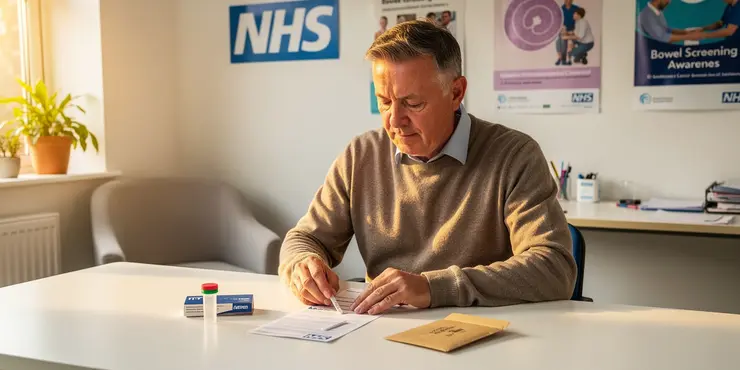
Individuals aged 60 to 74 are automatically invited to take part in the NHS Bowel Cancer Screening Programme. Every two years, this group receives a Faecal Immunochemical Test (FIT) kit by post. The FIT kit is designed to detect small amounts of blood in faeces, which could be an early indication of bowel cancer or polyps.
Pilot Screening for Ages 50 to 59
The NHS has begun a phased rollout of screening for those aged 50 to 59, acknowledging evidence that earlier screening can be beneficial. This group will also receive the FIT kit. Although not yet nationwide, the aim is to eventually offer screening to everyone in this age category.
High-Risk Groups and Surveillance Colonoscopy
Those with a higher risk of developing colorectal cancer, such as individuals with a strong family history of the disease or certain genetic conditions, may need more frequent screening. These individuals might be offered regular colonoscopies starting before age 50. Colonoscopy is a more invasive procedure that allows a direct view of the colon and rectum, enabling the removal of polyps during the examination.
Participation and Follow-up
It is essential to participate in screening when invited. If a FIT test indicates the presence of blood, the individual will be contacted for further testing, often a colonoscopy, to determine the cause. While many positive FIT results are due to non-cancerous conditions, finding the root cause is crucial for appropriate treatment.
Benefits and Limitations of Screening
Screening significantly reduces the risk of dying from bowel cancer by detecting early, treatable stages of the disease. However, it is also important to be aware of limitations and potential drawbacks, such as the chance of false positives or negatives and the risks associated with follow-up procedures like colonoscopy.
Conclusion
Colorectal cancer screening plays a vital role in cancer prevention and early intervention in the UK. It is imperative to adhere to screening schedules and guidelines provided by the NHS. Timely participation in the programme increases the likelihood of detecting cancer early, thus improving treatment outcomes and survival rates.
Introduction to Bowel Cancer Checks
Bowel cancer is a serious illness that happens in the colon and rectum. In the UK, it is important to find this cancer early. Checking for cancer can help save lives. The NHS helps by giving free checks to find the cancer early, even before you feel sick.
NHS Advice on Checks
The NHS has a plan to find bowel cancer early. They have different checks for people based on age and risk.
Checks for People Aged 60 to 74
People aged 60 to 74 get a letter from the NHS to do a bowel cancer check. Every two years, they get a FIT kit in the mail. This kit checks for tiny bits of blood in the poo, which may show early signs of bowel cancer or polyps.
Trial Checks for Ages 50 to 59
The NHS is starting to offer checks for people aged 50 to 59 because checking earlier can help. This group will also get a FIT kit. The plan is to give these checks to everyone aged 50 to 59 in the future.
Extra Checks for High-Risk People
Some people have a higher chance of getting bowel cancer. They might have family members with the illness or special gene problems. These people might need more checks, like a colonoscopy, before age 50. A colonoscopy looks inside the colon and rectum and can remove polyps.
Joining the Check Programme
It is important to do the test when the NHS asks you. If your FIT kit shows blood, you will be called for more tests, like a colonoscopy, to find out why. Sometimes, blood is found for reasons that are not cancer. But it is important to find out why to get the right help.
Good and Bad Sides of Checks
Checks help find bowel cancer early and can save lives. But, sometimes the tests can be wrong or might show cancer when there isn’t any. Follow-up checks, like a colonoscopy, have some risks too.
Conclusion
Checking for bowel cancer in the UK is very important. Follow the NHS advice for checks. Doing the checks on time helps find cancer early, making treatment easier and improving chances of getting better.
Frequently Asked Questions
The American Cancer Society recommends that individuals at average risk start screening at age 45.
For individuals at average risk, a colonoscopy is recommended every 10 years starting at age 45.
Screening methods include colonoscopy, fecal immunochemical test (FIT), stool DNA test, sigmoidoscopy, and CT colonography.
The fecal immunochemical test (FIT) is a non-invasive test that checks for hidden blood in the stool and is recommended annually.
Colonoscopy is generally safe but can carry risks like bleeding, perforation of the colon, and reactions to sedatives.
Individuals with a family history of colorectal cancer may need to start screening earlier, possibly before age 45, and may require more frequent screenings.
The stool DNA test checks for genetic markers of cancer in stool samples and is typically recommended every 3 years.
A diet high in fruits, vegetables, and whole grains, and low in red and processed meats, can help lower the risk of colorectal cancer.
Symptoms may include changes in bowel habits, blood in the stool, abdominal discomfort, fatigue, and unexplained weight loss.
CT colonography, also known as virtual colonoscopy, uses CT imaging to examine the colon and is recommended every 5 years.
Screening helps detect precancerous polyps and early-stage cancer, significantly reducing mortality from colorectal cancer.
People with long-standing IBD should undergo more frequent screenings, as they are at a higher risk for colorectal cancer.
Most insurance plans, including Medicare, generally cover recommended colorectal cancer screenings without additional costs to the patient.
Screening typically continues until age 75. After that, the need for screening should be individualized based on overall health and prior screening history.
Flexible sigmoidoscopy is a procedure that examines the lower part of the colon and is recommended every 5 years along with annual FIT.
Genetic testing can identify inherited cancer syndromes like Lynch syndrome, which may necessitate earlier and more frequent screenings.
Lynch syndrome is an inherited disorder that increases colorectal cancer risk, requiring screening to start in the 20s, often with more frequent colonoscopies.
Screening is generally not recommended after age 85, as the risks of procedures may outweigh the benefits.
Preparation includes following a clear liquid diet, taking prescribed laxatives, and completing bowel cleansing to ensure clear visibility during the procedure.
Yes, maintaining a healthy weight, regular physical activity, limiting alcohol, avoiding smoking, and eating a healthy diet can reduce risk.
The American Cancer Society says people who have a normal chance of getting cancer should start getting checked when they are 45 years old.
If you are 45 years old and do not have any special health problems, you should have a colonoscopy every 10 years.
There are different ways to check for problems in your tummy:
- A doctor can look inside your tummy with a camera. This is called a colonoscopy.
- You can do a special poop test at home. This is called a FIT test.
- Another test looks at your poop for changes. This is called a stool DNA test.
- The doctor can also use a camera to look at part of your tummy. This is a sigmoidoscopy.
- You can have special pictures taken of your tummy. This is called a CT colonography.
It can help to talk to an adult you trust or use tools like pictures and videos to understand these tests better.
The fecal immunochemical test (FIT) is a simple test. It looks for hidden blood in your poop. You should take this test once a year.
A colonoscopy is usually safe. But sometimes there are risks. You might have bleeding, a small tear in the colon, or a bad reaction to the medicine that helps you relax.
If you're worried, tell the doctor. It's okay to ask for help.
People whose family members had bowel cancer might need to get checked sooner, maybe before they turn 45. They might also need to have these checks more often.
The stool DNA test looks for signs of cancer in your poo. Doctors say to do this test every 3 years.
Eating lots of fruits, vegetables, and whole grains is good for your tummy. Try to eat less red meat like beef and pork, and less processed meat like hot dogs and bacon. This can help keep your tummy healthy and lower the chance of getting sick.
Signs might be:
- Going to the toilet a lot or not at all.
- Blood in your poo.
- Tummy aches.
- Feeling very tired.
- Losing weight without trying.
If you have these signs, talk to a doctor. You can also use pictures or apps to help explain how you feel.
CT colonography is also called virtual colonoscopy. This test uses a special machine to take pictures of your colon. You should have this test every 5 years.
Screening can find early problems in the body. It checks for small lumps called polyps and early cancer. This helps stop people from getting very sick or dying from bowel cancer.
People who have had IBD for a long time should have check-ups more often. This is because they have a higher chance of getting bowel cancer.
Most health insurance, like Medicare, helps pay for important tests to find colon cancer. You usually don't have to pay extra for these tests.
People usually have health check-ups until they turn 75 years old. After that, whether they need more check-ups depends on how healthy they are and their past check-up results.
Flexible sigmoidoscopy is a test that looks at the lower part of the colon. It is good to have this test every 5 years. Each year, it's also good to have a FIT test.
Genetic testing can help doctors find out if someone might get cancer because of their family genes. This means getting tested for cancer more often and starting at a younger age.
Lynch syndrome is a health problem that you can get from your family. It makes it more likely for you to get bowel cancer. Because of this, doctors say you should start getting checked for cancer in your 20s. This often means having more colonoscopies, which are special tests to look inside your bowel.
After age 85, it is usually not a good idea to do screening tests. This is because the risks of doing them might be more than the good things they could bring.
Getting ready means you need to drink only clear liquids, take special medicine to help you go to the bathroom, and clean out your tummy so the doctor can see everything clearly during the check-up.
Yes, you can stay healthy by doing these things:
- Keep a healthy weight
- Exercise often
- Drink less alcohol
- Do not smoke
- Eat healthy foods
These steps can help you stay well.

Ergsy Search Results
This website offers general information and is not a substitute for professional advice.
Always seek guidance from qualified professionals.
If you have any medical concerns or need urgent help, contact a healthcare professional or emergency services immediately.
Some of this content was generated with AI assistance. We've done our best to keep it accurate, helpful, and human-friendly.
- Ergsy carefully checks the information in the videos we provide here.
- Videos shown by Youtube after a video has completed, have NOT been reviewed by ERGSY.
- To view, click the arrow in centre of video.
- Most of the videos you find here will have subtitles and/or closed captions available.
- You may need to turn these on, and choose your preferred language.
- Go to the video you'd like to watch.
- If closed captions (CC) are available, settings will be visible on the bottom right of the video player.
- To turn on Captions, click settings.
- To turn off Captions, click settings again.