
Speak To An Expert
Get clear, personalised advice for your situation.
Jot down a few questions to make the most of your conversation.
Understanding Colorectal Cancer
Colorectal cancer is a significant health concern in the UK, being one of the most common types of cancer. Early detection is crucial for effective treatment and improved survival rates. This guide provides an overview of the primary methods used for self-testing or screening for colorectal cancer. Regular screening is recommended for individuals aged 50 and above, though those with a family history or other risk factors may need to start earlier.
Home Screening Tests
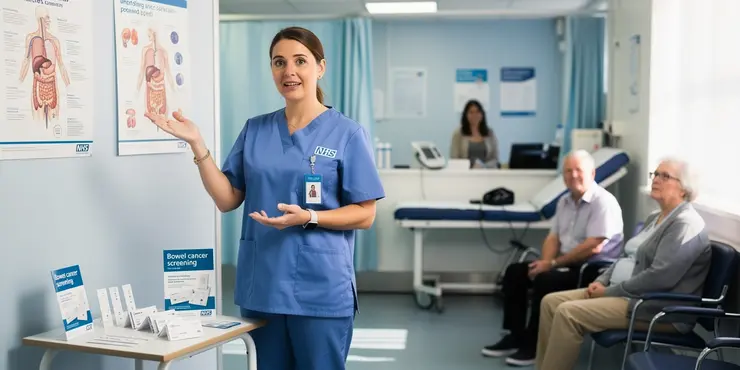
In the UK, the NHS Bowel Cancer Screening Programme offers home testing kits known as the faecal immunochemical test (FIT) kits. These simple tests are mailed directly to your home and allow you to collect a stool sample, which is then returned to a lab for analysis. The FIT test detects small traces of blood in the stool, which may be an early sign of bowel cancer or pre-cancerous growths called polyps. This non-invasive method is recommended every two years for individuals aged 60 to 74.
Flexible Sigmoidoscopy
Offered by the NHS as Bowel Scope Screening, flexible sigmoidoscopy is a procedure that allows doctors to view the inside of the lower part of the bowel using a flexible tube with a camera on the end. This test can locate polyps and other abnormalities in the rectum and the lower colon. It is a more direct method compared to stool tests, allowing practitioners to remove polyps during the procedure itself. Typically, this test is offered once when individuals reach the age of 55 as part of the screening programme.
Colonoscopy
A colonoscopy is a more comprehensive form of examination. It examines the entire colon and rectum using a longer, flexible tube with a camera. While not usually the first line of screening in asymptomatic individuals, it is often recommended if initial tests, like FIT, indicate potential issues, or if there are strong risk factors present. Colonoscopies can also facilitate biopsy or polyp removal, which helps in preventing cancer development.
CT Colonography
CT colonography, sometimes called a virtual colonoscopy, uses CT scanning technology to take pictures of the colon and rectum. This test is less invasive than a traditional colonoscopy and doesn’t require sedation, making it a viable option for those who cannot undergo a colonoscopy for medical reasons. However, if abnormalities are detected, a traditional colonoscopy might still be necessary.
Conclusion
Regular screening is a vital component in the fight against colorectal cancer. The UK offers several methods for early detection, each with its advantages and suitability based on personal health needs. Engaging in regular discussions with healthcare professionals and understanding personal risk factors is essential in choosing the appropriate screening method. Early detection significantly increases the chances of successful treatment, so undertaking these tests as recommended is highly advisable.
Understanding Colorectal Cancer
Colorectal cancer is a serious illness in the UK. It happens in the bowel and is common. Finding it early is very important. It helps doctors start treatment fast and can save lives. This guide will talk about the ways you can check for colorectal cancer at home. People who are 50 years or older should get screened. If your family has a history of cancer, you might need to start checking sooner.
Home Screening Tests
In the UK, the NHS offers a home test for bowel cancer. It is called the FIT kit. This kit comes to your home in the mail. You use it to collect a small sample of your poo. Then, you send it back to a lab. The lab checks for tiny amounts of blood in the poo. This could be a sign of bowel cancer or small growths called polyps. People aged 60 to 74 should do this test every two years.
Flexible Sigmoidoscopy
The NHS also offers another test called a flexible sigmoidoscopy. It is sometimes called the Bowel Scope Screening. This test lets doctors look inside the lower part of the bowel. They use a small, bendy tube with a camera. This test can find polyps and other problems. If doctors see polyps, they can take them out during the test. People usually have this test once when they are 55 years old.
Colonoscopy
A colonoscopy is another way to check the bowel. It looks at the whole bowel and rectum using a long tube with a camera. It is usually done if other tests show something is wrong or if there are high risks. During this test, doctors can take a small piece of tissue (a biopsy) or remove polyps. This helps stop cancer from starting.
CT Colonography
CT colonography is also called a virtual colonoscopy. It uses a special X-ray machine to take pictures of the bowel and rectum. It is less uncomfortable than a regular colonoscopy. You do not need to be put to sleep for this test. But if it finds something wrong, you might still need a regular colonoscopy.
Conclusion
Getting checked regularly is very important for stopping bowel cancer. The UK has many ways to find it early. Each method has its good points. Talking to doctors and knowing your own health is important to choosing the right test. Finding cancer early makes treatment work better. So, it is important to do these tests when the doctors recommend them.
Frequently Asked Questions
Colorectal cancer self-testing methods are home-based screening tests that look for signs of colorectal cancer or precancerous changes, most commonly by checking stool for hidden blood or abnormal DNA. They are designed to help identify people who need follow-up testing, usually a colonoscopy.
Many adults at average risk for colorectal cancer may be eligible for colorectal cancer self-testing methods, but eligibility depends on age, risk factors, symptoms, and local screening guidance. People with a personal history of colorectal cancer, certain polyps, inflammatory bowel disease, or strong family history may need a different screening plan.
Common colorectal cancer self-testing methods include fecal immunochemical tests, fecal occult blood tests, and stool DNA tests. These tests are done at home using a stool sample and are mailed or delivered to a laboratory for analysis.
The accuracy of colorectal cancer self-testing methods varies by test type and how consistently they are used. Stool DNA tests generally detect more cancers and advanced precancerous growths than basic blood-only stool tests, but no self-test is perfect and abnormal results require follow-up testing.
The recommended frequency for colorectal cancer self-testing methods depends on the specific test. Some stool-based tests are done every year, while stool DNA tests are often done less frequently according to screening guidelines and a clinician’s advice.
To use colorectal cancer self-testing methods correctly, follow the kit instructions exactly, collect the stool sample as directed, avoid contaminating the sample, and return it promptly for processing. Careful handling helps improve the reliability of the result.
Before using colorectal cancer self-testing methods, you should follow the kit instructions and any clinician guidance about diet, medications, or timing. Some older stool blood tests may be affected by certain foods or drugs, while many newer tests have fewer restrictions.
A positive result from colorectal cancer self-testing methods means abnormal material was detected, such as hidden blood or abnormal DNA markers. It does not automatically mean cancer is present, but it does mean you need prompt follow-up testing, usually a colonoscopy.
A negative result from colorectal cancer self-testing methods means the test did not find evidence of blood or abnormal markers in that sample. It does not completely rule out colorectal cancer, so screening must be repeated at the recommended interval.
Colorectal cancer self-testing methods can be an effective screening option for many average-risk people, but they do not replace a colonoscopy in every situation. A colonoscopy is still needed after a positive self-test or when higher-risk conditions are present.
Some colorectal cancer self-testing methods can detect early cancers reasonably well, especially certain stool DNA tests and fecal immunochemical tests. However, they are generally less able than colonoscopy to find and remove precancerous polyps before they become cancer.
Colorectal cancer self-testing methods are usually not painful or invasive because they are done with a stool sample collected at home. This makes them easier for many people to complete than procedures that require insertion of a scope.
If you have symptoms such as rectal bleeding, unexplained weight loss, persistent abdominal pain, or changes in bowel habits, colorectal cancer self-testing methods should not be used as a substitute for medical evaluation. Symptoms need prompt assessment by a healthcare professional.
Store colorectal cancer self-testing methods kits according to the package instructions, usually at room temperature unless otherwise stated. Return the sample as soon as possible, because delays or improper storage can affect test quality.
False results in colorectal cancer self-testing methods can happen because of sample handling errors, timing issues, bleeding from non-cancer causes, or limitations of the test itself. Following instructions carefully helps reduce the chance of inaccurate results.
Colorectal cancer self-testing methods may sometimes suggest the presence of polyps if they cause bleeding or release abnormal DNA, but they do not directly visualize or remove polyps. Colonoscopy is the main test used to find and remove polyps.
Coverage for colorectal cancer self-testing methods varies by insurance plan, country, and screening program. Many plans cover approved screening tests, but it is best to confirm costs, copays, and laboratory coverage before ordering a kit.
You may be able to choose among different colorectal cancer self-testing methods depending on what is available, your risk level, and your clinician’s recommendation. The choice often depends on how often you want to test and whether you prefer a stool blood test or a stool DNA test.
After an abnormal colorectal cancer self-testing methods result, the next step is usually a diagnostic colonoscopy to look directly at the colon and rectum. This follow-up is important because self-testing methods screen for risk signals rather than make a final diagnosis.
Colorectal cancer self-testing methods can be part of a regular screening plan for people at average risk who want home-based screening. To be effective, they must be done on schedule, and any positive result must be followed by diagnostic evaluation.

Ergsy Search Results
This website offers general information and is not a substitute for professional advice.
Always seek guidance from qualified professionals.
If you have any medical concerns or need urgent help, contact a healthcare professional or emergency services immediately.
Some of this content was generated with AI assistance. We've done our best to keep it accurate, helpful, and human-friendly.
- Ergsy carefully checks the information in the videos we provide here.
- Videos shown by Youtube after a video has completed, have NOT been reviewed by ERGSY.
- To view, click the arrow in centre of video.
- Most of the videos you find here will have subtitles and/or closed captions available.
- You may need to turn these on, and choose your preferred language.
- Go to the video you'd like to watch.
- If closed captions (CC) are available, settings will be visible on the bottom right of the video player.
- To turn on Captions, click settings.
- To turn off Captions, click settings again.