
Get Answers
Introduction to Home Colorectal Cancer Tests
Home colorectal cancer tests offer a convenient way for individuals in the UK to screen for signs of colorectal cancer. These tests typically involve collecting a stool sample at home, which is then sent to a laboratory for analysis. The main goal is to detect any signs of blood or abnormal DNA in the stool, which may indicate the presence of colorectal cancer or advanced polyps.
Types of Home Colorectal Cancer Tests
Two common types of home colorectal cancer tests are the Faecal Immunochemical Test (FIT) and the stool DNA test. The FIT detects hidden blood in the stool, while the stool DNA test checks for certain DNA markers that may be present in cancerous or precancerous cells shed in the stool. The choice between these tests may depend on availability, cost, and personal preference.
Process for Taking the Test
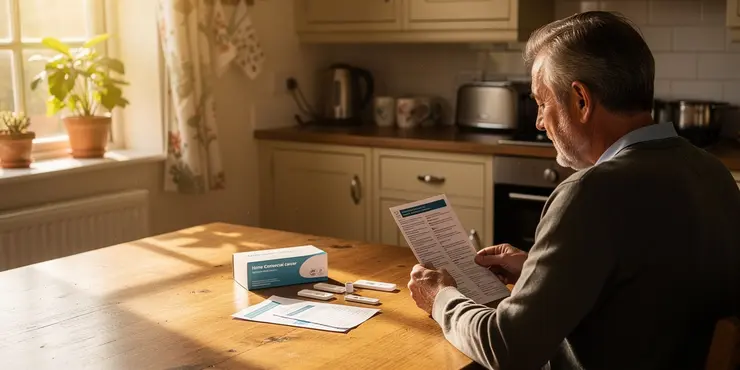
To take a home colorectal cancer test, individuals receive a test kit by mail or from their healthcare provider. The kit includes instructions, a sample collection device, and packaging for returning the sample. It is important to follow the instructions carefully to ensure accurate results. Typically, the individual will collect a small stool sample, place it in the provided container, and return the package to the designated laboratory using the prepaid envelope included in the kit.
Timeframe for Receiving Results
Once the laboratory receives the stool sample, the time taken to process and analyze it can vary. Generally, results from a home colorectal cancer test are available within one to two weeks. This timeframe allows for the laboratory to conduct a thorough analysis and ensure accuracy in the results reported.
Understanding the Test Results
The results of a home colorectal cancer test typically indicate whether the test is positive or negative for signs of blood or abnormal DNA. A negative result suggests no evidence of colorectal cancer was found in the sample, though it is important to continue regular screenings as recommended. A positive result indicates the presence of blood or abnormal markers, which does not necessarily mean cancer is present, but further diagnostic procedures, such as a colonoscopy, are recommended to investigate the cause.
Importance of Follow-Up and Regular Screening
Receiving results from a home colorectal cancer test is an important step, but it is equally crucial to follow up with healthcare professionals, especially if the result is positive. Regular screening is vital, as early detection significantly improves the chances of successful treatment. In the UK, individuals over the age of 60 are often invited for regular bowel screening, which includes tests like the FIT, as part of national health guidelines.
Conclusion
Home colorectal cancer tests provide a practical way for individuals to engage in preventative health care. The process from testing to receiving results is straightforward, typically taking one to two weeks. However, understanding the importance of results and subsequent actions is key to effective healthcare management. Individuals are encouraged to participate in regular screening and consult healthcare providers for guidance and any necessary follow-up actions.
Introduction to Home Colorectal Cancer Tests
Home tests for colorectal cancer help people in the UK check for signs of this cancer. These tests are easy to use. You collect a stool (poo) sample at home. Then, you send it to a lab to be checked. The test looks for blood or unusual DNA in the stool. These might show signs of cancer or growths called polyps.
Types of Home Colorectal Cancer Tests
There are two main types of home tests: the Faecal Immunochemical Test (FIT) and the stool DNA test. The FIT looks for hidden blood in the stool. The stool DNA test looks for DNA changes in bad cells in the stool. Which test you choose might depend on what’s available, how much it costs, and what you prefer.
Process for Taking the Test
To do the test, you get a kit in the mail or from your doctor. The kit has instructions, a tool to collect your sample, and a package to send it back. Follow the steps carefully to get the right results. Usually, you take a small stool sample, put it in the container in the kit, and send it to the lab using the included envelope.
Timeframe for Receiving Results
After the lab gets your sample, it takes about one to two weeks to get your results. This time lets the lab check your sample carefully to make sure the results are correct.
Understanding the Test Results
Your test results will say if they found blood or unusual DNA in your stool. A negative result means they didn’t find anything wrong, but you should keep doing regular tests. A positive result means they found something that needs more checking. It does not mean you have cancer, but you should have more tests, like a colonoscopy.
Importance of Follow-Up and Regular Screening
Getting your test results is important, but you should also talk to your doctor, especially if the result is positive. Regular tests are very important because finding cancer early can help treat it better. In the UK, people over 60 often get invited for regular tests, like the FIT, as part of health check-ups.
Conclusion
Home tests for colorectal cancer are a good way to take care of your health. The whole process, from testing to getting results, is usually simple and takes about one to two weeks. It’s important to understand your results and what to do next. Always join regular screenings and talk to your doctor for advice and next steps.
Frequently Asked Questions
The typical turnaround time is often about 1 to 2 weeks after the lab receives your sample, though it can be faster or slower depending on the test kit, shipping time, and laboratory workload.
For a home FIT kit, results are commonly available within several days to about 2 weeks after the laboratory receives the sample, but exact timing depends on the provider and processing volume.
For a stool DNA test, the turnaround time is often longer than a FIT and may take about 1 to 3 weeks after the lab receives the sample because the testing process is more complex.
Factors include mailing speed, whether the sample arrives intact and usable, the type of test, laboratory backlog, holidays, and how results are delivered to you.
The turnaround time usually starts when the laboratory receives your sample, not when you mail it, because shipping time is separate from processing time.
Many providers let you track the kit through an online portal, order status page, or customer support line, which can show when the sample was received and when results are expected.
Delays can happen if the sample is late, damaged, insufficient, or not properly collected, or if the lab has a high testing volume or an interruption in shipping.
Usually, no. Most home colorectal cancer screening tests are processed on a standard laboratory schedule, and expedited options are uncommon.
If the expected timeframe has passed, contact the test provider or laboratory to confirm that the sample was received, acceptable, and in processing.
Holidays can slow both mail delivery and lab processing, so results may take longer than usual if your sample is shipped near a holiday period.
The lab usually processes both positive and negative results on a similar schedule, though any follow-up review or confirmation step can occasionally add time.
That depends on the provider. Results may be posted in a secure portal, sent by email, delivered by mail, or communicated by phone.
A normal turnaround time is typically the timeframe stated by the provider, often ranging from several days to about 2 weeks after the lab receives the specimen.
If you have not heard back by the end of the provider’s stated window, it is reasonable to contact them and ask for an update.
Yes. If the sample is incomplete or cannot be analyzed, the provider may request a new kit, which restarts the timeline and extends the overall turnaround time.
Sometimes it does and sometimes it does not. Some providers release results immediately after lab processing, while others add clinician review before sharing them with you.
Shipping speed affects the total time you wait, but the official lab turnaround time usually begins only after the sample arrives at the laboratory.
Yes. Severe weather can delay mail delivery and lab logistics, which may push results beyond the usual timeframe.
If results are delayed, expect the provider to check whether the sample was received and accepted, and they may explain whether a replacement kit or repeat sample is needed.
To help avoid delays, mail the kit promptly, follow the instructions carefully, collect the sample correctly, and confirm your contact information is up to date.

Ergsy Search Results
This website offers general information and is not a substitute for professional advice.
Always seek guidance from qualified professionals.
If you have any medical concerns or need urgent help, contact a healthcare professional or emergency services immediately.
Some of this content was generated with AI assistance. We've done our best to keep it accurate, helpful, and human-friendly.
- Ergsy carefully checks the information in the videos we provide here.
- Videos shown by Youtube after a video has completed, have NOT been reviewed by ERGSY.
- To view, click the arrow in centre of video.
- Most of the videos you find here will have subtitles and/or closed captions available.
- You may need to turn these on, and choose your preferred language.
- Go to the video you'd like to watch.
- If closed captions (CC) are available, settings will be visible on the bottom right of the video player.
- To turn on Captions, click settings.
- To turn off Captions, click settings again.