
Get Answers
Understanding Home Tests for Colorectal Cancer
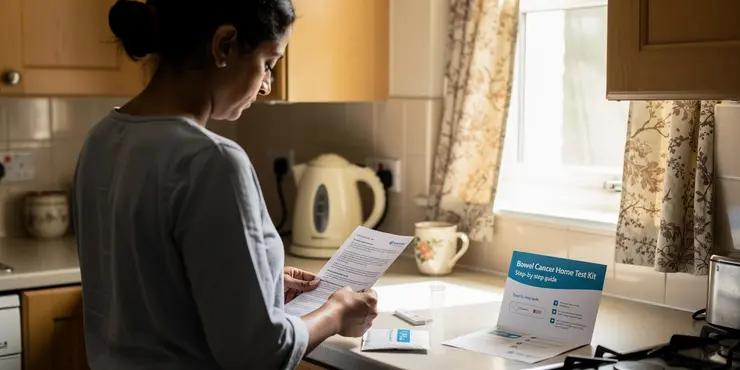
Home testing for colorectal cancer offers a convenient and non-invasive option for individuals who wish to screen for this disease in the privacy of their own homes. These tests are designed to detect signs of colorectal cancer at an early stage, potentially improving outcomes through earlier intervention. In recent years, the availability and variety of home tests for colorectal cancer have increased, prompting questions about their accuracy and effectiveness.
Types of Home Tests Available
There are primarily two types of home tests for colorectal cancer available in the UK: the faecal immunochemical test (FIT) and the guaiac-based faecal occult blood test (gFOBT). The FIT test detects hidden blood in the stool by identifying the presence of haemoglobin, while the gFOBT looks for traces of blood using a chemical reaction. Both tests aim to identify early signs of cancer by detecting blood from polyps or cancers in the bowel.
Accuracy of Home Tests
The accuracy of home tests for colorectal cancer depends on several factors, including the type of test used and adherence to the instructions. The faecal immunochemical test is generally considered more accurate than the guaiac-based test because it is more specific to human blood and less likely to be affected by dietary factors. FIT tests have shown higher sensitivity rates, which means they are more likely to correctly identify individuals who have colorectal cancer.
Benefits and Limitations
Home tests for colorectal cancer offer numerous benefits, including ease of use, privacy, and the ability to avoid a clinical setting. This convenience can lead to higher participation rates in screening programmes, which is crucial for the early detection of colorectal cancer. However, there are limitations to consider. Home tests may not detect all cases of cancer, particularly in their very early stages or in the presence of non-bleeding polyps. False positives can also occur, leading to unnecessary anxiety and the need for further diagnostic testing.
Recommendations for Use
The UK National Health Service (NHS) includes home testing as part of its bowel cancer screening programme, recommending that individuals aged 60 to 74 complete a FIT test every two years. It is important for individuals using home tests to follow the instructions carefully and to discuss any positive results with a healthcare professional. Even if results are negative, it is crucial to be vigilant and report any symptoms such as changes in bowel habits, rectal bleeding, or unexplained weight loss to a doctor.
Conclusion
Home tests for colorectal cancer are an important tool in the early detection of the disease and offer a practical option for many individuals. While they are generally accurate, they should be seen as part of a broader strategy for cancer screening, which includes regular consultation with healthcare providers and awareness of personal risk factors and symptoms. By using home tests responsibly, individuals can take proactive steps in monitoring their health and potentially improving outcomes through early detection.
Understanding Home Tests for Bowel Cancer
Home tests for bowel cancer help people check for this illness at home. These tests are easy to do and do not hurt. They look for signs of bowel cancer early, which can help people get treatment sooner and feel better. In recent times, more of these tests are available, and people want to know if they work well.
Types of Home Tests Available
There are two main types of home tests for bowel cancer in the UK. They are called the faecal immunochemical test (FIT) and the guaiac-based faecal occult blood test (gFOBT). The FIT test looks for hidden blood in your poo, and the gFOBT checks for blood using a chemical reaction. Both tests try to find early signs of cancer by checking for blood from lumps or cancers in the bowel.
Accuracy of Home Tests
The way home tests work well depends on the kind of test and how you do it. The FIT test is often better than the gFOBT. This is because it looks for human blood and is not affected by what you eat. FIT tests work better by finding more cases of bowel cancer.
Benefits and Limitations
Home tests for bowel cancer have many good points, like being easy to use, private, and not needing to go to the hospital. This can make more people want to do the tests, which helps find cancer early. But there are some problems too. Home tests might not find all cancers, especially if the cancer is very small or if there is no bleeding. Sometimes the test might say there is cancer when there is not, causing worry and more tests.
Recommendations for Use
The NHS in the UK suggests that people aged 60 to 74 use a FIT test every two years. It is important to follow the instructions for the test and talk to a doctor if the test shows positive. Even if the test is negative, people should still watch out for changes, like different poo habits, bleeding from the bottom, or losing weight without trying. If these happen, they should see a doctor.
Conclusion
Home tests for bowel cancer are a useful way to find the illness early. They help many people but should be used with other cancer checks. People should also talk to their doctors and know signs of cancer. By using home tests carefully, people can help take care of their health and find problems early.
Frequently Asked Questions
Colorectal cancer home test accuracy describes how well a home screening test identifies people who may have colorectal cancer or advanced polyps. Accuracy is usually discussed in terms of sensitivity, specificity, and false positive or false negative rates.
Colorectal cancer home test accuracy is generally lower than colonoscopy for detecting cancer and polyps, because colonoscopy directly visualizes the colon and can remove polyps. Home tests can still be effective for screening, especially for detecting cancer and some higher-risk lesions, but they do not replace colonoscopy in all situations.
Colorectal cancer home test accuracy can be affected by how the test is designed, whether the sample is collected correctly, how closely instructions are followed, how the sample is stored and mailed, and whether bleeding from other causes is present. Test performance can also vary by age, risk level, and whether the test looks for blood or DNA markers.
Sample collection has a major impact on colorectal cancer home test accuracy. If the sample is collected incorrectly, contaminated, delayed, or not enough material is provided, the result may be less reliable and the chance of false results increases.
Sensitivity in colorectal cancer home test accuracy refers to the test's ability to correctly identify people who actually have colorectal cancer or advanced precancerous changes. A test with higher sensitivity misses fewer true cases.
Specificity in colorectal cancer home test accuracy refers to the test's ability to correctly identify people who do not have colorectal cancer. A test with higher specificity produces fewer false positive results.
Yes, colorectal cancer home test accuracy can produce false negatives, meaning the test says the result is normal even though disease is present. This can happen if bleeding is intermittent, the lesion is small, or the test type is less sensitive for that stage of disease.
Yes, colorectal cancer home test accuracy can produce false positives, meaning the test suggests a problem when no colorectal cancer is present. False positives can occur because of hemorrhoids, minor bleeding, inflammation, or test limitations, and they often require follow-up testing.
Stool-based tests influence colorectal cancer home test accuracy by detecting blood, DNA changes, or other markers in stool. Different stool tests have different accuracy profiles, with some being better at finding cancer and others being better at reducing false positives.
Age can influence colorectal cancer home test accuracy because the likelihood of disease, the amount of bleeding from other causes, and screening recommendations may differ by age group. The test itself may perform differently in populations with different risk levels and disease prevalence.
Yes, colorectal cancer home test accuracy often varies by cancer stage. Home tests are usually more accurate at detecting established cancers than very early cancers or small advanced adenomas, which may be harder to identify.
A positive result in colorectal cancer home test accuracy means the test found something that needs further evaluation, not that cancer is confirmed. A follow-up colonoscopy is typically needed to determine the cause of the positive result.
A negative result in colorectal cancer home test accuracy lowers the chance of colorectal cancer but does not eliminate it completely. Screening still needs to be repeated according to the recommended schedule, and symptoms should be evaluated even after a negative result.
Colorectal cancer home test accuracy is maintained through repeat testing at the recommended intervals because one test only reflects a single point in time. Regular screening improves the chance of detecting disease that was missed earlier or that developed later.
DNA-based tests in colorectal cancer home test accuracy can be more sensitive for certain cancers and advanced lesions than blood-only stool tests, but they may also have more false positives. Their performance depends on the specific test technology and the population being screened.
Fecal occult blood tests can detect hidden blood associated with colorectal cancer, but their colorectal cancer home test accuracy depends on whether bleeding is present at the time of testing. They are generally less sensitive for some early lesions than more advanced stool DNA tests.
Yes, some medications can affect colorectal cancer home test accuracy, especially if they increase bleeding or change stool characteristics. It is important to follow the test instructions and ask a clinician whether any medications should be continued or avoided before testing.
Diet can affect colorectal cancer home test accuracy for some older blood-based stool tests, though many modern tests are less affected by diet. Following the specific instructions for the test is important because certain foods or supplements may still interfere with results in some cases.
The best way to improve colorectal cancer home test accuracy is to follow all collection and mailing instructions carefully, use the correct sample amount, avoid contamination, and complete repeat screenings on schedule. Choosing the right test for the person's risk level and promptly following up abnormal results also improves overall screening effectiveness.
Someone should rely on colonoscopy instead of colorectal cancer home test accuracy when they have symptoms, a high-risk history, a positive home test, or a clinician recommends direct examination. Home tests are useful for screening, but colonoscopy provides a more complete evaluation and is needed after abnormal results.

Ergsy Search Results
This website offers general information and is not a substitute for professional advice.
Always seek guidance from qualified professionals.
If you have any medical concerns or need urgent help, contact a healthcare professional or emergency services immediately.
Some of this content was generated with AI assistance. We've done our best to keep it accurate, helpful, and human-friendly.
- Ergsy carefully checks the information in the videos we provide here.
- Videos shown by Youtube after a video has completed, have NOT been reviewed by ERGSY.
- To view, click the arrow in centre of video.
- Most of the videos you find here will have subtitles and/or closed captions available.
- You may need to turn these on, and choose your preferred language.
- Go to the video you'd like to watch.
- If closed captions (CC) are available, settings will be visible on the bottom right of the video player.
- To turn on Captions, click settings.
- To turn off Captions, click settings again.