
Get Answers
Introduction to Type 1 Diabetes Screening
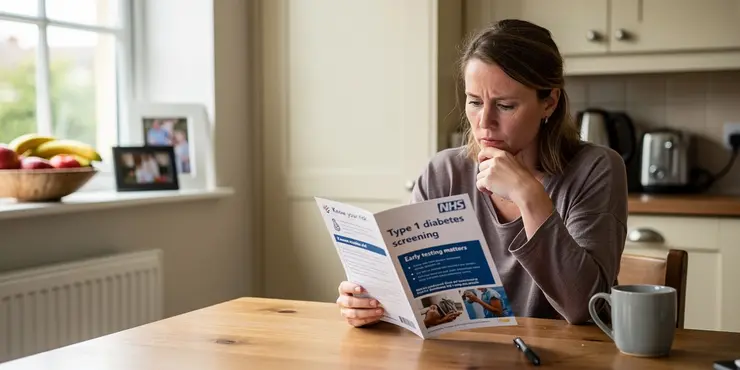
Type 1 diabetes is a chronic condition characterized by an autoimmune response against insulin-producing cells. Early detection is crucial for initiating management strategies and preventing complications. However, screening for type 1 diabetes presents several challenges and limitations.
Accuracy and Predictive Value
One limitation of type 1 diabetes screening is the accuracy of the tests available. While some tests can identify autoantibodies associated with the disease, they are not fully predictive. A positive result does not always indicate that diabetes will develop.
Furthermore, the presence of autoantibodies might lead to a false sense of security if undetected. Not all individuals with these markers will exhibit disease, complicating the interpretation of results.
Psychological Impact
Screening can have a psychological impact on individuals and families. A positive test for markers can lead to anxiety and stress over a potential future diagnosis. This uncertainty can affect the mental health of not only the individual but also their family members.
Moreover, decisions on lifestyle changes might be prompted despite the absence of certainty regarding disease development. Weighing the risk of false positives with the stress caused is a key concern in screening programs.
Cost and Resource Allocation
Another limitation is the cost involved in widespread screening programs. Resources required for conducting tests, processing, and follow-up can be significant. This raises questions about the cost-effectiveness of screening methods.
Limited healthcare budgets must prioritize interventions that benefit wider populations. Screening for type 1 diabetes might divert resources from other crucial services if not carefully evaluated.
Lack of Proven Preventive Interventions
A significant challenge is the absence of proven interventions to prevent the onset of type 1 diabetes. Screening might identify at-risk individuals, but if effective prevention methods are unavailable, the benefit of early detection is limited.
Research is ongoing to find preventive measures, yet currently, being aware of risk does not significantly alter the prevention of the condition. This gap affects the overall justification for broad screening initiatives.
Conclusion
While screening for type 1 diabetes has potential benefits, its limitations are significant. Issues with test accuracy, psychological effects, costs, and the lack of preventive measures must be carefully considered.
Screening programs must be developed with these challenges in mind to ensure they provide real value to individuals and the healthcare system. Continuous research and dialogue are necessary to improve these strategies.
Frequently Asked Questions
Type 1 diabetes screening involves testing individuals, typically those at high risk, to detect markers or indicators that may suggest the potential development of Type 1 diabetes.
Current screening methods can identify risk markers, such as autoantibodies, but they cannot predict exactly when or if a person will develop Type 1 diabetes.
No, screening alone cannot diagnose Type 1 diabetes. It only identifies risk factors. A diagnosis would require further testing and clinical evaluation.
The primary limitation is that screening cannot precisely predict who will develop the disease or when it will occur, making it difficult to implement preventive measures.
Type 1 diabetes is influenced by complex genetic, environmental, and immune system factors, making the prediction of its onset through screening challenging.
Screening is often targeted at individuals with a family history of Type 1 diabetes or those with certain genetic predispositions.
Yes, screening can cause anxiety and stress, especially in individuals identified as being at high risk for developing the disease.
While screening can identify at-risk individuals, there is currently a lack of effective interventions to delay or prevent the onset of Type 1 diabetes.
The main risks are psychological, such as anxiety from knowing one's risk status, as well as potential social or insurance implications of being identified as at-risk.
No, it is not widely conducted largely due to the limitations in predicting disease onset and lack of interventions for those identified as at risk.
Yes, screening can result in false positives, where a person is identified at risk but never develops the disease, and false negatives, where a person is mistakenly identified as low risk.
No, current screening primarily focuses on known autoantibodies and genetic markers, but may not capture all possible risk factors and markers.
Screening can be costly due to lab tests and follow-ups, and these costs may not be covered by insurance, particularly given its limitations in predictive capability.
Due to limitations in prediction and intervention, screening currently has a limited role in public health strategies for Type 1 diabetes.
Ethical considerations include informed consent, privacy concerns, and the psychological impact of knowing one's risk without effective ways to prevent the disease.
Screening is often more relevant in children and young adults, as they are more likely to show early signs or markers, but limitations still apply in predicting disease onset.
Advancements in understanding genetics, immune markers, and environmental triggers, combined with new preventive treatments, could enhance screening effectiveness.
A strong family history of Type 1 diabetes increases the likelihood of being screened due to the higher genetic risk of developing the disease.
Frequency of screening varies based on specific risk factors and guidelines but may not yield new information due to current limitations in predictive testing.
While early detection is possible, there are limited interventions available to prevent or delay Type 1 diabetes, making the utility of early screening limited.

Ergsy Search Results
This website offers general information and is not a substitute for professional advice.
Always seek guidance from qualified professionals.
If you have any medical concerns or need urgent help, contact a healthcare professional or emergency services immediately.
Some of this content was generated with AI assistance. We've done our best to keep it accurate, helpful, and human-friendly.
- Ergsy carefully checks the information in the videos we provide here.
- Videos shown by Youtube after a video has completed, have NOT been reviewed by ERGSY.
- To view, click the arrow in centre of video.
- Most of the videos you find here will have subtitles and/or closed captions available.
- You may need to turn these on, and choose your preferred language.
- Go to the video you'd like to watch.
- If closed captions (CC) are available, settings will be visible on the bottom right of the video player.
- To turn on Captions, click settings.
- To turn off Captions, click settings again.