
Get Answers
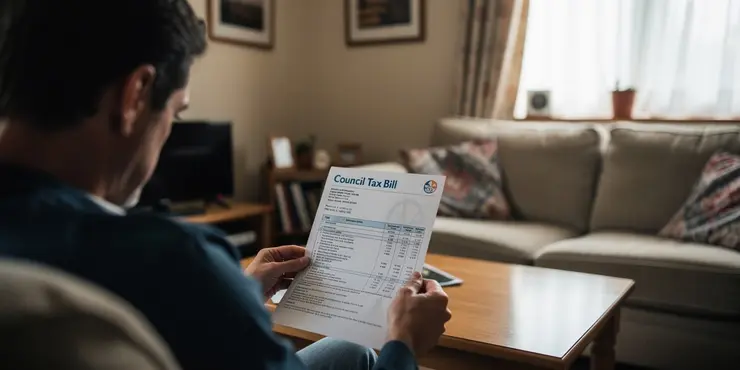
Understanding Your Council Tax Bill
Council Tax is a mandatory payment collected by local councils in the UK to fund local services such as education, waste management, and policing. Occasionally, discrepancies or errors can occur in your Council Tax bill, leading to overpayment or underpayment. Understanding your bill is the first step in identifying these errors.
Review Your Bill Carefully
Start by reviewing your Council Tax bill thoroughly. Check the property valuation band, the Council Tax reduction or exemption status, and ensure that all personal details are correct. Errors can sometimes occur due to incorrect property band allocation or incorrect application of discounts or exemptions.
Contact Your Local Council
If you identify a potential error, the next step is to contact your local council. Councils usually have dedicated customer service teams to handle billing inquiries. It's often helpful to provide them with all relevant details, including your account number and specific details about the suspected error. You can usually find contact information on the council's official website.
Submit a Formal Challenge
If an informal inquiry doesn’t resolve the issue, you might need to submit a formal challenge. This involves a written explanation of the perceived error and any supporting evidence. Councils have specific procedures for handling such challenges, and it's important to follow their guidelines closely. Keep copies of all correspondence for your records.
Understanding Council Tax Bands
Errors in property banding can lead to incorrect billing amounts. In England and Scotland, homes are allocated to bands based on their estimated market value as of 1 April 1991, and 1993 in Wales. If you believe your property has been incorrectly banded, you can contact the Valuation Office Agency (VOA) in England and Wales, or the Scottish Assessors Association in Scotland, to request a re-evaluation.
Check for Discounts and Exemptions
Ensure that any applicable discounts or exemptions are correctly applied. Students, single occupants, and individuals with disabilities, among others, may qualify for reductions. Verify that these are reflected on your bill. If not, you may need to provide additional documentation to support your eligibility.
What if Your Challenge Is Unsuccessful?
If after contacting the council and submitting a formal challenge your issue remains unresolved, you can escalate the matter. Contact the Local Government and Social Care Ombudsman in England or the Public Services Ombudsman in Wales and Scotland for further assistance. They can investigate complaints about mishandling of the case by the local council.
Preventing Future Errors
To prevent future billing errors, keep your personal information up to date and notify your council promptly of any changes in circumstances, such as moving homes or changes in occupancy. Regularly review your bills upon receipt to ensure correctness.
Understanding Your Council Tax Bill
Council Tax is money you need to pay to the local council. It helps pay for things like schools, trash collection, and the police. Sometimes, mistakes happen in your Council Tax bill, and you might pay too much or too little. Knowing how to read your bill can help you spot these mistakes.
Review Your Bill Carefully
Look at your Council Tax bill closely. Check the property band, any discounts, and make sure your personal details are right. Mistakes can happen if your house is put in the wrong band or if discounts are not applied.
Contact Your Local Council
If you think there is a mistake, talk to your local council. They have people who can help with billing questions. Give them your account number and details about the mistake. You can find their contact information on the council's website.
Submit a Formal Challenge
If talking to them doesn't fix the problem, you might need to write a letter explaining the mistake. Include any evidence you have. Follow the council's rules for submitting challenges. Keep copies of everything you send.
Understanding Council Tax Bands
Houses are put in bands based on how much they were worth in the past. This can affect your bill. If you think your home is in the wrong band, contact the Valuation Office Agency in England and Wales, or the Scottish Assessors Association in Scotland, to ask for a check.
Check for Discounts and Exemptions
Make sure any discounts you qualify for are on your bill. People like students, single people living alone, or those with disabilities might get a reduction. If these are not on your bill, you might need to give extra papers to prove you qualify.
What if Your Challenge Is Unsuccessful?
If you’ve tried to fix the mistake and it’s still there, you can ask for more help. In England, you can talk to the Local Government and Social Care Ombudsman. In Wales and Scotland, contact the Public Services Ombudsman. They can help if the council doesn’t sort things out properly.
Preventing Future Errors
To stop mistakes from happening again, keep your personal information current. If you move or there are changes, tell the council quickly. Always check your bills carefully when you get them.
Frequently Asked Questions
First, closely review the details on your Council Tax bill for any discrepancies. Then, contact your local council directly to raise the issue and provide them with all relevant information.
Carefully read through your bill and compare it against previous bills or any recent changes in your circumstances that you have reported to the council.
You should contact the billing department of your local council. Their contact information will be on your Council Tax bill.
Have your Council Tax bill reference number, details of the error, and any supporting documents ready when you contact your council.
Many local councils offer online services to dispute Council Tax bill errors. Check your council's website for more information.
Resolution times can vary, but your council should provide a timeline once you report the issue.
If an error is confirmed, your council should adjust your account. Let them know as soon as possible to avoid any overcharges.
There isn't a strict deadline, but it’s best to report errors as soon as you notice them to prevent additional charges or complications.
If you disagree, you can ask for a formal review or take your complaint to the Valuation Tribunal Service.
Normally, Council Tax is not reported to credit agencies. However, unresolved issues leading to arrears could indirectly affect your credit if enforced through the courts.
Continue making payments based on the correct amount you believe is due to prevent being in arrears.
Proof can vary based on the error. Council calculations, correspondence letters, and any related documentation can be useful.
Yes, incorrect property banding can lead to errors. Contact the Valuation Office Agency if you think your band is wrong.
Errors are not very common but can occur. Always review your bills carefully to catch any mistakes promptly.
Ask for a case or reference number when you report the error. Use this when following up with the council.
Yes, if overpayments are due to a confirmed error, your council should refund the excess amount.
Yes, the council should adjust your direct debit details to reflect the correct amount once the error is resolved.
Ensure the council has your up-to-date information and notify them of any changes to your household or property promptly.
Yes, some local councils may offer in-person appointments at their offices. Check with your local council for available options.
Not paying could result in arrears, but continue payments based on the correct calculation as you see it and alert the council of the dispute.
First, look carefully at your Council Tax bill. Check if anything is wrong. If you find a problem, talk to your local council. Tell them what is wrong and give them all the information they need.
Look at your bill closely. Check it against your old bills. Also, think about any changes you've told the council about. Make sure everything matches up.
You should get in touch with the billing office in your local council. You can find their phone number and email on your Council Tax bill.
When you talk to the council, have these things ready:
- Your Council Tax bill number
- Information about the mistake
- Any papers that can help show the mistake
These will make it easier to fix the problem.
Lots of local councils can help you online if your Council Tax bill is wrong. Look at your council's website to find out more.
Fixing the problem can take different amounts of time. After you tell your council about the issue, they should tell you how long it will take to fix it.
If there is a mistake, the council should fix it. Tell them right away so you don’t pay too much.
There is no exact time limit. But it is good to tell someone about mistakes as soon as you see them. This helps stop more problems or extra costs.
If you don't agree, you can ask someone to look at it again. You can also talk to the Valuation Tribunal Service if you have a complaint.
Usually, the Council Tax is not shared with credit companies. But, if you do not pay, it can go to court and this might hurt your credit score.
Keep paying the right amount of money that you think you owe so you don't fall behind.
Proof can be different depending on the mistake. Things like calculations from the council, letters they have sent, and any other important papers can help.
Yes, if your property is in the wrong band, it can cause mistakes. If you think your band is wrong, you should tell the Valuation Office Agency.
Mistakes can happen, but not often. Always check your bills carefully to find any errors quickly.
When you tell the council about a mistake, ask for a special number. This is the case number. Use this number when you talk to the council again.
Yes, if you paid too much because of a mistake, your council should give you the extra money back.
Yes, the council will change your direct debit details to make sure the right amount is taken out after they fix the mistake.
Make sure you tell the council about any changes to who lives in your home or if something changes about your home. It is important to do this quickly.
Yes, some local councils might let you visit and talk to someone at their offices. Ask your local council to find out more.
If you don't pay, you might end up owing money. Keep paying what you think is the right amount. Tell the council that you do not agree with what they are asking.

Ergsy Search Results
This website offers general information and is not a substitute for professional advice.
Always seek guidance from qualified professionals.
If you have any medical concerns or need urgent help, contact a healthcare professional or emergency services immediately.
Some of this content was generated with AI assistance. We've done our best to keep it accurate, helpful, and human-friendly.
- Ergsy carefully checks the information in the videos we provide here.
- Videos shown by Youtube after a video has completed, have NOT been reviewed by ERGSY.
- To view, click the arrow in centre of video.
- Most of the videos you find here will have subtitles and/or closed captions available.
- You may need to turn these on, and choose your preferred language.
- Go to the video you'd like to watch.
- If closed captions (CC) are available, settings will be visible on the bottom right of the video player.
- To turn on Captions, click settings.
- To turn off Captions, click settings again.