
Get Answers
Understanding the Importance of Verifying Medical Facilities
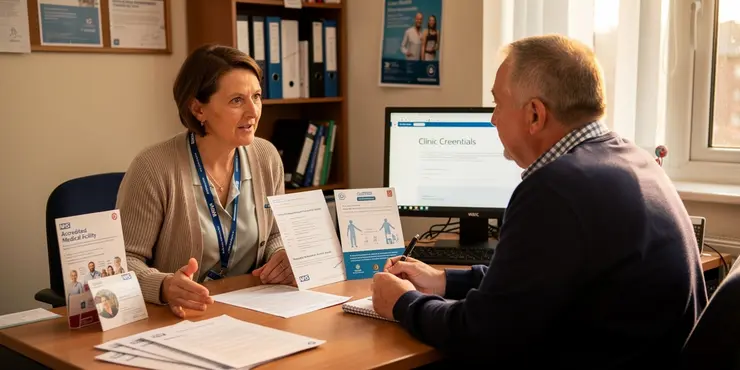
Before seeking medical treatment abroad, especially in the EU, it is crucial to verify the facility's credentials. Doing so ensures you receive high-quality care that meets safety and professional standards. Ensuring the facility is properly accredited can prevent potential health risks and ensure peace of mind.
In the UK, patients rely on trusted medical standards, and similar diligence should be applied when seeking care overseas. Verifying an EU facility’s credentials can help you maintain these standards and protect your health.
Researching Accreditation and Certifications
Accreditation is a key indicator of a facility's legitimacy and quality. It often involves independent evaluation based on specific healthcare standards. Check if the EU facility is accredited by recognized international bodies, such as the Joint Commission International (JCI) or relevant national medical boards.
Most medical facilities will display their accreditations on their websites. However, it's wise to cross-reference this information by visiting the accrediting body's official site for confirmation. Direct contact with the certifying body can provide additional assurance.
Consulting National and International Health Authorities
Contacting health authorities can provide further insights into a medical facility's credibility. In the EU, each country has its own regulatory body overseeing healthcare quality and safety. Contact the health department or equivalent authority of the country where the facility is located.
International organizations such as the World Health Organization (WHO) also offer resources and guidance. They may provide recommendations or recognition of standards that a facility adheres to, assisting in your verification process.
Reading Reviews and Seeking Recommendations
Patient reviews and ratings can offer valuable insights into the experiences of others at a given facility. Many patients share their stories and experiences online on forums, review sites, and social media. These can highlight both positive aspects and potential red flags.
Additionally, seek recommendations from healthcare professionals in the UK. GPs or specialists may have insights or connections with EU counterparts and can guide you towards reputable facilities.
Verifying Practitioners’ Qualifications
A facility's reputation is closely tied to the qualifications of its practitioners. Verify the credentials of the doctors and specialists who may treat you. Look for certifications, specializations, and memberships in professional medical associations.
Checking these qualifications can reassure you of their capability and ethical standards. Ask the facility directly for the credentials of their medical staff or check online medical directories for additional details.
Seeking Legal and Insurance Advice
Before traveling for medical treatment, it's wise to consult with a legal expert. They can help understand your rights and the legal regulations governing medical care in the EU country you're considering. This advice can be pivotal if issues arise.
Finally, contact your health insurance provider to confirm if they cover treatment in the chosen facility. They may also provide insights or recommend accredited facilities abroad, ensuring coverage is maintained in case of complications.
Frequently Asked Questions
The first step is to consult the official website of the national health authority or medical board in the specific EU country where the facility is located.
Yes, many EU countries have online databases or registries where you can check the credentials and accreditation of medical facilities.
While specific accreditation may vary by country, the European Union of Medical Specialists (UEMS) and Joint Commission International (JCI) may have relevant information about standards and accreditation in Europe.
Look for logos or certificates from recognized accrediting bodies such as JCI, and follow up directly with these organizations if needed.
Contact the accrediting body directly to confirm the facility's credentials and ask for further assistance.
Yes, you can contact the administrative department directly and request verification of their accreditation and credentials.
Yes, verifying the credentials of both the facility and its staff ensures that the medical professionals are licensed and properly qualified.
Have the facility's full name, location, and any accreditation or certificate numbers readily available when making inquiries.
While patient reviews can provide insights into service quality, they should be considered supplemental to official credential verification.
Yes, there can be legal and regulatory consequences for facilities that falsely represent their credentials.
Accreditation is typically renewed every few years, depending on the accrediting body and country regulations.
Language can be a barrier; use translation tools and seek assistance from local contacts if necessary.
Yes, they must comply with both EU-wide regulations and specific national standards for healthcare.
Yes, your country’s embassy might assist you in verifying a medical facility's credentials or direct you to appropriate local resources.
Check the websites of European healthcare associations or governmental health departments for lists of recognized accrediting bodies.
In most cases, online verification suffices, but visiting the facility for verification might be necessary for complex cases.
Inconsistent information, absence from official registries, and reluctance to provide accreditation details are red flags.
Yes, calling the institution or relevant accrediting body directly is a viable verification method.
Yes, there are consultancy firms and organizations that specialize in healthcare accreditation and verification services.
Seek alternative facilities with verified credentials and report any discrepancies to local medical boards or regulatory authorities.

Ergsy Search Results
This website offers general information and is not a substitute for professional advice.
Always seek guidance from qualified professionals.
If you have any medical concerns or need urgent help, contact a healthcare professional or emergency services immediately.
Some of this content was generated with AI assistance. We've done our best to keep it accurate, helpful, and human-friendly.
- Ergsy carefully checks the information in the videos we provide here.
- Videos shown by Youtube after a video has completed, have NOT been reviewed by ERGSY.
- To view, click the arrow in centre of video.
- Most of the videos you find here will have subtitles and/or closed captions available.
- You may need to turn these on, and choose your preferred language.
- Go to the video you'd like to watch.
- If closed captions (CC) are available, settings will be visible on the bottom right of the video player.
- To turn on Captions, click settings.
- To turn off Captions, click settings again.