
Get Answers
Assessing the Safety of an Elderly Person's Home
Ensuring the safety of an elderly person's home is crucial to prevent accidents and maintain their independence. Conducting a thorough assessment can help identify potential hazards and suggest improvements. Here's a guide to assess the safety of an elderly person's home in the UK.
Identify Fall Hazards
Falls are a major concern for the elderly. Check for tripping hazards such as loose rugs, slippery floors, and cluttered pathways. Ensure that all carpets and rugs are secured with non-slip pads. Consider removing unnecessary furniture to create clear walking paths.
Check Lighting
Proper lighting is essential to prevent accidents. Assess the lighting in each room, especially hallways, staircases, and entryways. Make sure all bulbs are functioning and consider installing brighter or additional lights if necessary. Motion-sensor lights can be beneficial in both indoor and outdoor areas.
Assess Stairs and Steps
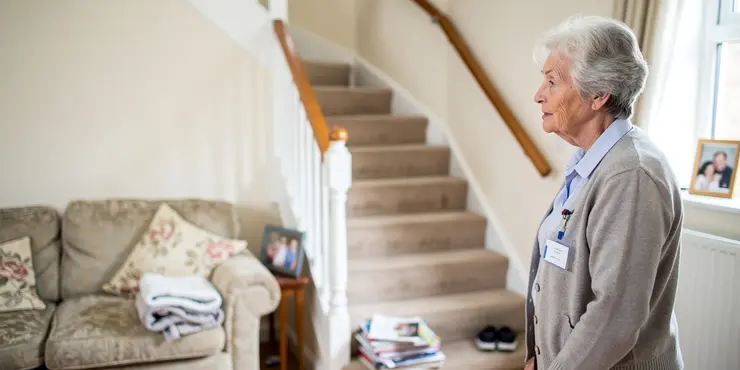
Stairs and steps can be particularly dangerous. Ensure staircases have sturdy handrails on both sides and are well-lit. Evaluate whether non-slip treads or contrasting strips on the edge of steps might be helpful. In some cases, a stairlift could be a worthwhile investment.
Review the Bathroom
Bathrooms can be hazardous due to wet surfaces. Check for secure grab rails in the bath or shower and next to the toilet. Consider a raised toilet seat and a shower chair to assist with bathing. Use non-slip mats both inside and outside the bath or shower.
Examine Fire Safety
Fire safety is critical. Verify the presence of smoke alarms on each floor and check that they are functioning correctly. Replace batteries annually and test alarms regularly. A carbon monoxide detector is also advisable, especially if gas appliances are used. Discuss an evacuation plan in the event of a fire.
Evaluate Accessibility
Ensure that the home is easily navigable. Check doorways for width to accommodate mobility aids if needed. Observe the height of countertops, cupboards, and electrical switches to ensure they are reachable without difficulty. Rearrange furniture to enhance ease of movement.
Consider General Maintenance
General maintenance is vital for safety. Verify that wires and cords are safely tucked away to prevent tripping. Inspect for any signs of damp or mould, which can affect health. Regularly check that heating systems and appliances are functioning properly.
Seek Professional Assistance
Sometimes, professional help is needed to conduct a comprehensive safety assessment. Services and charities in the UK, such as Age UK, can provide guidance and support. Occupational therapists can also offer specialized advice tailored to individual needs.
By carefully assessing these aspects, you can help create a safer and more secure environment for the elderly, enabling them to live with greater independence and peace of mind.
Checking How Safe an Older Person's Home Is
Making sure an older person's home is safe is very important. This helps stop accidents and lets them live on their own. Checking the home carefully can find problems and suggest ways to fix them. Here’s how to make an older person’s home safer in the UK.
Look for Things to Trip Over
Falling is a big problem for older people. Check for things that might cause trips, like loose rugs, slippery floors, and messy pathways. Make sure carpets and rugs have non-slip mats. You might want to move some furniture to make clear paths for walking.
Check the Lights
Good lighting helps prevent accidents. Look at the light in each room, especially in hallways, stairs, and entrances. Make sure all the lights work and consider adding more or brighter ones. Motion-sensor lights can be helpful inside and outside.
Check Stairs and Steps
Stairs and steps can be dangerous. Make sure they have strong handrails on both sides and good lighting. Think about adding non-slip treads or bright strips on the edge of steps. A stairlift might be a good idea for some homes.
Look at the Bathroom
Bathrooms can be slippery and dangerous. Make sure there are secure grab rails in the bath or shower and near the toilet. Think about adding a raised toilet seat and a shower chair to help with bathing. Use non-slip mats inside and outside the bath or shower.
Check Fire Safety
Fire safety is very important. Make sure there are smoke alarms on each floor and that they work. Change the batteries every year and test the alarms often. A carbon monoxide detector is also a good idea, especially if there are gas appliances. Talk about a plan to get out safely in case of a fire.
Check Accessibility
Make sure the home is easy to move around in. Check that doorways are wide enough for mobility aids. See if countertops, cupboards, and light switches are easy to reach. Move furniture if needed to make it easier to get around.
Look After the Home
Keeping the home in good shape is important for safety. Make sure wires and cords are out of the way to prevent tripping. Check for damp or mould, which can be bad for health. Regularly check that heating systems and appliances work properly.
Think About Getting Help from Experts
Sometimes, experts need to check how safe the home is. In the UK, services and charities like Age UK can help. Occupational therapists can also give special advice for each person’s needs.
By checking these things, you can help make an older person’s home safer. This lets them live more safely and confidently on their own.
Frequently Asked Questions
An elderly home safety assessment is a structured review of a home to identify hazards, reduce fall risks, and improve safety for older adults living independently or with support.
An elderly home safety assessment is important because it can help prevent falls, injuries, medication mistakes, and other accidents by spotting and correcting unsafe conditions in the home.
An elderly home safety assessment can be requested by older adults, family members, caregivers, healthcare providers, or social workers when there are concerns about safety, mobility, or aging in place.
An elderly home safety assessment usually checks floors, stairs, bathrooms, kitchens, lighting, entrances, handrails, smoke alarms, medications, furniture layout, and emergency access.
An elderly home safety assessment often takes between 30 minutes and 2 hours, depending on the size of the home, the number of safety concerns, and whether recommendations are discussed during the visit.
An elderly home safety assessment may be performed by an occupational therapist, home safety specialist, nurse, social worker, or trained community professional, depending on the service provider.
The cost of an elderly home safety assessment varies by provider, location, and level of detail. Some assessments are free through community programs, while others may require a fee or insurance coverage.
Common hazards found during an elderly home safety assessment include loose rugs, poor lighting, cluttered walkways, slippery bathroom surfaces, missing handrails, unsafe stairs, and hard-to-reach items.
An elderly home safety assessment can help prevent falls by identifying trip hazards, recommending grab bars and handrails, improving lighting, and suggesting safer furniture placement and flooring changes.
Yes, an elderly home safety assessment typically includes bathroom safety checks such as tub and shower access, grab bars, non-slip mats, toilet height, faucet safety, and floor slip resistance.
Yes, an elderly home safety assessment often includes kitchen safety checks such as stove safety, appliance accessibility, fire risk, storage placement, and whether the older adult can safely reach and use items.
Yes, an elderly home safety assessment usually provides recommendations for home modifications such as grab bars, ramps, improved lighting, stair railings, widened pathways, and safer flooring.
Yes, an elderly home safety assessment is very useful for people with dementia because it can identify risks such as wandering, unsafe appliance use, medication confusion, poor wayfinding, and unsecured exits.
Before an elderly home safety assessment, it helps to make a list of concerns, gather medication information, clear access to rooms, and note any recent falls, near misses, or mobility changes.
Yes, an elderly home safety assessment is often recommended after a fall to determine what caused it and to make changes that reduce the chance of another fall.
An elderly home safety assessment should be repeated whenever health, mobility, vision, or cognitive needs change, and it is also wise to review the home periodically as risks can evolve over time.
Yes, an elderly home safety assessment usually includes lighting recommendations such as brighter bulbs, night lights, motion sensors, and improved illumination in hallways, stairs, and entryways.
Yes, an elderly home safety assessment can help with medication safety by checking storage, accessibility, labeling, and organization, especially if there is a risk of confusion or missed doses.
An elderly home safety assessment focuses on how the home supports an older adult's daily function, mobility, and risk prevention, while a general home inspection focuses on the physical condition of the property.
To get started with an elderly home safety assessment, contact a healthcare provider, occupational therapist, aging services agency, or local home safety program to ask about scheduling and available services.

Ergsy Search Results
This website offers general information and is not a substitute for professional advice.
Always seek guidance from qualified professionals.
If you have any medical concerns or need urgent help, contact a healthcare professional or emergency services immediately.
Some of this content was generated with AI assistance. We've done our best to keep it accurate, helpful, and human-friendly.
- Ergsy carefully checks the information in the videos we provide here.
- Videos shown by Youtube after a video has completed, have NOT been reviewed by ERGSY.
- To view, click the arrow in centre of video.
- Most of the videos you find here will have subtitles and/or closed captions available.
- You may need to turn these on, and choose your preferred language.
- Go to the video you'd like to watch.
- If closed captions (CC) are available, settings will be visible on the bottom right of the video player.
- To turn on Captions, click settings.
- To turn off Captions, click settings again.