
Get Answers
Understanding Your Needs
When choosing a nursing home in the UK, the first step is to understand the specific needs of the individual requiring care. Consider factors such as medical needs, personal preferences, and proximity to family and friends. Assess whether the nursing home can provide specialized care for conditions like dementia or physical disabilities.
Research and Recommendations
Conduct thorough research by exploring various nursing homes in your area. Utilize online resources such as the Care Quality Commission (CQC) website to check ratings and inspection reports for each facility. Speaking to friends, family, or health professionals and reading reviews can provide valuable recommendations and insights into prospective nursing homes.
Visit Potential Nursing Homes
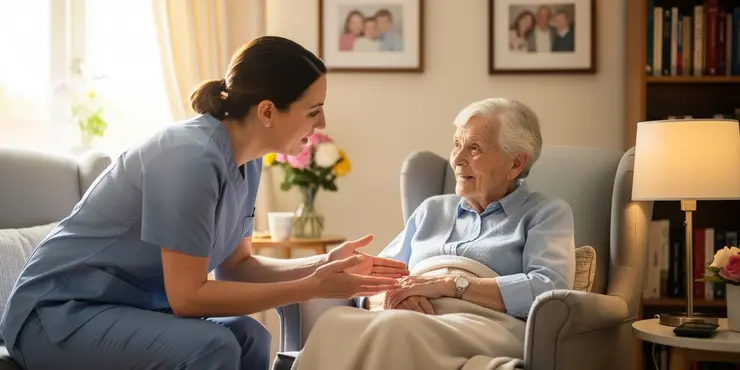
Arrange visits to potential nursing homes to get a feel for the environment and the quality of care provided. During the visit, observe the interactions between staff and residents, the cleanliness of the facilities, and the overall atmosphere. Pay attention to whether residents appear happy and well cared for.
Check Accreditation and Regulations
Ensure that the nursing home is accredited by appropriate regulatory bodies such as the CQC. Accreditation ensures that the facility meets specific standards of care and safety. Understanding the regulatory requirements can give you peace of mind that the facility adheres to high-quality care practices.
Evaluate Staff and Services
Assess the qualifications and ratio of staff to residents, as this significantly impacts the level of attention and care each resident receives. Inquire about staff training, turnover rates, and their ability to manage emergencies. Evaluate the range of services offered, such as medical care, social activities, and assistance with daily living tasks.
Consider Costs and Funding
Understand the cost structure and what is included in the fees of the nursing home. Consider the availability of funding options such as local authority assistance or continuing healthcare funding. It's important to evaluate whether the costs are sustainable for your financial situation.
Assess Facilities and Amenities
Review the available facilities and amenities, including the quality of rooms, communal areas, dining options, and outdoor spaces. Ensure they align with the needs and preferences of the prospective resident. A comfortable and well-maintained environment can significantly enhance the resident’s quality of life.
Trust Your Instincts
Ultimately, trust your instincts when choosing a nursing home. While objective factors are crucial, your intuition about whether a place feels right should also be considered. If you feel comfortable and confident in the environment and staff, it’s likely a good choice for your loved one.
Understanding What You Need
When you pick a nursing home in the UK, first think about what care the person needs. Think about their health needs, what they like, and how close the home is to family and friends. Check if the nursing home can help with things like dementia or physical disabilities.
Look for Information and Ask Around
Look up different nursing homes near you. Use online tools like the Care Quality Commission (CQC) website to see ratings and reports. Talk to friends, family, or doctors and read reviews. This can help you find good nursing homes.
Visit Nursing Homes
Go and visit nursing homes you are thinking about. See what the place is like and how they care for people. Watch how the staff treats residents, check how clean it is, and feel the overall mood. See if the residents seem happy and well cared for.
Check If It Passes the Rules
Make sure the nursing home is checked by groups like the CQC. This shows they meet standards for safety and care. Knowing this can help you feel sure they provide good care.
Look at the Staff and Services
Check how many staff are there and if they are well trained. This affects how well they can care for each person. Ask about staff training, how often staff changes, and if they are ready for emergencies. Also, see what services they offer, like medical help, fun activities, and help with everyday tasks.
Think About How Much It Costs
Understand how much the nursing home costs and what you get for that money. Look into help you can get, like local authority support or healthcare funding. Make sure the costs are something you can keep paying.
Look at the Buildings and Extras
Check out the rooms, shared areas, dining options, and outside spaces. Make sure they match what the person needs and likes. A nice and clean place can make life better for them.
Trust What You Feel
In the end, trust your feelings when choosing a nursing home. While it's important to look at the facts, also think about if the place feels right. If you feel happy and sure about the place and the staff, it might be a good fit for your loved one.
Frequently Asked Questions
Consider the location, quality of care, staff qualifications, facility safety, cleanliness, activities offered, and cost.
Visit the facility, talk to staff and residents, review state inspection reports, and check ratings from independent agencies.
A convenient location allows family and friends to visit frequently, which can have a positive impact on a resident’s well-being.
Ask about staff-to-resident ratios, medical services, meal plans, recreational activities, and policies on personal belongings.
Observe if the facility is well-maintained, odors are minimal, safety features are in place, and emergency procedures are clearly explained.
Online reviews can provide insights about others’ experiences, but they should be considered along with personal visits and official ratings.
Check if staff members are qualified, licensed, receive ongoing training, and have a compassionate approach to resident care.
Regular activities promote social engagement and mental stimulation, which are crucial for a resident’s quality of life.
Costs can vary based on location, level of care, amenities, and whether the facility is private or government-subsidized.
Medicare, Medicaid, long-term care insurance, and personal savings are common ways to finance nursing home care.
Inquire about on-site medical support, emergency procedures, access to specialists, and medication management.
State inspections ensure compliance with health and safety regulations, providing an official record of a facility’s performance.
Flexible visiting hours allow for more family interaction, which can be key for the emotional health of residents.
Ensure there are nutritious meal options, dietary accommodations, and meal plans reviewed by a nutritionist.
Some facilities have specialized programs for conditions like dementia or rehabilitation, which can be beneficial for residents with specific needs.
Check for accreditation by recognized bodies, staff certifications, and licensing status as per local regulations.
High satisfaction levels often indicate good quality of care and management practices in a facility.
Pay attention to unresponsive staff, safety hazards, unclean environments, and frequent resident complaints.
Communicate openly about the move, personalize their space, encourage visits, and work with staff for a smooth transition.
A nursing home should adhere to regulations on elder rights, maintain confidentiality, and follow ethical care guidelines.
Think about where the place is, how good the care is, how well the staff are trained, how safe the place is, how clean it is, what fun things they do, and how much it costs.
Go and look at the place. Talk to the people who work and live there. Read the state inspection reports. Check ratings from independent agencies.
If the place is close, family and friends can visit often. This is good for the people living there because it helps them feel happy and cared for.
Ask about how many staff help each person, doctors and nurses, food choices, fun activities, and rules for your things.
Look to see if the place is clean and tidy. Check if there are not many bad smells. Make sure it has safety things like fire alarms. Ask if they can tell you what to do if something goes wrong.
Online reviews can help you see what other people think. But it's good to visit the place yourself and look at official ratings too.
Make sure the staff are trained, have the right licenses, keep learning new things, and are kind to the people they care for.
Doing fun things together helps people make friends and keeps their minds active. This is really important for people to feel happy and healthy.
The cost can be different depending on where you are, the type of care you need, the things you get, and if the place is private or helped by the government.
There are different ways to pay for a nursing home.
You can use:
- Medicare
- Medicaid
- Long-term care insurance
- Your own savings
If this is hard to understand, you can ask someone to help you. Reading tools or apps can also help make reading easier.
Ask if there is a doctor or nurse nearby to help if someone gets sick. Find out what to do if there's an emergency and how to get medicine if you need it. Also, check if there are special doctors you can see if needed.
State checks help make sure places are safe and healthy. They keep records to show how well a place is doing.
When family can visit at different times, it helps people living there feel happier. Spending time with family is very important for feeling good.
Make sure there are healthy food choices. Check if special diets can be arranged, and ask a food expert to look at the meal plans.
Some places have special programs for people with conditions like dementia (troubles with memory) or who need to get better after being hurt or sick. These programs can really help people who need special care.
Make sure the school or service is approved by trusted groups. Check if the staff have the right training and certificates. Also, see if they have the right license to run in your area.
When people are happy with how they are treated, it usually means the place is taking good care of them and doing things right.
Look out for staff who do not help, things that might cause accidents, dirty places, and people living there who often complain.
Talk openly about moving. Make their room special. Visit often. Work with the staff to make things easy.
A nursing home must follow rules to protect older people's rights. They must keep personal information private and take care of people in the right way.

Ergsy Search Results
This website offers general information and is not a substitute for professional advice.
Always seek guidance from qualified professionals.
If you have any medical concerns or need urgent help, contact a healthcare professional or emergency services immediately.
Some of this content was generated with AI assistance. We've done our best to keep it accurate, helpful, and human-friendly.
- Ergsy carefully checks the information in the videos we provide here.
- Videos shown by Youtube after a video has completed, have NOT been reviewed by ERGSY.
- To view, click the arrow in centre of video.
- Most of the videos you find here will have subtitles and/or closed captions available.
- You may need to turn these on, and choose your preferred language.
- Go to the video you'd like to watch.
- If closed captions (CC) are available, settings will be visible on the bottom right of the video player.
- To turn on Captions, click settings.
- To turn off Captions, click settings again.