
Get Answers
Understanding Dementia and Its Challenges
Dementia is a broad term used to describe a range of progressive neurological disorders that affect memory, thinking, behavior, and the ability to perform everyday activities. In the UK, dementia affects a significant portion of the elderly population, posing unique challenges to individuals and their families. The progressive nature of dementia often requires tailored care solutions to ensure the well-being and safety of those diagnosed with the condition.
What is Live-in Care?
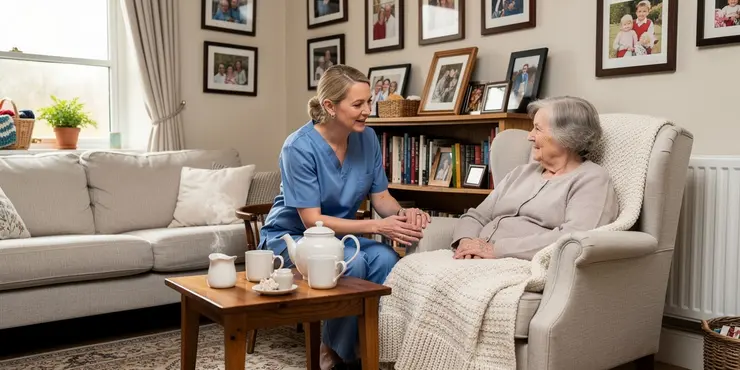
Live-in care is a service that involves a professional caregiver living in the home of the individual requiring assistance. This option allows individuals to receive continuous, personalized support in the comfort of their own homes. Unlike traditional residential care facilities, live-in care offers flexibility and is tailored to the specific needs of the individual, providing companionship, assistance with daily activities, and professional medical care as required.
Benefits of Live-in Care for Individuals with Dementia
For those living with dementia, familiar surroundings are crucial in managing symptoms and maintaining a sense of normalcy. Live-in care supports this by allowing individuals to stay in their own homes where they feel most comfortable. This continuity can be significant in reducing disorientation and agitation, common symptoms associated with dementia.
Live-in caregivers receive training in dementia care, enabling them to provide specialized support. They can assist with medication management, help maintain routines, and provide mental stimulation, which are essential in managing dementia. Familiar routines and personalized care can improve the quality of life and slow the progression of the disease.
Personalized and Quality Care
One of the key advantages of live-in care is the personalized attention individuals receive. Care plans are tailored to meet the specific needs of the person with dementia, ensuring they receive the most appropriate care possible. This individualized approach often includes activities designed to stimulate memory, encourage physical activity, and support emotional health.
Caregivers develop strong relationships with their clients, which can be reassuring for both the individual with dementia and their families. These bonds often lead to better understanding and responsiveness to the individual's needs, enhancing the overall effectiveness of care.
Conclusion
Live-in care is a viable and often beneficial option for individuals with dementia in the UK. It offers personalized and continuous support while allowing individuals to remain in the comfort and familiarity of their own homes. This approach not only enhances the quality of life for those with dementia but also provides peace of mind for their families, knowing their loved ones receive compassionate and dedicated care. While each situation is unique, live-in care is increasingly recognized as a valuable option for managing dementia's challenges effectively.
Understanding Dementia and Its Challenges
Dementia is a group of brain illnesses that make it hard to remember things, think clearly, and do everyday tasks. In the UK, many older people have dementia, which can be hard for them and their families. Dementia gets worse over time, so people need special care to keep them safe and well.
What is Live-in Care?
Live-in care means a helper lives with the person who needs extra support. This way, people can stay at home and get help throughout the day and night. It is different from living in a care home. Live-in care is flexible and matches what the person needs. It includes having a friend, help with daily tasks, and medical care when needed.
Benefits of Live-in Care for Individuals with Dementia
For people with dementia, it helps to stay in places they know well, like their home. Live-in care lets them do this. It can help them feel less confused and upset. Live-in carers know how to help people with dementia. They help with taking medicine, keeping daily routines, and playing games to think. This care helps make life better and can slow down the illness.
Personalized and Quality Care
With live-in care, people get special attention just for them. The care plan fits what the person needs to feel their best. This might include games to help remember things, exercise, and activities that make them happy. Carers and the people they help often become like friends. This makes the care better because they understand what the person needs and can help more effectively.
Conclusion
Live-in care is a good choice for helping people with dementia in the UK. It means they can stay in their own homes where they feel safe and happy. It gives people with dementia a better life and helps families feel at ease knowing their loved one is well cared for. Each person is different, but live-in care is a helpful way to deal with dementia.
Frequently Asked Questions
Live-in care for individuals with dementia involves a caregiver living in the home with the person, providing around-the-clock assistance and support for daily activities and care needs.
Live-in care provides consistent, personalized support, enabling individuals with dementia to remain in their familiar home environment while receiving tailored care and companionship.
A live-in caregiver can assist with personal care, medication management, meal preparation, housekeeping, and provide companionship and support for cognitive activities.
Yes, live-in care can be tailored to suit all stages of dementia, from early to advanced stages, by adapting care strategies to meet the individual's changing needs.
You can find a qualified live-in caregiver through reputable home care agencies that specialize in dementia care or by hiring independently with thorough background checks and interviews.
Yes, live-in care can reduce hospitalization risk by ensuring consistent care, managing health needs proactively, and providing immediate attention to potential issues.
The cost of live-in care for dementia varies based on location, level of care needed, and the caregiver's experience, but it generally ranges from $150 to $400 per day.
Yes, live-in care can be complemented with additional support, such as respite care, therapy sessions, and day programs to enhance the care experience.
Live-in caregivers typically work for several weeks or months at a time, with regular breaks arranged to prevent burnout and ensure quality care.
Challenges include caregiver burnout, managing behavioral changes, ensuring safety, and adapting care plans as dementia progresses.
Live-in care provides families with peace of mind, respite, and support, allowing them to focus on their relationship with their loved one rather than daily caregiving tasks.
Reputable home care agencies have contingency plans to provide temporary replacement caregivers if the primary caregiver gets sick or needs time off.
Live-in caregivers focus on fall prevention, use of assistive devices, medication management, and proper supervision to ensure the safety of individuals with dementia.
Yes, many live-in caregivers are specifically trained to understand dementia symptoms, effective communication strategies, and techniques to manage behavioral challenges.
Live-in caregivers engage individuals in cognitive activities, such as memory games, music therapy, and other personalized activities to stimulate mental function.
Yes, live-in care is flexible and can be adjusted to accommodate changing needs, ensuring continuous, appropriate care as dementia progresses.
Compassion, patience, empathy, adaptability, and effective communication skills are crucial qualities for a live-in caregiver providing dementia care.
Live-in caregivers are trained in techniques to de-escalate situations, redirect attention, and maintain a calm and supportive environment for the individual.
Yes, live-in caregivers can be part of a broader team providing compassionate end-of-life care, ensuring comfort and dignity for individuals with dementia.
Families can support live-in caregivers by maintaining open communication, providing necessary resources, and showing appreciation for their dedicated care.
Live-in care means a helper lives in the house with the person who has dementia. The helper is there all the time to help with daily tasks and give support.
Live-in care means someone stays with the person all the time. This helps because it gives them help that feels just right for them. It lets people with dementia stay at home, where they feel comfortable. They get the care and friendship they need.
A live-in caregiver helps with a lot of things. They help with washing and dressing. They give medicine. They make meals and help keep the house clean. They also keep you company and help with thinking games and activities.
Yes, live-in care can be changed to help people with dementia at all stages. This means from early to advanced dementia. We can change how we care to help with what the person needs.
You can use simple tools like picture cards or a daily schedule to help understand and plan daily tasks. It is also helpful to have quiet spaces for rest and play calm music to make the person feel comfortable.
You can find someone to help take care of someone who has dementia. You can ask special home care companies that are good at this, or you can find and hire someone on your own. Make sure you check their background and talk to them to see if they are the right person.
Having someone live with you to help can keep you from going to the hospital. They take care of you all the time and can spot problems early. This means they can get help quickly if needed.
The price of having someone live with and care for a person with dementia can change. It depends on where you live, how much help is needed, and how much experience the carer has. Usually, it costs between $150 and $400 each day.
Here are some ideas to help with this information:
- Ask a family member, teacher, or friend to help explain if you're confused.
- You can use a calculator to help with costs.
- If this is hard to read, try covering parts with your finger as you read along.
Yes, you can add more help to live-in care. Some extra help includes short breaks for caregivers, talking therapies, and day activities. These can make care better.
Live-in caregivers work by living with the person they are helping. They usually work for a few weeks or months before taking a break. These breaks help them rest and take care of themselves, so they can keep giving good care.
Some problems people face are caregivers getting very tired, changes in how people act, keeping everyone safe, and changing the care plan as the person's dementia gets worse.
Live-in care helps families feel calm and supported. Families can have a break, and they can enjoy time with their loved ones without worrying about taking care of them every day.
Good home care companies have backup plans. If your main helper gets sick or needs a break, they will send someone else to help you for a short time.
Live-in caregivers help keep people with dementia safe. They make sure people don't fall, use helpful tools, take medicine right, and watch over them properly.
Yes, many caregivers who live with people are trained to help them with dementia. They understand the signs of dementia and know how to talk to and care for these people. They are also trained to handle behavior that can be challenging.
Live-in caregivers help people with brain games. They might play memory games or do music therapy. They also do fun activities that help the brain work better.
Yes, having someone live with you to help is flexible. This means the help can change as you need it. It makes sure you always get the right care as dementia gets worse.
When looking after someone with dementia, it's important to be kind, patient, and understanding. You need to be able to change how you do things and talk clearly.
Live-in caregivers know how to calm things down when someone is upset. They are good at getting people to focus on something else. They make sure the place feels safe and caring for everyone.
Yes, caregivers who live with you can be part of a team that looks after people with dementia. They help make sure the person feels comfortable and respected at the end of their life.
Families can help caregivers who live with them by doing three things:
- Talk and listen to each other.
- Give them what they need to do their job.
- Say thank you for their hard work.

Ergsy Search Results
This website offers general information and is not a substitute for professional advice.
Always seek guidance from qualified professionals.
If you have any medical concerns or need urgent help, contact a healthcare professional or emergency services immediately.
Some of this content was generated with AI assistance. We've done our best to keep it accurate, helpful, and human-friendly.
- Ergsy carefully checks the information in the videos we provide here.
- Videos shown by Youtube after a video has completed, have NOT been reviewed by ERGSY.
- To view, click the arrow in centre of video.
- Most of the videos you find here will have subtitles and/or closed captions available.
- You may need to turn these on, and choose your preferred language.
- Go to the video you'd like to watch.
- If closed captions (CC) are available, settings will be visible on the bottom right of the video player.
- To turn on Captions, click settings.
- To turn off Captions, click settings again.