
Get Answers
Introduction
Dementia is a progressive neurological condition that affects memory, thinking, and behaviour. Diagnosing dementia can be complex due to the variety of symptoms and the overlap with other health conditions. Early and accurate diagnosis is crucial for effective management and planning of treatment. This guide explains how dementia is diagnosed, specifically within the UK healthcare system.
Initial Assessment
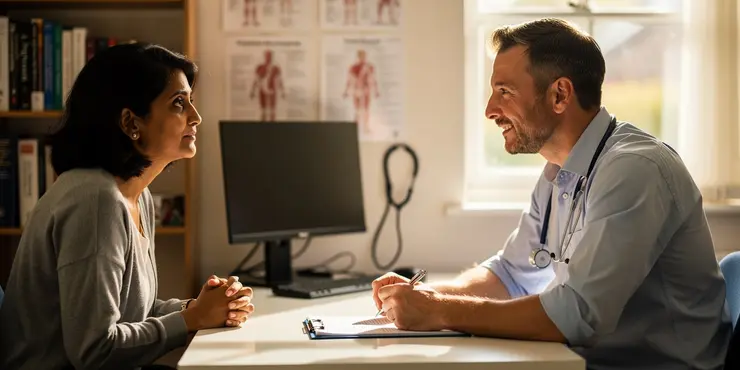
The diagnostic process typically starts with a visit to a General Practitioner (GP). Concerns about memory or cognitive function may be raised by the patient, family, or friends. The GP will take a thorough medical history and perform a basic physical examination. They may also ask questions about the patient's symptoms, daily life, and family history. Sometimes, the GP will request blood tests to rule out other conditions that could be causing similar symptoms, such as thyroid disorders or vitamin deficiencies.
Cognitive and Mental Status Tests
If dementia is suspected, the GP may administer initial cognitive tests. One commonly used test in the UK is the Mini-Mental State Examination (MMSE), which checks various mental skills, including memory, attention, language, and problem-solving. In some cases, more detailed neuropsychological testing may be required, which is usually done by a specialist.
Referral to Specialists
If cognitive tests indicate possible dementia, the GP will usually refer the patient to a specialist, often a neurologist, psychiatrist, or geriatrician, depending on the patient's symptoms and age. These specialists have more expertise in diagnosing and managing dementia and related disorders.
Imaging and Further Tests
Further assessments may include brain imaging to provide more information about the changes occurring in the brain. Common tests include Computerised Tomography (CT) scans or Magnetic Resonance Imaging (MRI), which help identify different types of dementia by highlighting brain atrophy, strokes, or other abnormalities. In some cases, a Positron Emission Tomography (PET) scan may be used to observe brain activity and changes.
Diagnosis and Care Plan
After all tests and assessments are completed, the specialist will review the results to determine a diagnosis. If dementia is diagnosed, they will discuss the type and stage of dementia with the patient and their family. Following diagnosis, a care plan will be developed to manage symptoms and plan for future needs. This plan may include medication, lifestyle changes, and support services.
Conclusion
Diagnosing dementia requires a comprehensive approach involving multiple assessments and specialist consultations. Understanding the process and available options in the UK can help patients and families prepare for the challenges of living with dementia. Early diagnosis not only aids in symptom management but also offers a chance to adjust and plan accordingly.
Introduction
Dementia is an illness that affects how the brain works. It can make it hard to remember things, think clearly, or behave the same way. It's important to find out early if someone has dementia, so they can get the right help. This guide tells you how dementia is found out in the UK.
Initial Check
The first step is to see a doctor called a General Practitioner or GP. If someone is worried about their memory or thinking, they should tell their GP. The GP will ask questions about how they feel, their daily life, and family illnesses. The GP might do a simple health check and ask for blood tests to check for other problems that might cause similar signs, like a thyroid issue or lack of vitamins.
Thinking Tests
If the GP thinks it might be dementia, they will do some tests on how the brain works. One test is called the Mini-Mental State Examination (MMSE). It checks memory, attention, language, and solving problems. Sometimes, more tests are needed, and a specialist like a neurologist will do them.
Seeing a Specialist
If the first tests show signs of dementia, the GP will send the person to a specialist doctor. This could be a neurologist, psychiatrist, or geriatrician. These doctors know more about dementia and how to help people with it.
Scans and More Tests
Specialists might use brain scans to see changes in the brain. Common scans are called CT or MRI scans. These scans help find out what type of dementia it might be. Sometimes, another scan called a PET scan is used to look at brain activity.
Finding Out and Planning
After all the tests, the specialist will decide if it is dementia and discuss it with the person and their family. They will talk about the type and stage of dementia. Then, they will make a plan to help manage life with dementia, which could include medicine and support services.
Conclusion
Finding out if someone has dementia takes a lot of steps, and several experts help in this process. Knowing what happens in the UK can help families get ready to deal with dementia. Finding out early means families can start planning and get the support they need.
Frequently Asked Questions
The first step is usually a thorough medical evaluation by a healthcare provider, which includes taking a detailed medical history and asking about changes in memory, behavior, and daily functioning.
Yes, cognitive tests are commonly used to assess memory, thinking, and problem-solving abilities.
It is important to rule out other conditions to ensure that symptoms are not caused by treatable problems such as nutritional deficiencies, thyroid issues, or depression.
Yes, brain imaging such as MRI or CT scans can be used to detect tumors, strokes, or brain shrinkage.
Blood tests can help identify medical conditions that might cause symptoms similar to dementia, such as infections or hormonal imbalances.
The MMSE is a common test used to assess cognitive function and helps gauge memory, attention, language, and other mental skills.
Doctors may ask about the patient's ability to perform daily tasks and may also ask family members about any observed changes in functionality.
Family history can help indicate if there is a genetic predisposition to dementia, particularly for early-onset forms.
No, there is no single test for dementia, and diagnosis is typically based on a combination of medical history, tests, and observations.
Neurologists, geriatricians, and neuropsychologists may all be involved in diagnosing dementia.
Yes, a psychiatric evaluation can help rule out conditions such as depression or anxiety that might mimic dementia symptoms.
Early diagnosis allows for better management of symptoms, planning for the future, and access to support and resources.
A neuropsychological test is a detailed assessment that looks at a variety of cognitive functions to help identify areas of impairment.
The process can vary but often takes several weeks to months as comprehensive evaluations are conducted.
Doctors may consider lifestyle factors such as diet, exercise, and social activity levels, which can impact cognitive health.
Genetic testing may be used in specific cases, especially if there's a strong family history of dementia.
Yes, symptoms typically need to be present and progressively worsening over a period of at least six months before a diagnosis is made.
Yes, misdiagnosis can occur, especially if symptoms are due to other conditions that mimic dementia.
Detailed accounts of symptoms and changes in behavior from both the patient and family members can be crucial for an accurate diagnosis.
A doctor might ask about memory issues, problem-solving abilities, mood changes, daily functioning, and any recent head injuries or major life events.
The first step is to see a doctor. The doctor will ask about your health and how you feel. They will want to know if you have noticed any changes in how you remember things, act, or do daily activities.
Yes, there are tests that help check how well you remember things, think, and solve problems.
We need to make sure that other problems are not causing the symptoms. These could be things we can treat, like not getting enough vitamins, problems with the thyroid gland, or feeling very sad (depression).
Yes, special pictures of the brain, like MRI or CT scans, can help doctors find things like tumors, stroke damage, or if the brain is getting smaller.
Blood tests can help doctors find out if someone is sick in ways that might look like dementia. These could be things like infections or problems with hormones.
The MMSE is a test that checks how well the brain is working. It looks at memory, attention, language, and other thinking skills.
Doctors might ask about what the patient can do every day. They may also talk to family members to see if they have noticed any changes.
Knowing about family health can show if someone might get dementia because of their genes, especially if it starts early.
No, there isn't one test to find out if someone has dementia. Doctors use a mix of your medical history, some tests, and watching how you behave to figure it out.
If you have trouble reading, you can ask someone to read it out loud for you. Tools like reading apps or recordings can also be helpful.
Doctors and specialists help find out if someone has dementia. These doctors are:
- Brain doctors (called neurologists)
- Older people's doctors (called geriatricians)
- Mind doctors (called neuropsychologists)
They work together to help people with dementia.
Yes, a special doctor visit can help check if someone has depression or anxiety. These can look like dementia, but they are not the same.
Finding out about a problem early helps you take care of symptoms, make plans, and get help and support.
A neuropsychological test is a special test that checks how well a person thinks and learns. It helps find out which parts of thinking might be difficult for them.
The process can be different for each person. It usually takes a few weeks or sometimes a few months. This is because we need to do many checks to make sure everything is right.
Doctors look at how you live your life. They check things like what you eat, how much you move around, and how often you hang out with friends. All these things can affect how your brain works.
Doctors might use special tests to look at your genes. This can happen if many people in your family have had dementia.
Yes, symptoms usually need to be there and getting worse for at least six months before a doctor can say what it is.
Yes, doctors can make mistakes when diagnosing. This can happen because other illnesses look like dementia.
It is important for both the person who is sick and their family to talk about any symptoms or changes in behavior. This helps doctors figure out what is wrong.
The doctor might ask questions about:
- Forgetting things
- Solving problems
- Feeling sad or moody
- Doing everyday activities
- Any head injuries
- Big changes in your life
Here are some helpful tips:
- Make a list of things you have noticed
- Write down any questions you want to ask
- Bring someone with you to the appointment if you can

Ergsy Search Results
This website offers general information and is not a substitute for professional advice.
Always seek guidance from qualified professionals.
If you have any medical concerns or need urgent help, contact a healthcare professional or emergency services immediately.
Some of this content was generated with AI assistance. We've done our best to keep it accurate, helpful, and human-friendly.
- Ergsy carefully checks the information in the videos we provide here.
- Videos shown by Youtube after a video has completed, have NOT been reviewed by ERGSY.
- To view, click the arrow in centre of video.
- Most of the videos you find here will have subtitles and/or closed captions available.
- You may need to turn these on, and choose your preferred language.
- Go to the video you'd like to watch.
- If closed captions (CC) are available, settings will be visible on the bottom right of the video player.
- To turn on Captions, click settings.
- To turn off Captions, click settings again.