
Speak To An Expert
Get clear, personalised advice for your situation.
Jot down a few questions to make the most of your conversation.
Introduction
Measles, a highly contagious viral disease, is making a problematic resurgence in the UK.
Despite being preventable through vaccination, cases have been increasing in recent years.
Understanding the causes of this rise is crucial to controlling the outbreak.
Decline in Vaccination Rates
A significant factor in the rise of measles is the decline in vaccination rates.
The MMR (measles, mumps, and rubella) vaccine requires two doses for complete immunity.
However, some parents are hesitant to vaccinate their children due to misinformation and fear.
Misinformation and Vaccine Hesitancy
Vaccine hesitancy has been fueled by false information linking vaccines to autism.
Even though numerous studies have debunked these claims, distrust persists in some communities.
Social media amplifies misinformation, complicating public health efforts.
Impact of the COVID-19 Pandemic
The COVID-19 pandemic disrupted routine healthcare services, including vaccinations.
Many parents postponed or missed their children's vaccinations due to lockdowns and restrictions.
This created gaps in immunization coverage, leading to increased vulnerability to outbreaks.
International Travel and Imported Cases
International travel can introduce measles cases to the UK from regions with lower vaccination rates.
Once introduced, measles can spread easily, especially in populations with vaccination gaps.
Travel-related cases highlight the global nature of disease control efforts.
Addressing the Rise in Cases
Combating the rise in measles cases requires a multifaceted approach.
Public health campaigns need to emphasize the safety and effectiveness of vaccinations.
There is also a need for robust strategies to counter misinformation online.
Government and Healthcare Initiatives
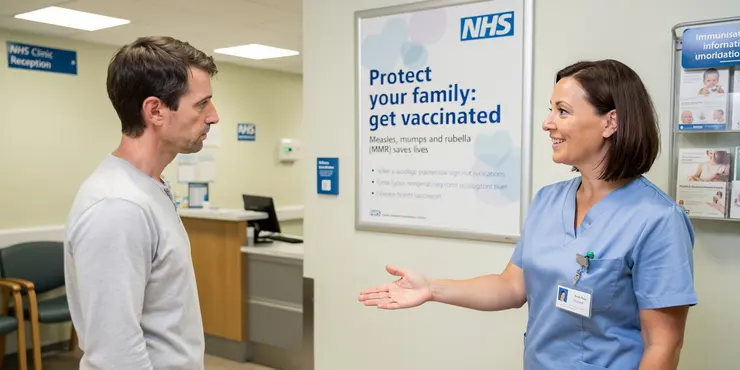
The NHS and Public Health England have launched initiatives to catch up on missed vaccinations.
Efforts include reminders for parents and outreach in communities with low vaccination rates.
This proactive approach aims to restore herd immunity and prevent further outbreaks.
Conclusion
The rise in measles cases in the UK can be attributed to several interrelated factors.
Addressing this issue will require cooperation between the government, healthcare providers, and the public.
Reinforcing trust in vaccinations is key to protecting public health against measles.
Frequently Asked Questions
Measles is a highly contagious viral disease characterized by symptoms such as fever, cough, runny nose, inflamed eyes, and a red, blotchy skin rash.
Measles is spread through respiratory droplets from an infected person's coughs or sneezes. It can also live on surfaces and remain infectious for several hours.
The rise in measles cases in the UK is largely attributed to declining vaccination rates, international travel, and exposure to regions with ongoing outbreaks.
Vaccination rates are declining due to vaccine misinformation, complacency, and barriers to vaccine access.
The MMR vaccine, which stands for measles, mumps, and rubella, is used to prevent measles.
The MMR vaccine is highly effective, providing about 97% protection against measles after two doses.
Unvaccinated individuals, including young children and those with compromised immune systems, are most at risk for contracting measles.
Yes, adults who haven't been vaccinated or are unsure of their vaccination status can receive the MMR vaccine.
Symptoms of measles include high fever, cough, runny nose, inflamed eyes, and a characteristic rash.
Preventing the spread of measles involves increasing vaccination coverage, ensuring timely booster doses, and isolating confirmed cases.
Yes, measles is a notifiable disease, meaning healthcare professionals must report suspected cases to local health authorities.
International travel can contribute to measles outbreaks as travelers may be exposed abroad and bring the virus back to the UK.
Yes, various regions continue to experience measles outbreaks, often in areas with low vaccination coverage.
Misinformation can lead to vaccine hesitancy, resulting in lower vaccination rates and increased susceptibility to outbreaks.
Complications from measles can include severe diarrhea, ear infections, pneumonia, encephalitis, and even death.
Measles is diagnosed through clinical assessment of symptoms and can be confirmed with a blood test for measles-specific antibodies.
Yes, the UK government has initiated campaigns to improve vaccination rates and public education on the importance of immunization.
There is no specific antiviral treatment for measles; care is supportive, focusing on relieving symptoms and addressing complications.
Herd immunity can be effective if a high percentage of the population is vaccinated, thereby reducing the overall spread of the virus.
If measles is suspected, parents should contact their healthcare provider immediately for advice and avoid public places to prevent spread.

Ergsy Search Results
This website offers general information and is not a substitute for professional advice.
Always seek guidance from qualified professionals.
If you have any medical concerns or need urgent help, contact a healthcare professional or emergency services immediately.
Some of this content was generated with AI assistance. We've done our best to keep it accurate, helpful, and human-friendly.
- Ergsy carefully checks the information in the videos we provide here.
- Videos shown by Youtube after a video has completed, have NOT been reviewed by ERGSY.
- To view, click the arrow in centre of video.
- Most of the videos you find here will have subtitles and/or closed captions available.
- You may need to turn these on, and choose your preferred language.
- Go to the video you'd like to watch.
- If closed captions (CC) are available, settings will be visible on the bottom right of the video player.
- To turn on Captions, click settings.
- To turn off Captions, click settings again.