
Speak To An Expert
Get clear, personalised advice for your situation.
Jot down a few questions to make the most of your conversation.
Introduction
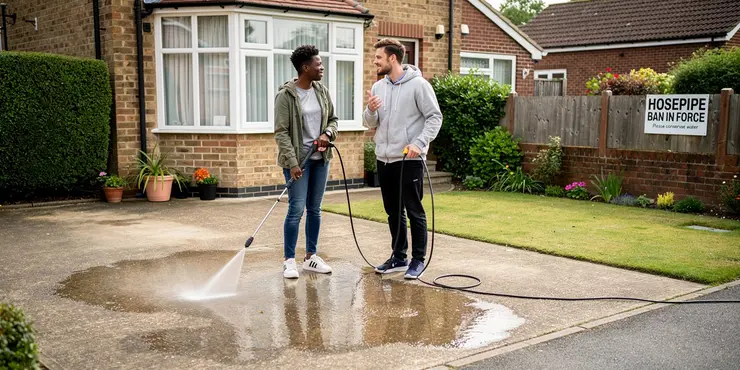
During periods of prolonged dry weather in the UK, water companies may impose a hosepipe ban, officially known as a Temporary Use Ban (TUB). These bans are designed to conserve water by restricting certain non-essential uses of water. One common question during these times is whether using a pressure washer is permitted under such restrictions.
Understanding Hosepipe Bans
A hosepipe ban typically restricts the use of hosepipes for activities such as watering gardens, filling paddling pools, and cleaning cars. The exact terms of the ban, including what is and is not allowed, are set by each water company and can vary across regions. In general, the aim is to reduce water consumption and ensure that there is enough available for essential functions, such as drinking water and sanitation.
Pressure Washers During a Ban
Pressure washers, which are high-powered cleaning devices, use less water compared to traditional hoses because they emit water at a higher pressure, making the cleaning process more efficient. However, their use during a hosepipe ban is not always clear-cut. Whether or not you can use a pressure washer legally during a hosepipe ban usually depends on the specific terms set by the water company imposing the ban.
Some water companies explicitly state that pressure washers are included in the ban, while others do not mention them, creating a grey area. It is therefore crucial to check the specific guidelines issued by your local water provider to determine if pressure washers are permitted.
Exceptions and Permitted Uses
In some cases, exemptions may apply. Commercial operators who rely on pressure washers for business, such as professional cleaners or car washes, might be allowed to continue their work depending on the terms of the ban. Additionally, individuals with health issues or disabilities that make manual methods difficult may also be exempted under certain conditions. Users should seek clarification from their water supplier regarding any potential exemptions.
Conclusion
In conclusion, whether you can use a pressure washer during a hosepipe ban in the UK depends largely on the regulations put forth by your local water company. It is important to stay informed about these rules and adhere to them, both to avoid fines and to contribute to the conservation of water resources during times of scarcity. By understanding and respecting the specific terms of hosepipe bans, individuals can help ensure sustainable water use during drought conditions.
Introduction
Sometimes, when it does not rain much in the UK, there is less water available. To save water, companies might say there is a "hosepipe ban." This means you can't use water in certain ways that are not really important. People often ask if they can use a pressure washer during a hosepipe ban.
What is a Hosepipe Ban?
A hosepipe ban stops people from using hosepipes for things like watering gardens, filling small pools, and washing cars. The rules about hosepipe bans are different depending on where you live. The goal is to save water, so there is enough for important things like drinking and cleaning.
Can You Use Pressure Washers?
Pressure washers are strong cleaning tools that use less water because they spray with force. But using them during a hosepipe ban might not be allowed. It depends on what the water company in your area says. Some companies do not allow pressure washers, while others do not say anything about them. You need to check the rules from your local water company.
Exceptions to the Rules
Sometimes, there are special rules. People who use pressure washers for work, like car washing businesses, might still be allowed to use them. If someone has trouble using manual methods because of health or disability, they might be allowed to use a pressure washer. It is important to ask your water supplier if you think you have a special reason to use a pressure washer.
Conclusion
In the end, if you can use a pressure washer depends on the water rules where you live. Make sure to know what these rules are and follow them. This helps you avoid getting into trouble and helps save water during dry times. By knowing the rules, we can all help make sure there is enough water to go around.
Frequently Asked Questions
A hosepipe ban is a water use restriction implemented by water companies or government authorities, typically during drought conditions to conserve water.
A hosepipe ban generally restricts the use of hosepipes and similar equipment for watering gardens, washing cars, or filling pools, but the specific conditions can vary.
It may be considered a violation depending on the specific restrictions of the hosepipe ban in your area. It's important to check with your local water authority.
Exceptions can vary. Some regions may allow pressure washers if they are water-efficient or used for essential purposes, but this is not universal.
You should check with your local water authority or the specific regulations of the hosepipe ban in your area for guidance.
Penalties can range from fines to legal action, depending on local regulations and the nature of the violation.
Some businesses may have exemptions, particularly if they provide essential services, but they should verify with local authorities.
The source of power (electric or gas) typically does not affect the regulations; it's usually about water use.
Pressure washers can consume significant amounts of water, so restricting them helps conserve water during shortages.
Alternatives include bucket and sponge cleaning or using biodegradable waterless cleaning products.
Yes, some pressure washers are designed to be water-efficient, but their use may still be restricted during a hosepipe ban.
No, regulations and enforcement can vary by region based on water availability and local policies.
Reports can usually be made to the local water authority, who will take appropriate action.
Using collected rainwater may be permitted, but you should confirm with local regulations.
Local water authorities or government bodies are typically responsible for enforcing hosepipe bans.
The duration can vary widely depending on weather conditions and water supply levels.
Some regions may offer exemptions for individuals with disabilities, but this varies by locale and needs confirmation.
Yes, you can purchase a pressure washer, but you should not use it if a ban applies to its use.
Different countries have different water management strategies, so the implementation of hosepipe bans varies.
Cease use immediately and check with your local water authority for any necessary steps or disclosures.
A hosepipe ban means you can't use a hose to water your garden or wash your car. The water company or the government might say this when there isn't enough rain and we need to save water.
A hosepipe ban means you cannot use hosepipes for some things like watering gardens, cleaning cars, or filling pools. The rules might be a little different in some places.
You might be breaking the rules if there is a hosepipe ban where you live. It's a good idea to ask your local water company to be sure.
Sometimes, there are special rules. In some places, you can use pressure washers if they save water or if you really need them. But this is not true everywhere.
Ask your local water company or the people who make the rules about using hoses. They will tell you what to do.
If someone breaks a rule, they might have to pay money or even go to court. This depends on what local rules say and how serious the problem is.
Some businesses might have special rules.
This is true if they give important services that people need.
They should check with local government to be sure.
Rules about using water are important. It doesn't matter if the machine uses electricity or gas.
Pressure washers use a lot of water. Limiting how much they are used saves water when there is not enough.
You can clean with a bucket and sponge. Another way is to use special cleaning products that don't need water and are safe for the earth.
Yes, some pressure washers use less water. But you may not be allowed to use them if there is a hosepipe ban.
No, rules and checks can be different in each area. This depends on how much water there is and the local rules.
You can tell the local water authority if there is a problem with water. They will help fix it.
You might be able to use rainwater that you collect. But you should check the rules where you live first.
Local water companies or the government make the rules about hosepipe bans.
The time it takes can be different. It depends on the weather and how much water there is.
Some places might have special rules for people with disabilities, but it depends on where you are. It's important to check and make sure.
Yes, you can buy a pressure washer. But don't use it if there is a rule that says you can't.
Each country takes care of water in its own way. This means that rules about using hosepipes can be different in each place.
Stop using it right away. Ask your local water authority what you need to do next. They can help you with any important information.

Ergsy Search Results
This website offers general information and is not a substitute for professional advice.
Always seek guidance from qualified professionals.
If you have any medical concerns or need urgent help, contact a healthcare professional or emergency services immediately.
Some of this content was generated with AI assistance. We've done our best to keep it accurate, helpful, and human-friendly.
- Ergsy carefully checks the information in the videos we provide here.
- Videos shown by Youtube after a video has completed, have NOT been reviewed by ERGSY.
- To view, click the arrow in centre of video.
- Most of the videos you find here will have subtitles and/or closed captions available.
- You may need to turn these on, and choose your preferred language.
- Go to the video you'd like to watch.
- If closed captions (CC) are available, settings will be visible on the bottom right of the video player.
- To turn on Captions, click settings.
- To turn off Captions, click settings again.