
Get Answers
Introduction to Hosepipe Bans
Hosepipe bans, also known as water use restrictions, are temporary prohibitions on the use of hosepipes for certain activities, typically enacted during periods of drought or anticipated water shortages. These bans are measures used to conserve water and ensure that essential water needs for people and ecosystems are met.
Who Enforces Hosepipe Bans?
In the United Kingdom, hosepipe bans are primarily enforced by water companies. These companies are responsible for managing and maintaining the water supply in their respective regions. When a water company determines that water levels are critically low or that there is an impending shortage, they may impose a hosepipe ban to conserve water. The enforcement of these bans falls under the jurisdiction of the individual water company that imposes the restriction.
Role of Water Companies
Water companies in the UK operate as private entities but are regulated by the government through entities like Ofwat, the Water Services Regulation Authority. These companies have the authority to impose hosepipe bans as part of their statutory duties to ensure an adequate supply of water to their customers. They monitor water reservoirs, aquifers, and other sources to determine when a hosepipe ban might be necessary. When a decision is made, the water company is responsible for publicly announcing the ban and detailing the restrictions involved.
Government and Regulatory Bodies
While water companies are the primary enforcers of hosepipe bans, regulatory bodies such as Ofwat and the Environment Agency play supportive roles. Ofwat ensures that water companies adhere to regulations and provide acceptable service levels, while the Environment Agency monitors environmental conditions that might necessitate a hosepipe ban. The Department for Environment, Food & Rural Affairs (DEFRA) also provides guidance and oversight concerning water conservation and usage policies.
Implementation and Compliance
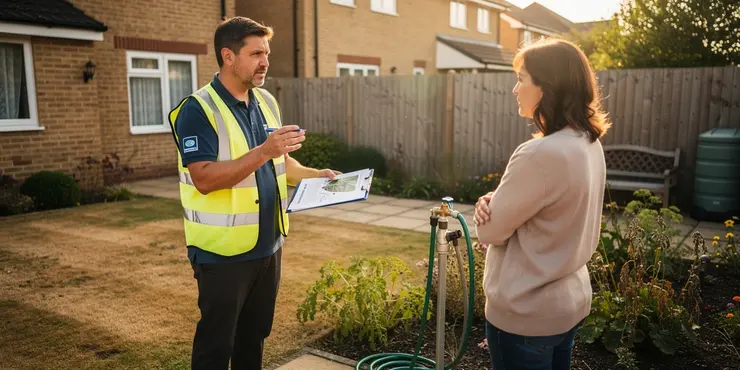
Once a hosepipe ban is announced, water companies expect affected customers to comply with the restrictions outlined. This typically includes restrictions on watering gardens, filling swimming pools, and other non-essential uses of water supplied via hosepipes. Water companies may engage in awareness campaigns to inform customers of the necessity and details of the ban. In the case of noncompliance, water companies have the authority to impose fines, although enforcement is generally more focused on awareness and voluntary compliance.
Conclusion
Hosepipe bans in the UK are enforced by water companies, with oversight from regulatory bodies like Ofwat and the Environment Agency. While companies have the authority to impose these restrictions, they also work to ensure that the public is informed and compliant, relying on a combination of public awareness and the possibility of fines to enforce the bans effectively.
Introduction to Hosepipe Bans
Hosepipe bans stop people from using hosepipes for some activities for a short time. These bans usually happen when there is not much rain or when water is running low. The bans help save water so there is enough for everyone and for nature.
Who Enforces Hosepipe Bans?
In the UK, water companies make sure people follow hosepipe bans. These companies take care of the water supply in different areas. If water is very low, a water company might start a hosepipe ban. The company in charge of the area will tell people what they can’t do with their hosepipes.
Role of Water Companies
Water companies in the UK are private businesses. The government checks on them through a group called Ofwat. Water companies can start hosepipe bans if needed. They keep an eye on water levels in places like lakes and underground. If water is too low, they will decide if a ban is needed. Then, they tell everyone about the ban and what they can or cannot do.
Government and Regulatory Bodies
Water companies enforce hosepipe bans, but they get help from groups like Ofwat and the Environment Agency. Ofwat makes sure companies follow the rules and do a good job. The Environment Agency checks the environment to see if a ban is needed. Another group called DEFRA helps with advice on how to save water and use it wisely.
Implementation and Compliance
When a hosepipe ban starts, people should follow the rules. This means not using a hosepipe for things like watering gardens or filling pools. Water companies tell people why the ban is important and what the rules are. If someone breaks the rules, they might have to pay a fine. But usually, companies just want people to understand and help save water.
Conclusion
Hosepipe bans in the UK are run by water companies with help from groups like Ofwat. Water companies can tell people not to use hosepipes to save water. They make sure people know about the bans and try to get everyone to follow the rules by explaining and sometimes giving fines.
Frequently Asked Questions
In the UK, water companies are responsible for enforcing hosepipe bans.
Water companies have the authority under the Water Industry Act to enforce hosepipe bans and can impose fines on those who violate the ban.
Local councils do not typically enforce hosepipe bans; enforcement is primarily the responsibility of water companies.
Violating a hosepipe ban can result in a fine, typically up to £1,000 in the UK.
Yes, there are often exceptions to hosepipe bans for activities such as watering food crops, and for those with mobility issues.
No, the police do not enforce hosepipe bans. It is the responsibility of the water companies.
Water companies can conduct spot checks and respond to reports from the public regarding non-compliance.
Yes, members of the public can report suspected violations to their local water company.
Yes, non-compliance can lead to legal proceedings and fines imposed by water companies.
Water companies inform the public about hosepipe bans through announcements on their websites, social media, and sometimes local news.
A hosepipe ban is a restriction placed by water companies to limit the use of hosepipes for activities like watering gardens or washing cars during water shortages.
Hosepipe bans are implemented to conserve water during periods of drought or when water resources are low.
Yes, businesses may also be subject to hosepipe bans, though they can sometimes apply for exemptions.
Hosepipe bans generally cover the use of hosepipes for watering gardens, washing vehicles, and similar activities, but specific restrictions can vary.
The duration of a hosepipe ban depends on the severity of the water shortage; it can last from a few weeks to several months.
Yes, commercial properties can face fines similar to residential properties if they do not comply with a hosepipe ban.
Individuals can contact their water company to discuss specific circumstances, but generally, hosepipe bans cannot be appealed.
Yes, water companies might impose varying levels of restrictions depending on the regional water scarcity situation.
Individuals with specific needs, such as health-related issues or specific businesses like nurseries, can apply to their water company for exemptions.
You can check your local water company's website or contact them directly to find out if there is a hosepipe ban in your area.
In the UK, water companies make the rules about hosepipe bans.
Water companies can say "no" to using hosepipes if there is not enough water. This is called a hosepipe ban. If you use a hosepipe when you are not allowed, you might have to pay money as a fine.
Local councils do not usually check if people are using hosepipes during bans; water companies are the ones who check and enforce the rules.
If you break the rules and use a hosepipe when you are not allowed to, you might have to pay money. This money can be a lot, up to £1,000. This happens in the UK.
Yes, sometimes there are special rules about hosepipe bans. People can use hosepipes to water food plants or if they have trouble moving around.
No, the police do not make sure you follow hosepipe bans. The water companies do this.
Water companies can do surprise checks. They also listen to people’s reports if rules are not followed.
Yes, people can tell their local water company if they see something wrong.
If you do not follow the rules, you might get in trouble with the law, and water companies might make you pay money.
Water companies tell people about hosepipe bans. They use their websites, social media, and sometimes local news to make announcements.
A hosepipe ban is when water companies say you cannot use a hosepipe. This is to save water when there isn't much.
Hosepipe bans mean you can't use a hosepipe to water your garden or wash your car. This helps save water. We need to do this when there is not much rain, or when our water is running low.
Yes, businesses might have to follow hosepipe bans too. But sometimes they can ask for special permission to keep using them.
When there is a hosepipe ban, you cannot use a hose to water your garden or wash your car. The rules can be a bit different depending on where you live.
The hosepipe ban length depends on how bad the water shortage is. It can last a few weeks or many months.
Yes, businesses can get in trouble like homes if they break the hosepipe ban rules.
You can call or talk to your water company to ask them questions. But, usually, if they say "no hosepipes," you cannot change their mind.
Yes, water companies might use different rules if there is not enough water in some areas.
People with special needs, like health problems or if they run a nursery, can ask their water company for help with special rules.
You can look on your water company’s website or call them to see if you can use a hosepipe at home.

Ergsy Search Results
This website offers general information and is not a substitute for professional advice.
Always seek guidance from qualified professionals.
If you have any medical concerns or need urgent help, contact a healthcare professional or emergency services immediately.
Some of this content was generated with AI assistance. We've done our best to keep it accurate, helpful, and human-friendly.
- Ergsy carefully checks the information in the videos we provide here.
- Videos shown by Youtube after a video has completed, have NOT been reviewed by ERGSY.
- To view, click the arrow in centre of video.
- Most of the videos you find here will have subtitles and/or closed captions available.
- You may need to turn these on, and choose your preferred language.
- Go to the video you'd like to watch.
- If closed captions (CC) are available, settings will be visible on the bottom right of the video player.
- To turn on Captions, click settings.
- To turn off Captions, click settings again.