
Get Answers
Introduction
Hosepipe bans, also known as temporary use bans, are restrictions implemented during periods of drought to conserve water. These bans are commonly introduced by water companies in the UK when water levels in reservoirs, rivers, and aquifers become dangerously low. While household water use is directly impacted, there’s often confusion about whether public spaces like parks and gardens are also subject to these restrictions. This article will explore the applicability of hosepipe bans to public parks and gardens in the UK.
Understanding Hosepipe Bans
Hosepipe bans are a legal measure used by water companies to manage water consumption. Under a typical hosepipe ban, the use of hosepipes or similar apparatus for watering private gardens or cleaning private vehicles is prohibited. The primary goal is to reduce the demand on the water supply system during periods of scarcity. These bans can also include restrictions on filling swimming pools, cleaning patios or driveways, and watering lawns. Violating these restrictions can result in fines, emphasizing the importance for the public to adhere closely to the guidelines set by water authorities.
Application to Public Parks and Gardens
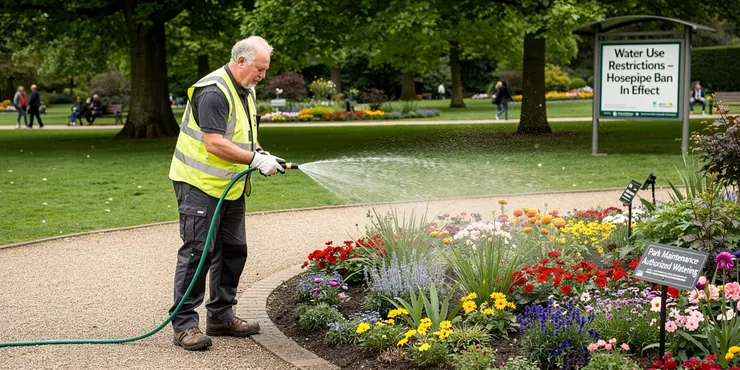
Public parks and gardens, while heavily reliant on water for maintenance, often have exemptions from hosepipe bans. These spaces are typically managed by local councils or other municipal bodies. The rationale behind these exemptions is the role public parks play in community well-being, providing essential green spaces for recreation and mental health. Maintaining the aesthetic and ecological condition of these areas can be seen as a priority.
However, it is important to note that while exemptions exist, local councils are still encouraged to minimize water usage and implement efficient watering practices. This could include using alternative water sources such as boreholes or greywater recycling to reduce reliance on the main water supply. In some cases, advanced irrigation technology, like drip-feeding systems, may be utilized to optimize water use.
Conclusion
In summary, although hosepipe bans have a significant impact on individual water consumption in the UK, their application to public parks and gardens often comes with exemptions. These exemptions recognize the value of public green spaces and their maintenance. Nonetheless, responsible water usage practices remain crucial for local councils to support overall water conservation efforts. During a ban, it is beneficial for park managers to strike a balance between maintaining these vital community resources and adhering to the broader need to conserve water.
Introduction
A hosepipe ban means you can't use hosepipes to save water during a drought. This happens when there isn't enough water in lakes or rivers. In the UK, water companies tell people when they can't use hosepipes at home. People often wonder if this rule applies to parks and gardens too. Let's find out if parks and gardens have to follow these rules.
What's a Hosepipe Ban?
Water companies use hosepipe bans to stop people from using too much water. When there is a ban, you can't use hosepipes to water your garden or wash your car. This helps save water when there isn't much available. The ban might also mean you can't fill swimming pools or wash the driveway. If you break the rules, you might have to pay money. So, it is important to follow the water company's rules to save water.
Parks and Gardens
Parks and gardens are very important and need water to stay nice. Usually, they don't have to follow hosepipe bans. Local councils take care of these places. Parks help people feel happy and give them a place to relax. So, they are allowed to use water to keep parks looking good.
Even though parks can use water, local councils need to be careful not to waste it. They might find other ways to get water, like using rainwater or recycled water. They can also use special watering systems that do not waste a lot of water.
Conclusion
In short, hosepipe bans affect how people at home use water in the UK, but parks and gardens usually do not have to follow these bans. Parks are important for communities because they provide nice green spaces. But, it's still important for councils to use water carefully. During a ban, park managers should use just enough water to keep parks nice while also trying to save water.
Frequently Asked Questions
Yes, hosepipe bans often apply to public parks and gardens to conserve water during drought conditions.
Local water authorities typically decide the specifics of hosepipe bans, including whether they apply to public parks.
Exemptions may exist for essential maintenance or if the park uses non-potable water sources, but these vary by region.
Yes, parks may use alternative methods like drip irrigation or watering cans, depending on the restrictions.
Information is usually provided by local councils, park departments, or the water company.
Penalties can vary but often include fines imposed on the managing bodies of the parks.
Public gardens may have specific restrictions, but they are generally included in hosepipe bans.
Including parks in hosepipe bans helps conserve water resources and ensures fair usage during shortages.
No, the implementation and specifics of hosepipe bans can vary by region and local water authority policies.
Yes, the use of rainwater is generally allowed and encouraged during hosepipe bans.
Hosepipe bans may limit watering schedules, potentially affecting grass and plant health, but parks may adapt using alternative methods.
Sports fields are typically included in hosepipe bans, although there may be exceptions for safety reasons.
Alternatives include using drought-resistant plants, mulching, and efficient irrigation systems.
New plantings may receive special consideration, sometimes allowing limited watering to ensure establishment.
Parks may work with local authorities to discuss necessary exemptions or alternative measures.
Hosepipe bans are usually imposed during droughts or periods of low rainfall, not necessarily year-round.
Yes, public awareness campaigns often accompany hosepipe bans to promote water conservation efforts.
The duration varies depending on water levels and weather conditions, and can last from weeks to months.
Yes, park management can be held liable and face penalties if they violate hosepipe bans.
Public consultations may be held by local authorities when setting out the terms of a hosepipe ban, allowing community input.
Yes, when there is not enough water, using hosepipes is often not allowed. This rule can be for public parks and gardens, too.
Your local water company chooses the rules for using hosepipes. They will say if people can or cannot use hosepipes in public parks.
Sometimes, rules are different if a park needs fixing or uses water that’s not for drinking. But this can change depending on where you are.
Yes, parks can use different ways to water plants.
They might use drip irrigation.
They might use watering cans.
It depends on the rules they have to follow.
Using pictures or videos can help understand these methods better.
Local councils, park departments, or the water company usually give this information.
Penalties can be different. Usually, they are fines. This means the park managers have to pay money if they break the rules.
Most public gardens may have some rules. Usually, hosepipe bans mean public gardens can't use them either.
Stopping people in parks from using hosepipes saves water. This way, everyone can share the water when there is not much of it.
No, hosepipe bans are not the same everywhere. Different places have different rules about hosepipe bans, because of their own water policies.
Yes, you can usually use rainwater when there is a hosepipe ban. This is a good thing to do.
Sometimes, there are rules that stop us from using hoses to water plants. This might happen because there isn't enough water. When this happens, grass and plants in parks might not get enough water.
But don't worry! Parks can find other ways to water plants. This helps keep them healthy and green.
If understanding this is difficult, try using pictures or videos to learn more about it. You can also ask someone to explain it in a different way. This can help you understand better.
Sports fields usually cannot use hosepipes when there is a ban. But, sometimes they can if it is important for safety.
You can try other things like planting plants that don’t need much water, putting mulch on the soil, and using water-saving watering systems.
When you plant new plants, you might be able to water them a little bit to help them grow strong.
Parks might talk with local councils to find special rules or other ways to help.
Hosepipe bans happen when there is not enough rain or water. They do not last all year.
Yes, when there's a hosepipe ban, there are usually campaigns to tell people about it and to save water.
The time it takes can be different. It depends on how much water there is and the weather. It can take a few weeks or even a few months.
Yes, park managers can get in trouble and pay fines if they break hosepipe rules.
Sometimes, when there is a hosepipe ban, local leaders ask people what they think about it. This gives people a chance to share their ideas.

Ergsy Search Results
This website offers general information and is not a substitute for professional advice.
Always seek guidance from qualified professionals.
If you have any medical concerns or need urgent help, contact a healthcare professional or emergency services immediately.
Some of this content was generated with AI assistance. We've done our best to keep it accurate, helpful, and human-friendly.
- Ergsy carefully checks the information in the videos we provide here.
- Videos shown by Youtube after a video has completed, have NOT been reviewed by ERGSY.
- To view, click the arrow in centre of video.
- Most of the videos you find here will have subtitles and/or closed captions available.
- You may need to turn these on, and choose your preferred language.
- Go to the video you'd like to watch.
- If closed captions (CC) are available, settings will be visible on the bottom right of the video player.
- To turn on Captions, click settings.
- To turn off Captions, click settings again.