
Get Answers
How is Jaundice in Newborns Treated?
Jaundice is a common condition in newborns, manifested by a yellowing of the skin and eyes. This occurs due to high levels of bilirubin, a substance produced during the normal breakdown of red blood cells. Although jaundice often resolves without treatment, in some cases, medical intervention is necessary to prevent complications. Understanding how jaundice is treated in newborns can help parents manage the condition effectively.
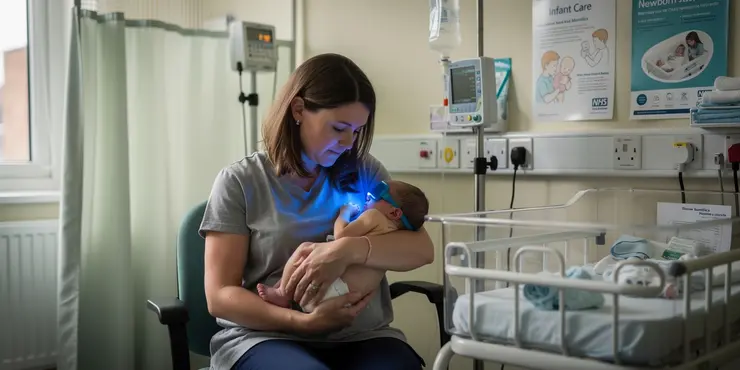
In the UK, the treatment for jaundice in newborns typically depends on the baby's bilirubin levels, age, and overall health. The primary goal of treatment is to lower bilirubin levels to avoid potential brain damage. One of the most common and effective treatments is phototherapy. This involves placing the baby under a special blue light that helps break down bilirubin in the skin, allowing it to be excreted more easily by the liver.
Phototherapy can be administered through overhead lamps or light-emitting mattresses, and it is generally well tolerated by infants. During phototherapy sessions, the baby's eyes are protected with special covers, and it is important to ensure adequate hydration, usually achieved through increased feeding. The duration of phototherapy can vary, but it typically spans several hours to overnight, with breaks for feeding and care.
In more severe cases, when bilirubin levels do not decrease adequately with phototherapy, or if the condition progresses rapidly, more intensive treatments may be required. One such treatment is an exchange transfusion. This procedure involves gradually replacing the newborn’s blood with fresh donor blood. Exchange transfusion reduces bilirubin levels quickly by directly removing bilirubin from the bloodstream and diluting bilirubin levels with new blood, providing immediate relief from the condition.
Preventive measures also play a crucial role in managing jaundice in newborns. For instance, ensuring the baby has sufficient feeding – be it breastfeeding or formula feeding – can help. Adequate feeding enhances hydration and encourages bowel movements, both of which are vital for eliminating bilirubin from the body. Hospitals in the UK often conduct routine jaundice screenings before discharge to identify babies at risk, allowing for early intervention when necessary.
For parents managing a newborn with jaundice at home, it is important to monitor the baby's feeding patterns, urine output, and overall alertness. Consulting with healthcare providers promptly if symptoms persist or worsen is crucial. Overall, most cases of neonatal jaundice resolve successfully with timely and appropriate treatment, allowing newborns to thrive as they continue developing.
Understanding the methods and importance of treating jaundice in newborns can offer peace of mind to families, ensuring that they can support their baby's health effectively. If concerns arise, parents in the UK are encouraged to seek guidance from their midwife, health visitor, or GP.
Frequently Asked Questions
The primary treatment is phototherapy, where the baby is placed under a special light that helps break down bilirubin in the skin.
Jaundice in newborns is often caused by an immature liver, which is unable to process bilirubin, a yellow pigment produced from the breakdown of red blood cells.
Phototherapy should be started when bilirubin levels are high enough to pose a risk of complications, as determined by a healthcare professional.
Mild jaundice can sometimes be managed with increased feeding to promote hydration and excretion of bilirubin. However, severe cases require medical treatment like phototherapy.
While mild jaundice is common and typically harmless, severe or prolonged jaundice can lead to complications like kernicterus, which affects the brain.
Phototherapy transforms bilirubin in the skin into a form that can be more easily excreted in urine and stool.
Yes, frequent breastfeeding helps increase the baby’s hydration and promotes regular bowel movements, which can assist in reducing bilirubin levels.
Breastfeeding should generally continue, as it provides essential nutrients and promotes bilirubin excretion. However, consult a healthcare provider for individual advice.
Signs include yellowing of the skin and eyes, usually starting on the face and moving down the body. Other symptoms might include poor feeding and lethargy.
Jaundice often resolves within 1-2 weeks as the baby's liver matures and bilirubin levels decrease.
While not all cases of jaundice can be prevented, ensuring the baby is feeding well can help minimize the risk.
Consult a doctor if the jaundice appears severe, if the baby is not feeding well, is lethargic, or if the jaundice persists beyond two weeks.
Hospitalization is generally only necessary for severe cases that require intensive phototherapy or other treatments.
In cases where phototherapy is not sufficient, an exchange transfusion might be needed to rapidly lower bilirubin levels by replacing the baby's blood with fresh donor blood.
Once effectively treated, jaundice usually does not recur in newborns as their liver function improves with age.
Sunlight can help in mild cases of jaundice, but it is less controlled and effective compared to phototherapy, and should not be relied upon for treatment.
Delayed cord clamping can increase the infant's blood volume which might impact bilirubin levels, but its benefits generally outweigh these risks.
A bilirubin meter is used to measure the level of bilirubin in a newborn, aiding in determining the severity of jaundice and the need for treatment.
Factors like insufficiency of feeding leading to dehydration and poor intake of nourishment can make jaundice worse.
Yes, all newborns are typically screened for jaundice before discharge from the hospital to ensure any necessary treatment can be promptly started.

Ergsy Search Results
This website offers general information and is not a substitute for professional advice.
Always seek guidance from qualified professionals.
If you have any medical concerns or need urgent help, contact a healthcare professional or emergency services immediately.
Some of this content was generated with AI assistance. We've done our best to keep it accurate, helpful, and human-friendly.
- Ergsy carefully checks the information in the videos we provide here.
- Videos shown by Youtube after a video has completed, have NOT been reviewed by ERGSY.
- To view, click the arrow in centre of video.
- Most of the videos you find here will have subtitles and/or closed captions available.
- You may need to turn these on, and choose your preferred language.
- Go to the video you'd like to watch.
- If closed captions (CC) are available, settings will be visible on the bottom right of the video player.
- To turn on Captions, click settings.
- To turn off Captions, click settings again.