
Get Answers
Understanding the Surveyor's Report
If you disagree with a surveyor's findings, the first step is to carefully review the report. Make sure you fully understand the surveyor's observations and opinions. Cross-reference the findings with any previous surveys or property documents you possess.
It's important to differentiate between factual errors and professional opinions. While factual inaccuracies can be directly challenged, differences in professional judgment may require more nuanced discussions. Consider the nature of the disagreement before proceeding.
Contact the Surveyor
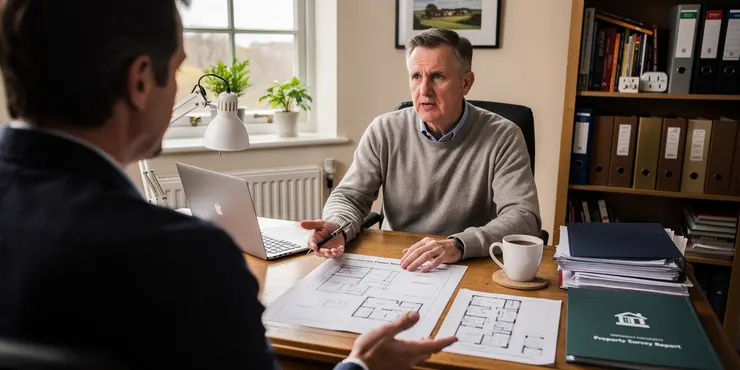
After reviewing the survey report, contact the surveyor directly to discuss your concerns. Open a dialogue to clarify any points of contention or misunderstandings. A straightforward conversation can often resolve minor issues and misunderstandings quickly.
Prepare specific questions in advance to guide the conversation. Provide any additional evidence or documentation that may support your argument. This proactive approach can make the discussion more productive and focused.
Request a Reassessment
If your concerns remain unresolved after discussing them with the surveyor, consider requesting a reassessment. Some surveyors may agree to reassess your property to address specific issues you raise. This may be free or involve a nominal fee, depending on the circumstances.
Document your concerns and provide any new information that might influence a reassessment. Ensure all communications are polite and professional to maintain a positive relationship with the surveyor.
Seek a Second Opinion
If a reassessment does not satisfy your concerns, consider obtaining a second opinion from another qualified surveyor. An independent assessment can provide an unbiased perspective. Make sure the new surveyor is equally qualified and familiar with the relevant property type and issues.
While a second opinion may incur additional costs, it could prove invaluable if the disagreement significantly impacts your property decisions. Compare the reports to identify areas of consensus and contention.
Consider Formal Complaint Procedures
In situations where informal discussions do not resolve the issue, consider utilizing formal complaint procedures. Contact the professional body to which the surveyor belongs, such as RICS (Royal Institution of Chartered Surveyors). They offer mediation and complaint resolution services.
Gather all relevant documentation, including correspondence and previous assessments, to support your case. Be clear and concise in detailing your complaint to facilitate the process.
Legal Advice and Next Steps
For serious disagreements that could affect substantial financial decisions, seek legal advice. A solicitor specializing in property law can guide you through your options and potential courses of action.
This step should be considered a last resort due to potential costs. However, it may be necessary to protect your interests if other avenues have been exhausted without a satisfactory resolution.
Frequently Asked Questions
You can start by reviewing the survey report carefully and identifying the points you disagree with. Gather any evidence you have to support your viewpoint.
Yes, if you believe the surveyor's findings are incorrect, you can request a second survey from another qualified surveyor for a second opinion.
It's best to write a formal letter or email to the surveyor outlining your specific concerns and asking for clarification or further explanation.
You may need to seek advice from a legal professional or contact the firm's complaints department if the surveyor is part of a larger organization.
Yes, in some cases it may be possible to discuss and agree upon amendments to the report with the surveyor if your concerns are valid.
Yes, involving an independent mediator can help resolve disputes between you and the surveyor if direct negotiations are unsuccessful.
Consulting a subject matter expert, like another surveyor, can offer an unbiased opinion regarding the surveyor's findings.
If you can prove professional negligence, you might have grounds for legal action. Consult with a lawyer to explore this possibility.
Compile all relevant documents, correspondence, photographs, and any other evidence that supports your claims.
It might delay transactions if the survey is for a property sale or purchase, as the issues may need resolution before proceeding.
Yes, if the surveyor is part of a professional association, you can file a complaint with them if you believe there has been misconduct.
Discuss your disagreement with your lender, and consider requesting a reassessment or reevaluation based on your evidence.
Disagreements can happen, especially if unexpected findings arise. It’s important to handle them professionally.
Check your contract or agreement for specified timeframes, but it’s best to raise any disputes as soon as possible.
Yes, sometimes misunderstandings or miscommunications occur. It’s important to verify details with the surveyor.
A real estate agent can offer advice and help mediate between you and the surveyor to find a resolution.
Understanding key terms like 'defect,' 'valuation,' and condition descriptions can help in assessing the report accurately.
Yes, unresolved issues can impact your ability to sell, refinance, or insure the property.
There might be costs involved, such as legal fees, additional surveys, or expert consultations.
If resolution isn't possible, consider your contractual termination clauses or renegotiation options with all parties involved.

Ergsy Search Results
This website offers general information and is not a substitute for professional advice.
Always seek guidance from qualified professionals.
If you have any medical concerns or need urgent help, contact a healthcare professional or emergency services immediately.
Some of this content was generated with AI assistance. We've done our best to keep it accurate, helpful, and human-friendly.
- Ergsy carefully checks the information in the videos we provide here.
- Videos shown by Youtube after a video has completed, have NOT been reviewed by ERGSY.
- To view, click the arrow in centre of video.
- Most of the videos you find here will have subtitles and/or closed captions available.
- You may need to turn these on, and choose your preferred language.
- Go to the video you'd like to watch.
- If closed captions (CC) are available, settings will be visible on the bottom right of the video player.
- To turn on Captions, click settings.
- To turn off Captions, click settings again.