
Get Answers
Understand the NHS Dental Services
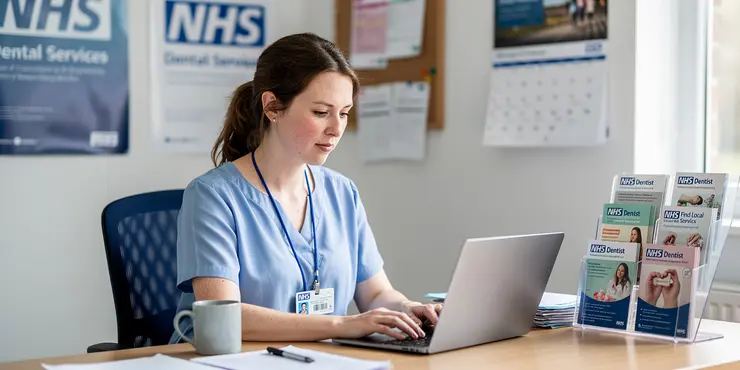
The National Health Service (NHS) offers dental care to residents in the UK. It's important to understand the services available to make informed decisions.
NHS dental services aim to maintain oral health and provide treatment for patients when necessary. Some services are free for those eligible, while others require a contribution.
Search Using the NHS Website
The NHS website is a reliable resource for finding local healthcare providers. It features a dentist locator tool that allows users to search for practices in their area.
Simply enter your postcode or town into the search tool. The results will display a list of nearby NHS dentists alongside contact information and practice details.
Check Availability of NHS Dentists
Once you’ve located nearby practices, check their availability for NHS patients. This can vary as some practices may have limited NHS slots.
Contact the dental practices directly to inquire about their current NHS patient capacity. Some clinics might maintain a waiting list if they are unable to accept new NHS patients immediately.
Register with an NHS Dentist
It is not mandatory to register with a particular NHS dentist as you do with a GP; however, many people prefer having a regular dental practice.
When choosing a dentist, consider factors like clinic location, appointment availability, and any special dental needs you might have.
Explore Alternative Options
If finding a nearby NHS dentist proves challenging, explore alternative options. Consider practices further afield or those in neighboring towns.
Check for community dental clinics, which sometimes offer NHS services tailored for specific groups, including those with special needs.
Understand NHS Dental Charges
NHS dental treatment costs are divided into bands. Each band covers specific types of services, from routine exams to more complex procedures.
It is beneficial to familiarize yourself with the banding system and charges associated with each to manage the financial aspects of your dental care effectively.
Additional Resources and Support
If you need further assistance, consider reaching out to NHS dental helplines or local consumer advice centers. They can provide guidance and additional information.
Some local councils also offer resources or lists of NHS dental providers. Don't hesitate to explore these avenues for support in your search.
Frequently Asked Questions
You can find an NHS dentist by using the NHS website's 'Find a Dentist' service, where you can search by location and see which practices are accepting new NHS patients.
To search for a dentist, you'll need your postcode or the name of a town or city you'd like to search within.
Not all dental practices listed on the NHS website are accepting new NHS patients, so it's important to check the status and contact the practice directly.
Yes, using the NHS website to find a dentist is free of charge.
Some dental practices may offer online registration, but typically you will need to call or visit the practice to register.
If you can't find a dentist accepting new patients, try expanding your search to neighbouring areas or contact NHS England for assistance.
On the NHS website's 'Find a Dentist' service, practices that are part of the NHS will be clearly labeled. You can also confirm by contacting the practice directly.
You can search for a dentist using your postcode or any town, city, or region in England using the NHS website's 'Find a Dentist' service.
Yes, even if you are not currently registered with a practice, you can use the NHS service to find dentists potentially accepting new patients.
Yes, NHS dentists provide emergency dental care. If you need urgent care, contact a local dental practice or NHS 111.
You can choose any NHS dentist, but whether they accept new patients depends on their current capacity.
Yes, you typically need to make an appointment in advance to visit an NHS dentist.
It is generally recommended to visit a dentist every 6 to 12 months, but your dentist may suggest a schedule based on your individual needs.
NHS dental charges are set in three bands: Band 1 (£25.80 for a check-up), Band 2 (£70.70 for a filling or extraction), and Band 3 (£306.80 for more complex work like crowns). These are subject to change.
It's a good idea to call practices you're interested in and ask to be notified if they start accepting new patients. Regularly checking the NHS dental services website can also help.
If you're having difficulty finding a dentist, contact NHS England or use NHS 111 for guidance.
Some dental practices may offer extended hours or specific times for NHS patients, but you'll need to contact the specific practice for details.
Yes, NHS dental care is free for children under the age of 18, or under 19 and in qualifying full-time education.
Yes, you can use the NHS website to find dental practices in your new area. Contact NHS England if you need additional help.
Orthodontic treatment is available on the NHS for children under the age of 18 with a clear health need for treatment, but adults usually have to pay for private orthodontic treatment.

Ergsy Search Results
This website offers general information and is not a substitute for professional advice.
Always seek guidance from qualified professionals.
If you have any medical concerns or need urgent help, contact a healthcare professional or emergency services immediately.
Some of this content was generated with AI assistance. We've done our best to keep it accurate, helpful, and human-friendly.
- Ergsy carefully checks the information in the videos we provide here.
- Videos shown by Youtube after a video has completed, have NOT been reviewed by ERGSY.
- To view, click the arrow in centre of video.
- Most of the videos you find here will have subtitles and/or closed captions available.
- You may need to turn these on, and choose your preferred language.
- Go to the video you'd like to watch.
- If closed captions (CC) are available, settings will be visible on the bottom right of the video player.
- To turn on Captions, click settings.
- To turn off Captions, click settings again.