
Get Answers
Understanding Boundary Disputes Within the UK Context
Boundary disputes can arise between neighbors regarding the correct location of a property line. These disputes can lead to considerable stress and potential legal battles. In the UK, handling these matters involves various layers of governance, where local government plays a crucial role in guiding and sometimes resolving these disagreements.
The Role of Local Government in Boundary Disputes
Local governments in the UK, such as boroughs, districts, and counties, play an essential part in property and land disputes, including boundary issues. They are tasked with maintaining and updating local property records, planning applications, and sometimes historical cadastral maps, which provide essential information when investigating a boundary dispute.
Advisory and Mediation Services
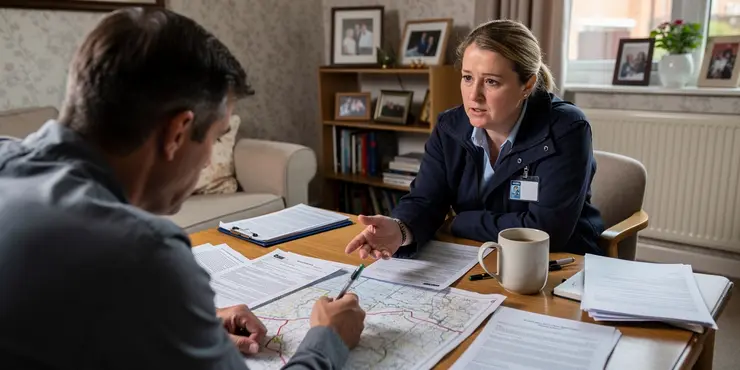
One of the key roles of local government in boundary disputes is to provide advisory services. Local councils can offer residents guidance on how to proceed with a boundary dispute, suggesting the first steps such as surveying the property and examining deeds. Additionally, some local councils may offer or recommend mediation services to help parties come to an agreement without the need for more formal legal action.
Planning and Property Records
Another role that local governments fulfil is the management of planning and property records. When a boundary dispute arises, these records can provide crucial information. They hold data related to planning applications, building permissions, and historical changes to the property lines. Local councils can offer access to these records or direct residents to where they can find pertinent documents, including copies of the deeds, which can help clarify boundary lines.
Involvement in Legal Proceedings
While local governments themselves do not typically become involved in the legal side of boundary disputes, the information they hold can be vital in legal proceedings. If a boundary dispute escalates to court, accurate records from the local authority can be pivotal in determining the rightful boundary line. Lawyers and surveyors often rely on the thoroughness of council records in these cases.
Limitations of Local Government
It is important to note that while local councils provide guidance, they are not directly responsible for resolving boundary disputes. The ultimate resolution may require legal intervention, especially if both parties cannot amicably agree or when the boundary lines are complex and contested. Nonetheless, their role in providing information and initial advice is crucial in laying the groundwork for resolving such disputes efficiently.
Conclusion
In summary, local governments in the UK play an advisory and informational role in boundary disputes, offering resources, maintaining crucial records, and sometimes facilitating mediation. While not directly resolving disputes, they provide the necessary tools and information that help homeowners address and potentially settle these disagreements.
Understanding Boundary Disputes in the UK
Sometimes neighbours argue about where the line between their properties is. This can be very stressful and might even lead to court. In the UK, local councils have a big part in helping sort out these arguments.
What Local Councils Do in Boundary Disputes
Local councils, like boroughs and counties, help with property disagreements. They keep important records about land and property. These records help when there's a disagreement about where a property line is.
Getting Advice and Mediation
Local councils can give advice on boundary disputes. They can tell you the first steps to take, like checking property surveys and deeds. Some councils can suggest mediation, which means getting help to agree without going to court.
Keeping Property Records
Councils manage files about properties, like planning applications and building permissions. These records can help solve boundary arguments because they hold important information about property lines. Councils can show you where to find these records, like deeds, that might help solve your dispute.
Legal Proceedings
If a boundary dispute ends up in court, the records from the local council can be very important. These records can help lawyers and surveyors understand where the boundary should be.
Limits of Local Councils
Local councils can give advice, but they don't solve disputes themselves. Sometimes, you might need to go to court if an agreement can't be reached. Local councils still help a lot by providing helpful information at the start.
Conclusion
In short, local councils in the UK help with boundary disputes by giving advice, keeping important records, and sometimes helping with mediation. They don't solve the disputes directly but provide tools and information to help homeowners sort things out.
Frequently Asked Questions
A boundary dispute is a disagreement between property owners over the location of their property lines.
The local government often provides information, facilitates communication, and may mediate disputes, but it does not usually resolve boundary disputes directly.
Local government officials can provide access to public records and maps but usually do not determine property boundaries.
Local governments may provide access to land records, property maps, and tax parcel information.
Local government surveyors may not typically be involved directly in private boundary disputes, but they can offer guidance on finding licensed surveyors.
Local governments do not have the authority to resolve boundary disputes; that's typically a matter for civil courts.
Local governments can help prevent disputes by maintaining accurate public records and maps.
Yes, local government offices may have boundary maps and plat maps available for public viewing.
Some local governments may offer mediation services or referrals to help resolve boundary disputes amicably.
Yes, property records from local government offices can be used as evidence in court.
Inaccuracies in land records should be reported to the local government, which might need to update and correct their files.
You might start with the local planning or zoning office for guidance on boundary issues.
An updated survey from a licensed surveyor is often necessary to clarify property lines in a boundary dispute.
Enforcement of boundary resolutions usually falls outside the local government's authority; this is typically handled by the court system.
Yes, historical property data and plats are often kept at local government offices and can assist in clarifying boundaries.
Zoning changes themselves do not affect legal boundaries but may influence property use and local land value perceptions.
Boundary maps can vary in accuracy; official surveys are typically more precise.
It is generally recommended to seek legal counsel in boundary disputes for proper guidance and resolution.
The assessor's office, planning and zoning department, and the recorder of deeds might be involved in boundary issues.
It is advisable to survey property boundaries when buying or selling property, and as needed if disputes arise.
A boundary dispute is when neighbors argue about where the edge of their land is.
The local government shares information and helps people talk to each other. They might help with arguments about borders. But they don't usually fix these problems themselves.
Extra Help: You can use pictures or drawings to better understand your boundary. Try asking a friend or family member to explain it to you in different words.
People who work for the local government can help you see public records and maps. But, they usually do not decide where property lines are.
Local governments can help you find land records, maps of property, and tax parcel information.
Local government surveyors might not help with private boundary arguments. But they can help you find surveyors who are allowed to do this work.
Local councils can't decide who owns land or where borders are. This is usually something for the courts to sort out.
Local governments can help stop arguments by keeping good records and maps.
Yes, you can see boundary maps and plat maps at local government offices. Ask someone there to help you if you need it.
Some local councils might help you solve problems about boundaries. They can help you talk and sort things out peacefully.
Yes, you can use papers about a house from the local government as proof in court.
If there are mistakes in land records, tell your local government. They can fix and update their files.
You can ask for help with boundary questions at the local planning office. They know about the rules and can help you.
If people are arguing about where the edges of the land are, they might need a special map to see the lines clearly. A map maker called a "surveyor" can help make this map.
Your local government (like the town or city officials) does not usually fix problems about where property lines are. These problems are usually solved by the court (a judge and lawyers).
Yes, you can find old maps and records about land at local government offices. They can help you understand where land boundaries are.
Zoning changes don't change the lines or borders of a property, but they can change how people use the land and how much it's worth to others.
Boundary maps show where property lines are. Sometimes, they are not very accurate. Official surveys are usually better and more exact.
It is a good idea to talk to a lawyer if you have problems with your neighbor about where the property line is. They can help you find a solution.
- Ask a lawyer for help.
- Use maps or pictures to understand the property line.
- Talk to your neighbor to fix the problem together.
The office that checks property details, the team that plans where things go, and the place where important papers are kept might help with problems about where property lines are.
It is a good idea to check the property lines when you buy or sell a house. You should also do it if there are any arguments about where the property lines are.

Ergsy Search Results
This website offers general information and is not a substitute for professional advice.
Always seek guidance from qualified professionals.
If you have any medical concerns or need urgent help, contact a healthcare professional or emergency services immediately.
Some of this content was generated with AI assistance. We've done our best to keep it accurate, helpful, and human-friendly.
- Ergsy carefully checks the information in the videos we provide here.
- Videos shown by Youtube after a video has completed, have NOT been reviewed by ERGSY.
- To view, click the arrow in centre of video.
- Most of the videos you find here will have subtitles and/or closed captions available.
- You may need to turn these on, and choose your preferred language.
- Go to the video you'd like to watch.
- If closed captions (CC) are available, settings will be visible on the bottom right of the video player.
- To turn on Captions, click settings.
- To turn off Captions, click settings again.