
Get Answers
Understanding the Surveyor’s Report
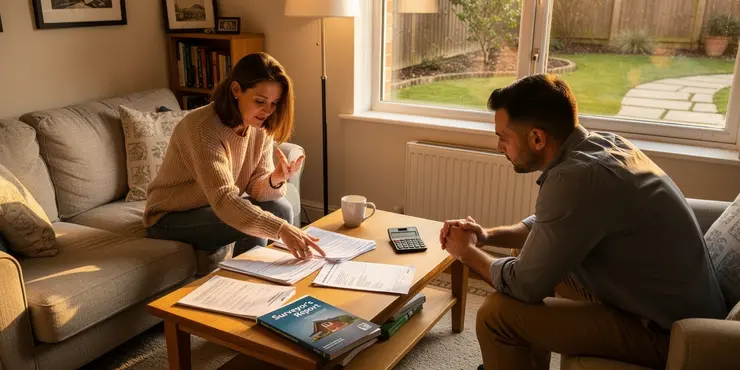
When purchasing a property in the UK, a surveyor's report is often a critical step in the process. It provides the buyer with an assessment of the property's condition.
This report can reveal issues that may affect the property's value or require future repairs. As such, it plays a significant role in the decision-making process for buyers.
Who Typically Pays for the Surveyor’s Report?
Traditionally, the buyer is responsible for commissioning and paying for the surveyor's report. This gives the buyer confidence in their purchase based on an independent assessment.
Since the report is primarily for the buyer's benefit, they usually choose the surveyor and cover the associated costs. This ensures the report meets their specific needs and expectations.
Negotiating the Costs
In some cases, the cost of the surveyor's report can be a point of negotiation between the buyer and seller. This is often true if the market favors buyers, giving them more leverage.
Sellers might agree to cover the cost to make their property more attractive or to speed up the transaction. However, this is not a standard practice and should be mutually agreed upon.
Factors to Consider in Negotiation
Several factors can influence whether the cost is negotiable. These include current market conditions, the property's condition, and the level of interest from other potential buyers.
Both parties should consider the value brought by the surveyor's report in identifying significant issues. This information can benefit both buyer and seller in understanding the property's true status.
Conclusion
While negotiating the cost of the surveyor's report is possible, it is not typical in most transactions. Buyers should be prepared to cover these costs themselves.
Open communication is essential if a buyer wishes to negotiate these fees. Both parties should understand the benefits and agreed terms fully before proceeding.
Frequently Asked Questions
Yes, the cost of the surveyor's report can often be negotiated between the buyer and the seller, depending on their agreement.
Typically, the buyer pays for the surveyor's report, but this can be negotiated with the seller.
Factors such as market conditions, local customs, and the terms of the offer can influence who pays for the surveyor's report.
It is not common for sellers to pay for the surveyor's report, but it can happen in certain negotiations.
A seller might agree to pay for the report to expedite the sale, as part of an incentive package, or in a competitive market.
Yes, the buyer can request it during negotiations, though the seller may not always agree.
If neither party is willing to pay, it could result in a stalemate or one party caving to proceed with the transaction.
Yes, buyers and sellers might agree to split the cost or factor it into the closing or selling price.
Lenders may require a surveyor's report, but do not typically dictate who pays for it.
Yes, negotiations can be revisited, especially if unexpected survey requirements arise.
Local laws sometimes have customs or guidelines, but typically do not strictly dictate payment responsibilities.
The report primarily benefits the buyer, providing detailed property condition insights, but it can also reassure the seller of honest dealings.
Parties should research market norms, understand their negotiating power, and possibly consult with their real estate agent.
Common outcomes include the buyer bearing full cost, shared costs, or incorporating the cost into the final price.
The seller might choose the surveyor if they pay, but the buyer should ensure the surveyor is reputable.
Yes, surveyor costs can vary based on property size and location, making negotiations potentially valuable.
In a competitive market, buyers may have less leverage to ask the seller to cover the cost.
Yes, sellers can refuse, as covering the cost is negotiable and not mandatory.
A real estate agent can advise on market practices, offer negotiation strategies, and facilitate communication.
There's no standard agreement; it typically depends on regional practices and individual negotiations.

Ergsy Search Results
This website offers general information and is not a substitute for professional advice.
Always seek guidance from qualified professionals.
If you have any medical concerns or need urgent help, contact a healthcare professional or emergency services immediately.
Some of this content was generated with AI assistance. We've done our best to keep it accurate, helpful, and human-friendly.
- Ergsy carefully checks the information in the videos we provide here.
- Videos shown by Youtube after a video has completed, have NOT been reviewed by ERGSY.
- To view, click the arrow in centre of video.
- Most of the videos you find here will have subtitles and/or closed captions available.
- You may need to turn these on, and choose your preferred language.
- Go to the video you'd like to watch.
- If closed captions (CC) are available, settings will be visible on the bottom right of the video player.
- To turn on Captions, click settings.
- To turn off Captions, click settings again.