
Get Answers
Construction and demolition
Construction workers often face some of the highest risks of industrial disease in the UK. The job can involve dust, noise, vibration, heavy lifting, and repeated physical strain over many years.
Exposure to silica dust, asbestos, and cement can lead to serious long-term illnesses. These include occupational asthma, chronic obstructive pulmonary disease, and mesothelioma.
Manufacturing and engineering
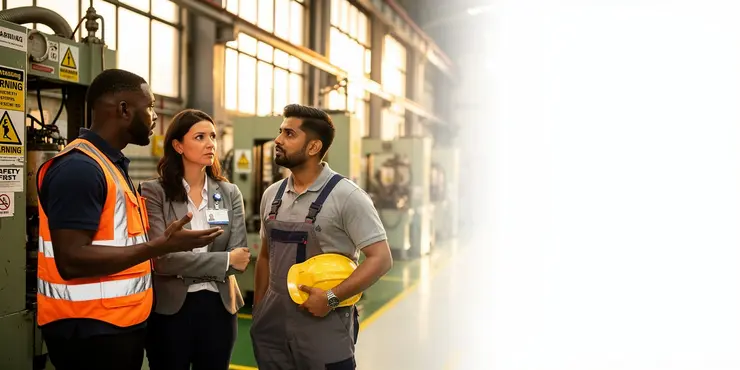
Manufacturing and engineering jobs can expose workers to chemicals, metal fumes, solvents, and machine noise. Many roles also involve repetitive tasks that can affect the hands, wrists, shoulders, and back.
Over time, these conditions may cause dermatitis, hearing loss, and musculoskeletal disorders. Workers in welding, machining, and assembly lines are often at particular risk.
Agriculture and farming
Agriculture is another high-risk industry because workers may handle pesticides, fertilisers, animals, and dusty materials. Long hours outdoors can also increase exposure to extreme weather and physical wear and tear.
Farm workers can develop respiratory problems from grain dust and mould. They may also suffer from skin conditions, injuries from machinery, and illnesses linked to chemicals or animal waste.
Healthcare and social care
Healthcare workers may not always be thought of as industrial workers, but they can still face occupational disease risks. Repeated lifting, long shifts, and contact with cleaning agents or bodily fluids can create health problems.
Back injuries, dermatitis, and stress-related conditions are common concerns. In some settings, there is also a risk of infection and exposure to hazardous substances such as disinfectants and anaesthetic gases.
Mining, quarrying, and energy
Mining, quarrying, and some energy-sector jobs involve dust, confined spaces, noise, and vibration. Workers may also encounter gases, fumes, and physically demanding conditions underground or in remote environments.
These industries have been linked to lung disease, hearing loss, and vibration-related injuries. Although safety standards have improved, the long-term risks remain significant for many workers.
Transport, warehousing, and logistics
People working in transport, warehousing, and logistics often spend long periods driving, loading, or moving goods. This can lead to repetitive strain, joint problems, and fatigue from shift work.
In some roles, workers are also exposed to diesel exhaust, noise, and manual handling injuries. Over time, these hazards can contribute to respiratory illness and chronic pain.
Frequently Asked Questions
Industries with the highest risk typically include mining, construction, manufacturing, agriculture, shipbuilding, chemical production, and healthcare because workers may be exposed to dust, noise, chemicals, repetitive strain, and biological hazards.
Mining workers can be exposed to silica dust, coal dust, heavy metals, noise, vibration, and poor ventilation, which can lead to lung disease, hearing loss, skin conditions, and other long-term health problems.
Construction workers often face asbestos, silica dust, noise, vibration, fumes, and physically demanding tasks, which can contribute to respiratory diseases, hearing loss, musculoskeletal disorders, and skin problems.
Manufacturing may involve chemicals, solvents, dust, machine noise, heat, repetitive motions, and hazardous machinery, increasing the risk of respiratory illness, dermatitis, hearing loss, and repetitive strain injuries.
Chemical plants and refineries can expose workers to toxic substances, vapors, acids, and flammable materials, which can cause poisoning, burns, respiratory illness, skin damage, and long-term organ effects.
Agriculture can lead to pesticide exposure, dust-related lung disease, heat stress, skin conditions, and musculoskeletal disorders from heavy manual work and repetitive tasks.
Healthcare workers may face infectious agents, disinfectants, latex, radiation, lifting injuries, and shift-related stress, which can contribute to infections, allergies, skin irritation, and musculoskeletal disorders.
Textile workers may be exposed to cotton dust, dyes, chemicals, and repetitive work, which can lead to byssinosis, dermatitis, asthma, and repetitive strain injuries.
Shipbuilding has historically involved asbestos, welding fumes, paints, solvents, noise, and heavy physical labor, increasing the risk of lung disease, cancer, hearing loss, and musculoskeletal problems.
Welding and metalworking can expose workers to metal fumes, ultraviolet radiation, noise, heat, and gases, which may cause respiratory illness, eye damage, burns, and hearing loss.
Yes, food processing workers can develop repetitive strain injuries, cuts, dermatitis, cold-related stress, and respiratory issues from flour dust, cleaning chemicals, or refrigeration environments.
Woodworkers may be exposed to wood dust, adhesives, solvents, and noise, which can cause asthma, nasal irritation, dermatitis, hearing loss, and certain cancers with long-term exposure.
Battery manufacturing may involve lead, cadmium, acids, and other chemicals that can cause poisoning, respiratory problems, skin burns, and long-term nerve or kidney damage.
Printing workers may be exposed to solvents, inks, ozone, and repetitive motions, leading to headaches, skin irritation, respiratory issues, and musculoskeletal disorders.
Electronics manufacturing can involve solder fumes, solvents, fine particles, and repetitive assembly tasks, which may cause respiratory irritation, skin problems, and repetitive strain injuries.
Fiberglass and insulation workers can inhale fine fibers and dust, which may irritate the skin, eyes, and lungs and contribute to chronic respiratory conditions.
Oil and gas workers may be exposed to hydrocarbons, toxic gases, noise, heat, and heavy equipment hazards, increasing the risk of respiratory disease, chemical exposure, hearing loss, and injuries.
Yes, firefighters may encounter smoke, toxic combustion products, heat, and physically demanding conditions, which can raise the risk of respiratory disease, heart problems, cancer, and heat-related illness.
These industries often produce high levels of silica and mineral dust that can be inhaled over time, leading to silicosis, chronic bronchitis, and other serious lung conditions.
Industries with frequent lifting, repetitive motion, awkward postures, or vibration, such as construction, manufacturing, agriculture, healthcare, and warehousing, commonly cause musculoskeletal disorders.

Ergsy Search Results
This website offers general information and is not a substitute for professional advice.
Always seek guidance from qualified professionals.
If you have any medical concerns or need urgent help, contact a healthcare professional or emergency services immediately.
Some of this content was generated with AI assistance. We've done our best to keep it accurate, helpful, and human-friendly.
- Ergsy carefully checks the information in the videos we provide here.
- Videos shown by Youtube after a video has completed, have NOT been reviewed by ERGSY.
- To view, click the arrow in centre of video.
- Most of the videos you find here will have subtitles and/or closed captions available.
- You may need to turn these on, and choose your preferred language.
- Go to the video you'd like to watch.
- If closed captions (CC) are available, settings will be visible on the bottom right of the video player.
- To turn on Captions, click settings.
- To turn off Captions, click settings again.