
Get Answers
Protecting Workers’ Health
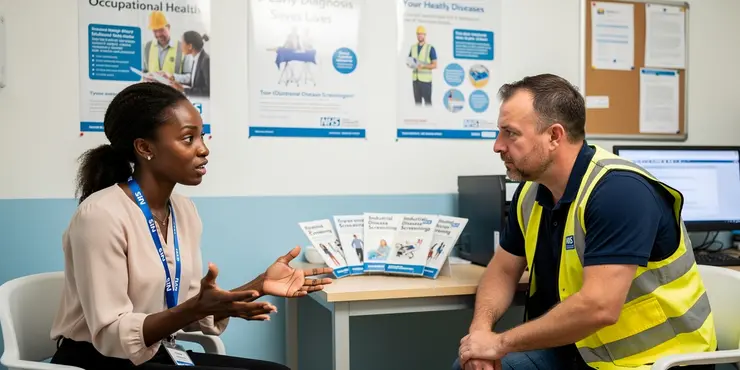
Early detection of industrial diseases helps protect workers before symptoms become severe. Many conditions, such as asthma, hearing loss, or skin disease, can worsen over time if they are not spotted quickly.
When a problem is identified early, treatment and workplace adjustments can begin sooner. This can reduce pain, limit long-term damage, and improve a worker’s chance of staying well.
Reducing Time Off Work
Industrial diseases can lead to time away from work, which affects both employees and employers. If a condition is found early, it may be possible to manage it before it causes extended absence.
For workers, this means less disruption to income and daily life. For businesses, it helps reduce lost productivity and supports a more stable workforce.
Preventing Conditions from Getting Worse
Many industrial diseases develop gradually, often after repeated exposure to harmful substances or working conditions. If they are not detected in time, they can become permanent or much harder to treat.
Early diagnosis gives people a better chance of avoiding further exposure. It also allows doctors and occupational health professionals to act before the condition becomes more serious.
Improving Workplace Safety
Spotting industrial diseases early can highlight wider safety problems in the workplace. If several workers show similar symptoms, it may point to dust, fumes, noise, chemicals, or poor ventilation.
This information helps employers take action to protect everyone, not just the person already affected. Better controls, training, and monitoring can prevent future cases.
Supporting Legal and Financial Rights
In the UK, early diagnosis can be important for accessing occupational health support and making informed decisions about next steps. It may also help workers understand whether their illness is linked to their job.
Where a claim or compensation process is involved, medical evidence is often stronger when a condition is identified promptly. Acting early can make it easier to show what has happened and why.
Improving Long-Term Quality of Life
Industrial diseases can affect a person’s ability to work, sleep, travel, and enjoy everyday activities. The earlier a condition is found, the more options there are for treatment and lifestyle changes.
That can make a real difference to long-term wellbeing. Early detection gives workers a better chance of managing their condition and maintaining their independence.
Frequently Asked Questions
Early detection can stop a disease from progressing, improve treatment outcomes, and reduce the risk of permanent disability.
It allows workers to start treatment sooner, manage symptoms better, and often maintain a higher quality of life.
Yes, identifying a disease early can prevent complications such as organ damage, chronic pain, breathing problems, or loss of function.
It helps doctors link symptoms to workplace exposures and intervene before the condition becomes severe.
Treatment started early often leads to faster recovery and a better chance of returning to normal activities or work.
Yes, catching diseases early usually lowers costs by reducing hospitalizations, advanced treatments, and long-term care needs.
Screening can find diseases before symptoms become obvious, especially in workers exposed to harmful dust, chemicals, or noise.
It can reveal hazardous exposures in the workplace, allowing employers to fix risks and protect other workers.
Many industrial diseases cause irreversible harm if left untreated, so early detection can preserve lung function, hearing, or mobility.
Yes, treating a condition early can shorten sick leave and help workers stay employed longer.
Early detection of lung diseases can prevent severe breathing impairment and allow exposure to be reduced before more damage occurs.
Doctors can choose less aggressive and more effective treatments when a disease is caught at an earlier stage.
Yes, many industrial diseases have a better outlook when they are found and treated early.
Because ongoing exposure can worsen damage, and early detection helps stop exposure before the condition advances.
If a workplace hazard is identified quickly, steps can be taken to reduce exposure for others and prevent more cases.
Yes, mild symptoms can be the first warning sign of a serious condition, so early evaluation is very important.
It can lower the chance of long-term disability by preventing disease progression and preserving body function.
Reporting symptoms early helps detect disease sooner, which increases the chance of effective treatment and workplace intervention.
Yes, finding a disease early can reduce uncertainty, support quicker treatment, and lessen stress about health outcomes.
The overall benefit is better health, fewer complications, lower costs, and stronger protection for both workers and workplaces.

Ergsy Search Results
This website offers general information and is not a substitute for professional advice.
Always seek guidance from qualified professionals.
If you have any medical concerns or need urgent help, contact a healthcare professional or emergency services immediately.
Some of this content was generated with AI assistance. We've done our best to keep it accurate, helpful, and human-friendly.
- Ergsy carefully checks the information in the videos we provide here.
- Videos shown by Youtube after a video has completed, have NOT been reviewed by ERGSY.
- To view, click the arrow in centre of video.
- Most of the videos you find here will have subtitles and/or closed captions available.
- You may need to turn these on, and choose your preferred language.
- Go to the video you'd like to watch.
- If closed captions (CC) are available, settings will be visible on the bottom right of the video player.
- To turn on Captions, click settings.
- To turn off Captions, click settings again.