
Get Answers
What is the Hazard Perception Test?
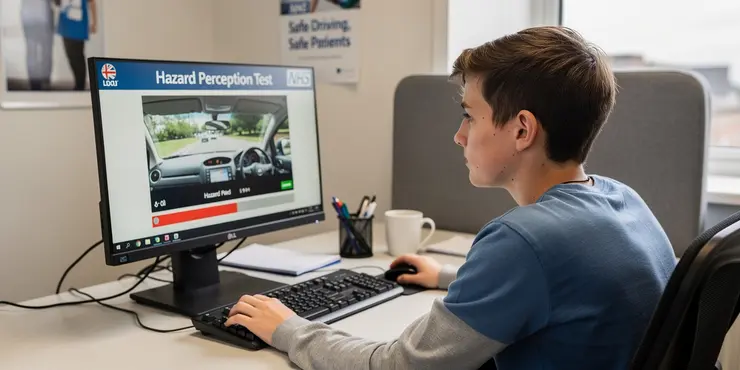
The Hazard Perception Test is a crucial component of the UK driving theory test, designed to assess a learner driver's ability to perceive and respond to potential hazards on the road. It forms part of the process required to obtain a full driving licence in the United Kingdom.
Purpose of the Hazard Perception Test
The primary goal of the Hazard Perception Test is to ensure that new drivers possess the necessary skills to identify and react to developing hazards in real-time traffic situations. This is vital for road safety, as recognizing potential dangers early on can significantly reduce the likelihood of accidents.
Structure of the Test
The Hazard Perception Test involves watching a series of video clips, typically 14 in total, which depict various road scenes from the driver’s perspective. Each clip contains at least one developing hazard, with one clip containing two hazards. As the candidate watches these clips, they must click the mouse when they notice a developing hazard.
The timing of the response is crucial. A scoring window allocates points based on how quickly the candidate identifies the hazard after it begins to develop. Scoring can range from five to zero points per hazard, with an earlier response yielding higher scores. The total score required to pass is 44 out of a possible 75.
Preparing for the Hazard Perception Test
Preparation for the Hazard Perception Test can be enhanced by using various practice tools and resources. Many online platforms offer mock tests that mimic the real test format. These resources help learners familiarize themselves with the types of hazards they may encounter and improve their reaction times.
Moreover, understanding the roadway environment and common potential hazards, such as pedestrian crossings, cyclists, and unexpected vehicle maneuvers, can significantly aid in preparation. Developing strong observation skills is essential for success in the hazard perception segment.
Improving Hazard Perception Skills
Improving hazard perception skills involves being constantly aware of one's surroundings while driving and anticipating possible sequences of events. Learners are encouraged to practice in varied driving conditions and environments to gain a diverse range of experiences. Additionally, learning to scan the road ahead and using peripheral vision will help in identifying early signs of potential hazards.
Conclusion
The Hazard Perception Test is a vital part of the driver testing process in the UK, designed to ensure new drivers are capable of identifying and responding to hazards effectively. By practicing diligently and enhancing awareness on the road, learners can improve their chances of passing the test and contribute to safer driving standards across the country.
What is the Hazard Perception Test?
The Hazard Perception Test is part of the UK driving test. It checks if you can see and respond to dangers on the road. You need to pass this to get a full driving licence in the UK.
Purpose of the Hazard Perception Test
The test makes sure new drivers can spot dangers quickly while driving. This helps keep everyone safe because you can avoid accidents if you see problems early.
Structure of the Test
In the Hazard Perception Test, you watch 14 video clips of roads seen from a driver's view. Each clip has at least one problem to spot, and one clip has two problems. You click the mouse when you see a danger.
It's important to click quickly. You score points based on how fast you spot the problem. You can earn 5 to 0 points per problem, more points for quicker clicks. You need a total of 44 points out of 75 to pass.
Preparing for the Hazard Perception Test
You can get ready for the test by using practice tools online. Many websites let you take practice tests just like the real one. This helps you learn what dangers look like and how to see them fast.
It's also good to know about common problems on the road, like people crossing, bicycles, and cars doing unexpected things. Being good at looking around and noticing things is important for this test.
Improving Hazard Perception Skills
To get better at spotting dangers, you should always pay attention while driving. Think about what might happen next. Try driving in different places and conditions to learn more. Looking ahead on the road and using your side vision can help you see problems early.
Conclusion
The Hazard Perception Test is important for new drivers in the UK. It checks if you can see and react to dangers. Practice and stay aware on the road to pass the test and drive safely.
Frequently Asked Questions
The Hazard Perception Test is part of the driver's license examination process that assesses a candidate's ability to identify and respond to potential road hazards.
The test is important because it evaluates a driver's awareness and reaction to hazards, which is crucial for safe driving and accident prevention.
New drivers, those aiming to upgrade their licenses, or drivers moving from certain countries are typically required to take the Hazard Perception Test.
The test is conducted using a computer-based system where candidates watch video clips and identify developing hazards by clicking the mouse.
The test covers various hazards including pedestrians crossing, vehicles merging, sudden stops, or changes in road conditions.
The test usually lasts around 20 to 30 minutes, depending on the number of video clips included.
Passing scores vary by region, but generally a score of around 44 out of 75 is required.
Yes, you can retake the test if you fail, but there may be a waiting period before you can attempt it again.
No, the specific requirements and scoring can vary between different countries or regions.
Numerous preparation materials are available, including online practice tests, videos, and guides that simulate the test environment.
No questions can be skipped, as the test is interactive and based on video scenarios.
Official tests are typically administered at designated centers, although some practice tests can be done online.
Regular practice with mock tests and developing good observation skills by watching hazard perception videos can be effective.
Failing to identify a hazard may result in a lower score, impacting your chances of passing the test.
Yes, the video scenarios aim to mimic real-life driving conditions to better assess hazard detection skills.
The test typically includes 14 to 20 video clips, with each clip containing potential hazards.
It depends on the jurisdiction and whether the practicing drivers are applying for a full or upgraded license.
This depends on the testing center and region, but many locations do offer tests in multiple languages.
Common mistakes include clicking too early, too late, or not recognizing emerging hazards.
It's beneficial to practice using official mock tests, driver education programs, and reviewing guidelines provided by the testing authority.
The Hazard Perception Test is a part of the driver’s license exam. It checks if you can see and react to dangers on the road.
The driving test is important. It checks if a driver can spot danger and act quickly. This helps keep everyone safe and can stop accidents.
Here are some tips to help you:
- Practice spotting hazards on the road.
- Stay calm and focused when driving.
- Use apps or tools that can help you learn more about road safety.
New drivers, people who want to get better licenses, or drivers from some other countries usually have to take the Hazard Perception Test.
You take the test on a computer. You watch short videos and look for things that might be dangerous. You click the mouse when you see something that could be a problem.
Here are some tips to help:
- Watch the video carefully.
- If you see something that might be dangerous, click the mouse.
- Stay calm and take your time.
Remember, there are tools like headphones to help you focus. Ask for help if you need it.
The test looks at different types of dangers on the road. These include people walking across the street, cars joining the road, cars stopping quickly, or changes in road conditions.
The test takes about 20 to 30 minutes. This can change if there are more video clips.
To pass the test, you usually need to get about 44 out of 75 questions right. The exact number can change depending on where you take the test.
Yes, you can take the test again if you do not pass. But, you might have to wait a while before you try again.
Rules and scores are different in each country or area.
There are lots of tools to help you get ready. You can find practice tests, videos, and guides online. These tools can help you understand what the test will be like.
You have to answer all the questions. The test uses videos, and you can't skip any part of it.
Official tests usually happen at special places called test centers. But, you can do some practice tests on the computer at home.
Practice often with pretend tests. Watch videos to learn how to spot dangers. This can help you get better.
If you don't see a danger, you might get a lower score. This could make it harder for you to pass the test.
Yes, the videos show what driving is like in real life. This helps to test how well you can spot dangers on the road.
The test has 14 to 20 videos. Each video shows things that might be dangerous.
It depends on where you live and what kind of driver's license you want.
This depends on where you take the test. But many places let you take the test in different languages.
People often make mistakes by clicking too soon or too late. They also might not see new dangers coming.
It helps to use practice tests, take driving classes, and learn the rules from the people who give the test.

Ergsy Search Results
This website offers general information and is not a substitute for professional advice.
Always seek guidance from qualified professionals.
If you have any medical concerns or need urgent help, contact a healthcare professional or emergency services immediately.
Some of this content was generated with AI assistance. We've done our best to keep it accurate, helpful, and human-friendly.
- Ergsy carefully checks the information in the videos we provide here.
- Videos shown by Youtube after a video has completed, have NOT been reviewed by ERGSY.
- To view, click the arrow in centre of video.
- Most of the videos you find here will have subtitles and/or closed captions available.
- You may need to turn these on, and choose your preferred language.
- Go to the video you'd like to watch.
- If closed captions (CC) are available, settings will be visible on the bottom right of the video player.
- To turn on Captions, click settings.
- To turn off Captions, click settings again.