
Speak To An Expert
Get clear, personalised advice for your situation.
Jot down a few questions to make the most of your conversation.
Introduction
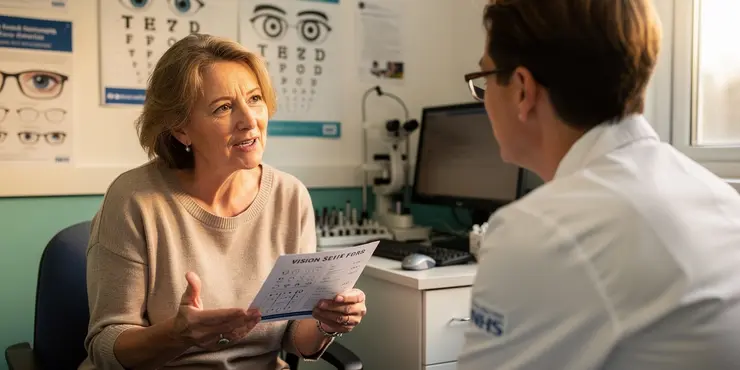
Visiting your eye doctor is crucial for maintaining good eye health. In the UK, it’s common for individuals to use self-test kits and online tools to assess their vision at home. However, many people are unsure whether they should share these self-test results with their optometrist. In this article, we'll explore the benefits and considerations of discussing self-test findings with your eye care professional.
The Importance of Self-Tests
Self-tests can be a useful way to monitor your eye health in between regular check-ups, particularly for those experiencing new symptoms or changes in their vision. Tools such as online vision tests, Amsler grids for macular health, and smartphone apps can help identify potential issues. However, these tests are not a substitute for a comprehensive examination by an eye care professional. They can provide initial insights that may prompt a medical consultation.
Benefits of Sharing Self-Test Results
There are several benefits to sharing your self-test results with your eye doctor. First, it provides additional context for your eye doctor, helping them better understand any changes or symptoms you may be experiencing. They can assess whether these findings indicate a need for further testing or medical intervention. Moreover, discussing these results can open a dialogue about your concerns, allowing your optometrist to address any worries you might have.
Additionally, sharing results can help track the progression of certain conditions. If you have a chronic condition like glaucoma or age-related macular degeneration, your doctor can compare self-test results over time to decide if adjustments to your treatment plan are needed.
Considerations
While self-tests can be useful, it is essential to understand their limitations. Home tests may not be as accurate as those performed in a clinical setting, and interpreting results without professional guidance can lead to unnecessary anxiety or false reassurance. Hence, it’s vital to approach these tests as preliminary screenings rather than definitive assessments.
Furthermore, not all self-tests are scientifically validated, and results can vary based on numerous factors, including lighting conditions, screen quality, and personal perception. Your optometrist is trained to consider these variables and determine the reliability of the data.
Conclusion
In summary, sharing the results of your self-tests with your eye doctor in the UK can be beneficial as part of an open, communicative relationship regarding your eye health. It allows your optometrist to better understand your condition and provide tailored advice. While these tests are helpful tools for monitoring changes, they should never replace professional eye exams. Always consult your eye doctor if you have concerns about your vision or self-test findings.
Introduction
Visiting your eye doctor is very important. It helps keep your eyes healthy. In the UK, people sometimes use small tests at home to check their eyes. These are called self-tests. You can also find tests online. But when you do these, you might wonder if you should tell your eye doctor. This article will help you understand why sharing these results with your doctor is a good idea.
Why Self-Tests Are Important
Self-tests are tools that help you watch your eye health between doctor visits. They are useful if you notice something different with your sight. For example, there are online tests, grids for checking parts of the eye, and phone apps. These can spot problems early. But remember, they aren’t as complete as a doctor’s check-up. They can help decide if you should see your doctor sooner.
Why Tell Your Doctor About Self-Tests?
Sharing self-test results with your eye doctor has many benefits. It gives your doctor more information. This helps them understand any changes you see. They can decide if you need more tests or help. Also, talking about these results lets you share your worries. Your doctor can then help answer your questions.
Also, sharing results helps follow changes over time. If you have issues like glaucoma (eye pressure) or degeneration (eye aging), your doctor can see if things change. They can then change your treatment if needed.
Things to Think About
Self-tests are helpful but remember they have limits. Home tests may not be as exact as the ones at the doctor's office. Without a doctor’s help, these tests might make you worry too much or too little. So, use them as an early check, not the final answer.
Not all self-tests are always correct. Things like light, screen quality, and even your own view can change the results. Your eye doctor knows how to look at these tests and see what’s right or wrong.
Conclusion
To sum up, telling your eye doctor in the UK about your self-test results is a good idea. It makes sure you and your doctor talk about your eyes and any changes. This helps your doctor give you the best advice. These tests help watch changes but should not replace real doctor visits. Always ask your eye doctor if you worry about your eyes or test results.
Frequently Asked Questions
Self-tests for eye health are assessments that individuals can perform at home to evaluate aspects of their vision such as acuity, color perception, and potential eye abnormalities.
Sharing self-test results with your eye doctor can provide them with additional information about your vision and eye health, allowing for more informed diagnoses and treatment plans.
Yes, self-test results can provide your eye doctor with early indicators of changes in your vision, potentially affecting diagnosis and treatment approaches.
You can share results from various self-tests, such as visual acuity tests, color blindness checks, or any digital apps designed for vision assessment.
Provide your eye doctor with detailed information on how you conducted the self-tests, including any scores or results, and any concerns you may have.
While professional diagnostic tools are more reliable, your eye doctor might find your self-test results helpful as additional information about your vision history.
No, self-tests are not as accurate as professional eye exams but can serve as a preliminary tool to detect changes in your vision.
While not necessary, sharing self-test results can help keep your eye doctor informed about any changes in your vision between regular exams.
No, self-test results should not replace a professional eye exam which is comprehensive and performed with advanced equipment.
Yes, if your self-test results indicate any issues with your vision, it is advisable to schedule a professional eye exam to evaluate these concerns further.
Regardless of your self-test results, if you are experiencing symptoms like vision changes, discomfort, or pain, you should consult your eye doctor.
The frequency depends on individual circumstances but doing them periodically can help detect early changes in vision; discuss with your doctor how often they recommend.
Some apps are designed to provide a basic check of your vision, but they should not be solely relied upon for diagnosis or treatment decisions.
Self-tests may not accurately diagnose complex eye conditions and can be influenced by factors such as lighting and screen size.
Doctors may note your self-test results in your medical record as part of a comprehensive view of your eye health.
Self-tests might help identify potential issues early, but they cannot definitively diagnose eye diseases—professional evaluation is necessary.
If you are confused about your self-test results, discuss them with your eye doctor who can provide clarification and further advice.
Generally, self-tests pose no risks as long as they are conducted properly, but misinterpretation could delay necessary professional care.
Yes, monitoring changes over time can be useful in recognizing trends or new symptoms, discussing them with your eye doctor is important.
Common signs include blurry vision, difficulty in seeing at night, frequent headaches, eye strain, or any sudden changes in vision.
Eye tests you can do yourself are checks you can do at home. They help you see how well your eyes work. You can check how clearly you see, if you see colors correctly, and if there are any problems with your eyes.
If you tell your eye doctor the results of your eye tests at home, it can help them understand your vision better. This way, they can make better decisions about how to help your eyes.
Yes, when you check your eyes at home, it can help your eye doctor see early signs that your eyes are changing. This can help them know how to help your eyes and decide what treatment you might need.
You can share results from different eye tests. These tests can check how well you see, if you can see colors, or if you use any apps to check your eyes.
Tell your eye doctor how you did the tests on your own eyes. Share what scores or results you got. Tell the doctor if you are worried about anything.
Doctors have special tools to check your eyes. These tools are very good. But if you try a little eye test at home, it can still help your eye doctor. It gives them extra information about how your eyes have been working.
No, home eye tests are not as good as seeing an eye doctor. But they can help you see if your eyes have changed.
You don't have to share your test results, but it can help your eye doctor. This way, they know if your eyes are changing between your check-ups.
No, a self-test cannot take the place of a professional eye test. A real eye test is done by a professional who uses special tools to check your eyes thoroughly.
If your eye test shows a problem, it's a good idea to see an eye doctor. They can check your eyes and help you.
If your eyes hurt or you can't see clearly, you should talk to an eye doctor, no matter what your test says.
How often you need to do this depends on you. Doing it now and then can help you find changes in your eyesight early. Talk to your doctor about how often you should do this.
Some apps can help you check your eyes. But you should not use them to find or treat problems on your own.
Self-checks might not tell if you have tricky eye problems. Things like the light in the room and how big your screen is can change the results.
Doctors might write down your test results in your medical record. This helps them see the full picture of how healthy your eyes are.
Self-tests can help find signs of problems early. But you still need a doctor to check your eyes to know for sure if something is wrong.
If you do not understand your test results, talk to your eye doctor. They can help explain what the results mean and tell you what to do next.
Self-tests are safe if you do them the right way. But if you don't understand the results, it could mean you don't get help from a doctor when you need it.
Yes, watching changes over time can help you see patterns or new symptoms. It is important to talk about these with your eye doctor.
Here are signs that something might be wrong with your eyes:
- Your vision looks blurry, like you're looking through fog.
- It's hard to see when it gets dark outside.
- Your head hurts a lot, like you have headaches often.
- Your eyes feel tired and hurt.
- If your eyesight suddenly changes, tell someone.
Tools that can help:
- Ask an adult to help you see an eye doctor.
- Use glasses or a magnifying glass if you need help seeing things clearly.

Ergsy Search Results
This website offers general information and is not a substitute for professional advice.
Always seek guidance from qualified professionals.
If you have any medical concerns or need urgent help, contact a healthcare professional or emergency services immediately.
Some of this content was generated with AI assistance. We've done our best to keep it accurate, helpful, and human-friendly.
- Ergsy carefully checks the information in the videos we provide here.
- Videos shown by Youtube after a video has completed, have NOT been reviewed by ERGSY.
- To view, click the arrow in centre of video.
- Most of the videos you find here will have subtitles and/or closed captions available.
- You may need to turn these on, and choose your preferred language.
- Go to the video you'd like to watch.
- If closed captions (CC) are available, settings will be visible on the bottom right of the video player.
- To turn on Captions, click settings.
- To turn off Captions, click settings again.