
Get Answers
Introduction to Eye Self-Tests
Eye self-tests are vital tools for individuals to monitor their eye health and detect early signs of vision problems. In the UK, a variety of self-tests are available for eye patients, enabling them to assess different aspects of their vision. While these tests are not substitutes for professional eye examinations, they can provide useful insights into the condition of one's eyesight.
Types of Eye Self-Tests
Visual Acuity Tests
Visual acuity tests are designed to measure how clearly a person can see. The most common self-test for visual acuity is reading a Snellen chart, which features letters of varying sizes. These tests can be easily downloaded and printed at home. Patients are advised to cover one eye and read the smallest line of letters they can see clearly from a specified distance.
Amsler Grid Test
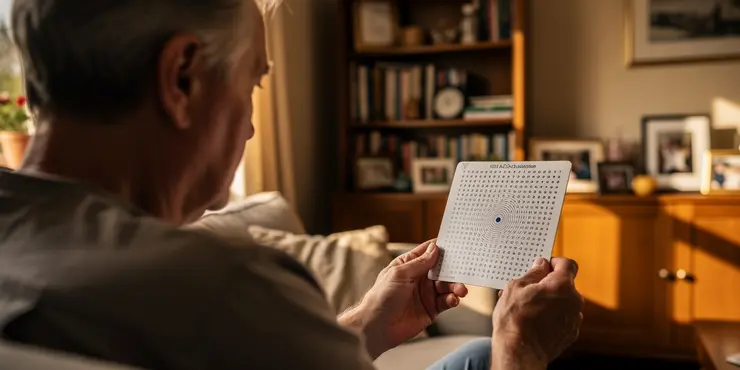
The Amsler grid test is used to evaluate the central visual field and identify signs of macular degeneration. This test consists of a grid of horizontal and vertical lines with a dot in the center. Patients should focus on the central dot and observe whether any lines appear wavy or missing. Such distortions can indicate potential issues with the retina.
Contrast Sensitivity Tests
Contrast sensitivity tests assess the ability to distinguish between different shades and contrast levels. These tests can be conducted online or using printed materials. By identifying difficulties in distinguishing contrasts, individuals may uncover issues not detected during standard visual acuity tests. Poor contrast sensitivity can be indicative of cataracts or other vision problems.
Colour Vision Tests
Colour vision tests help identify colour blindness or other colour perception issues. The Ishihara Test is the most widely recognized colour vision test and involves identifying numbers or patterns within a series of dots in varying colours. These tests are typically available online, offering a simple method to assess colour vision at home.
Near Vision Tests
Near vision tests help evaluate the ability to see clearly at close distances. These are particularly useful for detecting presbyopia, a condition that becomes more prevalent with age. Printed reading cards featuring text of various sizes enable individuals to assess their near vision by reading from a standard reading distance.
Conclusion
Self-tests for eye health provide a convenient method for UK residents to monitor their vision and identify potential issues that require further professional assessment. While these tests can be insightful, regular eye check-ups with an optometrist or ophthalmologist remain essential for maintaining overall eye health.
Introduction to Eye Self-Tests
Eye self-tests help you keep track of your eye health. They can show if there are early signs of vision problems. In the UK, there are different self-tests you can do to check your eyesight at home. These tests are not the same as seeing an eye doctor, but they can give you an idea of how your eyes are doing.
Types of Eye Self-Tests
Visual Acuity Tests
Visual acuity tests check how well you see. The most common test is reading a Snellen chart, which has letters of different sizes. You can download and print this chart at home. Cover one eye and try to read the smallest line of letters you can see from a certain distance.
Amsler Grid Test
The Amsler grid test checks the center part of your vision. You look at a grid of lines with a dot in the middle. Focus on the dot and see if the lines look wavy or if some are missing. If they do, you might have a problem with your eyes.
Contrast Sensitivity Tests
Contrast sensitivity tests see how well you can tell different shades apart. You can do these tests online or use printed sheets. If it's hard to see contrast, it might mean you have vision problems like cataracts. This test checks things that regular tests might miss.
Colour Vision Tests
Colour vision tests show if you have trouble seeing colors right. The Ishihara Test is a famous one. It has numbers or patterns made of dots in different colors. You can do this test online to check your color vision from home.
Near Vision Tests
Near vision tests check how well you see things up close. They help find presbyopia, a common eye condition as people get older. Use reading cards with text in different sizes to test your near vision by reading from a normal distance.
Conclusion
Self-tests are helpful for people in the UK to watch over their eye health. They can show if you need to see an eye doctor. But remember, visiting an eye doctor regularly is important to keep your eyes healthy.
Frequently Asked Questions
Self-tests for eye patients are tools or exercises that individuals can perform at home to help assess their vision or monitor eye health.
A visual acuity test measures how well you can see from a distance and is often performed using an eye chart with letters or symbols.
Yes, color vision tests, such as the Ishihara Color Test, are available online or in printable forms to help detect color blindness.
The Amsler grid test is used to detect macular degeneration and other vision problems. It involves looking at a grid pattern to see if any lines appear blurry or distorted.
You can test peripheral vision at home by focusing on a central point and noticing objects or movement in the surrounding area without moving your eyes.
Yes, there are questionnaires and symptom checklists available that can help assess whether you may have dry eye syndrome.
Online tools and apps can help screen for vision issues, but they are not a substitute for a professional eye exam by an optometrist or ophthalmologist.
There aren't reliable self-tests for glaucoma, but monitoring changes in vision or warning signs should prompt a professional check-up.
You can use an online astigmatism test that involves looking at an image with lines to see if they appear equally dark or blurred.
The pinhole test involves looking through a small hole to see if it improves vision, which can indicate an issue with refractive errors.
Self-tests aren't effective for diagnosing cataracts, but noticing cloudiness or blurred vision may indicate a need for an eye examination.
Some self-tests can be adapted for children, but professional eye exams are recommended for accurate assessments in young patients.
A confrontation visual field test involves covering one eye and identifying objects in the periphery to assess side vision.
A cover test involves covering one eye and then the other to check for eye movement or deviation, which can indicate strabismus.
While smartphone apps can provide preliminary assessments, they are not as accurate as professional testing and should not replace eye exams.
Testing for night vision problems at home isn't straightforward; however, difficulty seeing in low light should prompt a professional evaluation.
You can perform simple tests like the pencil push-up test for binocular vision issues, but professional evaluation is recommended for accurate diagnosis.
A stereopsis test checks depth perception using specific patterns or 3D images to determine how well your eyes coordinate together.
Noticing floaters usually requires looking at a bright, plain background; any sudden increase in floaters should be checked by a professional.
If a self-test indicates a potential vision problem, it is important to schedule an appointment with an eye care professional for a comprehensive examination.
Eye tests you can do at home are like little check-ups for your eyes. They help you see how well your eyes are working and keep track of your eye health.
A visual acuity test helps check how well you can see things that are far away. This test usually uses a chart with letters or pictures.
Yes, you can find color vision tests online or in print. These tests, like the Ishihara Color Test, help check if someone is color blind.
The Amsler grid test helps find eye problems like macular degeneration. You look at a grid of lines. If the lines look blurry or bent, it tells the doctor there might be a problem.
You can check side vision at home by looking at one spot. Try to see things or movement around you without moving your eyes.
Yes, there are question sheets and symptom lists that can help you find out if you might have dry eyes.
There are websites and apps that can help check if you have problems with your eyes. But, you still need to see an eye doctor to be sure everything is okay.
There are no good self-tests for glaucoma. But, if you notice changes in your vision or see any warning signs, you should go to the eye doctor for a check-up.
You can try an online test for astigmatism. In the test, you look at a picture with lines. Check if the lines look the same or if some look blurry.
The pinhole test helps check your eyes. You look through a small hole. If your vision gets better, it might mean your eyes have trouble focusing.
Self-tests do not work for finding cataracts. But, if you see things blurry or cloudy, you should get your eyes checked by a doctor.
There are some eye tests you can do at home for children. But it is best to go to an eye doctor to make sure their eyes are healthy.
A confrontation test checks how well you can see to the sides. You cover one eye and have to spot things at the edges of your sight.
A cover test is a simple eye test. First, you cover one eye and then the other. This helps the doctor see if your eyes move differently or don't line up right. This can show if you have a condition called strabismus, where your eyes don't look in the same direction.
Phone apps can help check your eyes a little bit, but they are not as good as going to the eye doctor. You should still get your eyes checked by a real eye doctor.
It can be hard to test if you have trouble seeing at night by yourself at home. But if you find it hard to see in the dark, you should see a doctor to check your eyes.
You can try a simple eye test at home using a pencil. This is called the pencil push-up test. It helps see if both eyes work together. But it is also important to visit an eye doctor for a proper check-up. They can tell you exactly what's needed.
A stereopsis test checks how well you see in 3D. It uses special pictures or patterns to see how your eyes work together.
To see floaters, look at a bright and plain background. If you see a lot more floaters all of a sudden, you should see a doctor.
If your test shows you might have trouble seeing, you should go to an eye doctor. They can check your eyes to find out what's going on.

Ergsy Search Results
This website offers general information and is not a substitute for professional advice.
Always seek guidance from qualified professionals.
If you have any medical concerns or need urgent help, contact a healthcare professional or emergency services immediately.
Some of this content was generated with AI assistance. We've done our best to keep it accurate, helpful, and human-friendly.
- Ergsy carefully checks the information in the videos we provide here.
- Videos shown by Youtube after a video has completed, have NOT been reviewed by ERGSY.
- To view, click the arrow in centre of video.
- Most of the videos you find here will have subtitles and/or closed captions available.
- You may need to turn these on, and choose your preferred language.
- Go to the video you'd like to watch.
- If closed captions (CC) are available, settings will be visible on the bottom right of the video player.
- To turn on Captions, click settings.
- To turn off Captions, click settings again.