
Speak To An Expert
Get clear, personalised advice for your situation.
Jot down a few questions to make the most of your conversation.
Introduction
Recently, there has been growing concern about the impact of social media on young people. In response, some policymakers in the UK have been advocating for a potential ban on social media use for individuals under the age of 16. Such a ban, if implemented, would significantly impact both the users and the companies operating these platforms. This article explores how social media companies might respond to such a regulatory change in the UK.
Enhancing Age Verification Measures
Social media companies would likely need to significantly enhance their age verification measures to comply with a ban on under-16s using their platforms. This could involve implementing more robust age verification technologies, such as AI-driven identification systems or integrating third-party verification services. Ensuring accurate enforcement of age-related restrictions would become a priority to avoid penalties and maintain compliance with UK regulations.
Adjusting Platform Features
To accommodate younger users and adhere to new guidelines, social media companies might redesign certain features of their platforms. They could introduce a modified version of their services for users aged 16 and above, ensuring a more suitable user experience that adheres to safety standards. These changes might include limited data collection practices, enhanced privacy controls, and content filtering to ensure safer online environments.
Developing Educational Campaigns
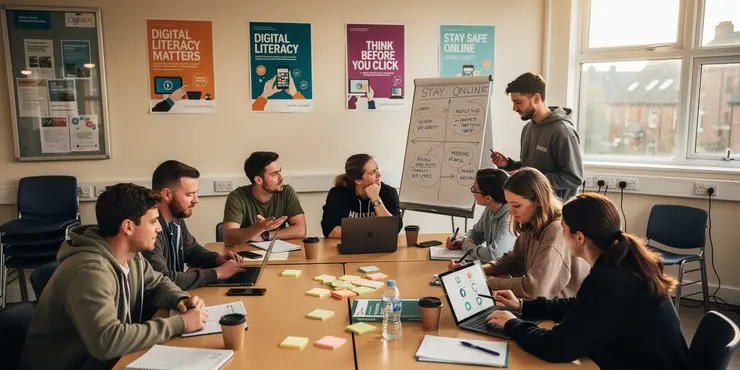
Recognizing the importance of online safety, social media companies might also invest in educational campaigns targeted at both parents and teenagers. These campaigns could promote digital literacy and encourage responsible social media usage. By increasing awareness about online safety, companies can build trust with users and demonstrate their commitment to safeguarding young individuals online.
Collaborating with Regulators
To effectively navigate new regulatory landscapes, social media companies may actively collaborate with UK regulators. Engaging in discussions with government bodies, child protection organizations, and other stakeholders would help these companies understand the expectations and legal requirements, ensuring smooth implementation of the new policies. By working together, social media platforms can contribute to developing balanced and effective regulations for online safety.
Potential Impact on Business Models
Adapting to a ban on under-16s may also impact the business models of social media companies. With a significant portion of their user base potentially affected, companies might need to explore alternative revenue streams or user engagement strategies to offset any financial impact. This could involve focusing more on older demographics, enhancing advertising models, or developing new subscription services designed for adult users.
Conclusion
In conclusion, a ban on social media use for under 16s in the UK would require companies to adopt comprehensive strategies to ensure compliance and maintain user trust. By enhancing age verification, adjusting platform features, developing educational initiatives, collaborating with regulators, and reassessing business models, social media companies can effectively respond to this regulatory challenge. Ultimately, these efforts would contribute to creating a safer digital environment for all users.
Introduction
A lot of people are worried about how social media affects young people. Some leaders in the UK want to stop anyone under 16 from using social media. This would change how young people and social media companies use these platforms. This article talks about how companies might react if these changes happen in the UK.
Making Sure Users Are Old Enough
Social media companies would need to find better ways to check how old users are. This might mean using smart computers to help or asking another company to check ages for them. It’s important to make sure kids under 16 don’t use social media, or the companies could get in trouble.
Changing How the Platforms Work
Social media companies might change their platforms to follow new rules. They could make a special version for older teens and adults. This could include gathering less data, improving privacy settings, and making sure content is safe to see.
Teaching People How to Stay Safe Online
Social media companies might also start teaching kids and their parents about being safe online. They could run programs that show how to use social media wisely. This helps build trust and shows they care about keeping young people safe.
Working with Rule-Makers
Social media companies would likely talk to the UK government and others to understand the new rules. By working together, they can make sure the new policies work well and really help keep people safe online.
Changes to How Companies Make Money
If kids under 16 can’t use social media, companies might lose some money. They might look for new ways to make money, like focusing more on adults, changing ads, or creating services that only adults can buy.
Conclusion
In summary, if the UK stops under-16s from using social media, companies will have to make big changes to follow the rules and keep users happy. They will need to check ages better, change how their platforms work, teach online safety, work with rule-makers, and find new ways to make money. All these steps will help create a safer internet for everyone.
Frequently Asked Questions
Social media companies might implement stricter age verification processes, such as requiring identification documents or parental approval to create an account.
Companies might update their privacy policies to explicitly outline how they handle data from users suspected to be underage, emphasizing their compliance with local regulations.
Yes, companies might enhance parental control features to allow parents to monitor and regulate their children's social media usage effectively.
Platforms could use technology like AI to detect behaviors typical of younger users, and conduct regular audits to ensure compliance with age restrictions.
They might start campaigns to educate parents and users about online safety, the importance of age restrictions, and potential risks for underage users.
Yes, they might work with the government to align their policies with legal requirements and receive guidance on best practices for implementation.
They may conduct a review of current users, require re-verification of age, and suspend accounts that cannot be verified as compliant with the age restriction.
Companies might invest in advanced age verification technologies, machine learning algorithms to detect false age claims, and enhanced user behavior analysis tools.
Marketing strategies could shift to focus more on older demographics, and advertisers might adjust their targeted campaigns accordingly.
Updated community guidelines might clearly state age restrictions and provide protocols for reporting suspected underage users.
Reporting systems could be enhanced to allow users to flag profiles suspected to be underage, prompting further investigation by the platform.
Companies might implement localized enforcement teams and mechanisms to ensure adherence to age restrictions in all regions, considering regional differences in user behavior.
Yes, they could face fines, penalties, or legal action from UK regulatory bodies if they are found to be non-compliant with the age restriction laws.
There is a risk that unsanctioned platforms might emerge to cater to underage users, potentially complicating regulatory enforcement.
Companies might develop informative resources and tools for parents, aiming to involve them directly in their children's online activities.
Companies could see a decrease in user numbers as underage accounts are removed or restricted, potentially impacting overall engagement metrics.
Yes, collaborations with schools could promote digital literacy programs and help educate students and parents about age restrictions.
Companies might develop long-term strategies to enhance security and compliance measures, alongside continued outreach and education efforts.
New features could focus more on safety and compliance, possibly including tools designed to prevent underage access or promote age-appropriate interactions.
Challenges could include accurately verifying age, preventing workarounds, keeping up with regulatory changes, and maintaining user trust and satisfaction.
Social media companies could make it harder for kids to join by asking for ID cards or permission from parents before making an account.
Companies should say clearly in their privacy rules how they use information from kids. They must follow the law.
Yes, companies might make better tools to help parents watch and control how their kids use social media.
Websites can use smart computers to find out if someone is acting like a kid. They should check often to make sure everyone is the right age to use the site.
They might start special programs to teach parents and children how to be safe online. This can help everyone understand why age rules are important and what could go wrong if kids use the internet too early.
Yes, they might team up with the government. This helps them follow the rules and get advice on the best ways to do things.
The company might check who is using their services now. They might ask people to prove their age again. If someone cannot show they are the right age, the company might stop their account.
Companies might spend money on tools that check how old someone is. They might also use smart computer programs to find out if someone is lying about their age. They can look at how people use their website too.
Companies might change their plans to talk more to older people. Advertisers might change their ads to better reach older audiences.
The rules for the community might say what age you need to be. They might also tell you how to tell someone if you think there is a user who is too young.
We can make reporting systems better. They should let people point out profiles of kids who are too young to be on the platform. Then, the platform can check these profiles carefully.
Companies can create local teams in different places. These teams make sure that age rules are being followed everywhere. Different places might have different ways that people act.
Yes, they might get into trouble if they do not follow age rules in the UK. They could pay a fine or get legal action against them.
There is a chance that some websites might be made just for kids who are not old enough. This could make it hard for the rules to work properly.
Companies can make helpful tools and guides for parents. These can help parents be part of what their kids do on the internet.
Companies might have fewer users if they take away or limit accounts for young kids. This could mean fewer people are using their services.
Yes, working with schools can help teach students and parents about using computers safely. It can also help them learn why some things on the internet are only for older kids or adults.
Companies can make plans for the future to keep things safe and follow rules. They can also help teach people and share information.
New things could help make things safer. They could stop kids from using it if they are too young and make sure everyone is using it the right way for their age.
Problems might be:
- Making sure to check how old someone is correctly.
- Stopping people from finding ways around the rules.
- Keeping up with new laws.
- Making sure users feel happy and trust the service.
Here are some tools that can help:
- Use a calendar for easy date tracking.
- Ask a friend to double-check things you aren’t sure about.
- Watch simple videos about new rules to understand them.
- Talk with someone if you have questions to feel more confident.

Ergsy Search Results
This website offers general information and is not a substitute for professional advice.
Always seek guidance from qualified professionals.
If you have any medical concerns or need urgent help, contact a healthcare professional or emergency services immediately.
Some of this content was generated with AI assistance. We've done our best to keep it accurate, helpful, and human-friendly.
- Ergsy carefully checks the information in the videos we provide here.
- Videos shown by Youtube after a video has completed, have NOT been reviewed by ERGSY.
- To view, click the arrow in centre of video.
- Most of the videos you find here will have subtitles and/or closed captions available.
- You may need to turn these on, and choose your preferred language.
- Go to the video you'd like to watch.
- If closed captions (CC) are available, settings will be visible on the bottom right of the video player.
- To turn on Captions, click settings.
- To turn off Captions, click settings again.