
Speak To An Expert
Get clear, personalised advice for your situation.
Jot down a few questions to make the most of your conversation.
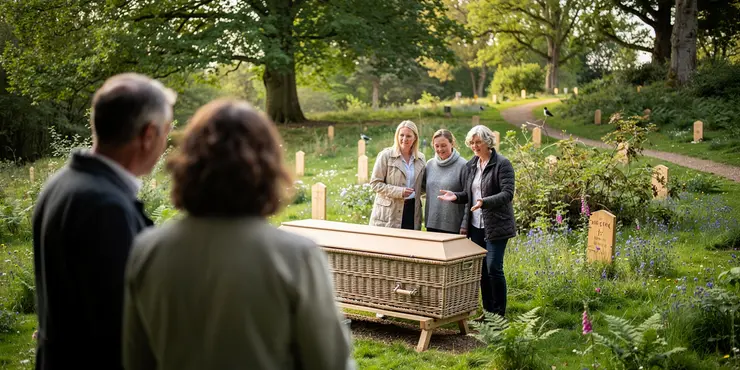
Understanding Natural Burials
Natural burials are an eco-friendly alternative to traditional burials. They focus on minimising the environmental impact. This means avoiding practices that use chemicals or non-biodegradable materials.
The popularity of natural burials is growing in the UK. Many people are drawn to the idea of returning to the earth naturally. This approach allows the body to decompose naturally without impediments.
The Role of Embalming
Embalming is a process that involves using chemicals to preserve the body. It is commonly used in traditional burials. However, it raises environmental concerns due to the chemicals involved.
In natural burials, there is a strong preference to avoid embalming. The process introduces toxins into the soil. This contradicts the ethos of natural burials.
Regulations on Embalming in Natural Burials
Natural burial sites in the UK often have specific guidelines. These sites usually prohibit embalming to maintain their environmentally friendly standards. Regulations are focused on protecting the natural habitat and soil quality.
Each natural burial site may have its own set of rules. It is important for individuals to check these regulations beforehand. This ensures compliance with ecological preservation practices.
Alternatives to Embalming
For those concerned about preservation, there are alternatives to embalming. Refrigeration or cooling blankets can be used to preserve the body temporarily. These methods do not involve harmful chemicals.
Some families choose immediate burial to circumvent the need for embalming. This option is also in keeping with natural burial principles. It respects both the deceased and the environment.
Making an Informed Decision
Deciding against embalming is key when considering a natural burial. It aligns with the values of sustainability and environmental protection. This choice reflects a commitment to reducing negative ecological impacts.
For individuals and families interested in natural burials, understanding these aspects is crucial. It allows them to honour their loved one's memory while respecting the planet. Consulting with funeral directors familiar with natural burials can provide valuable guidance.
Frequently Asked Questions
Embalming is a process that preserves a body after death to delay decomposition, typically using chemical fluids.
In most cases, embalming is not legally required. Laws can vary by state or country, so it's important to check local regulations.
A natural burial is an environmentally friendly way to dispose of a body, minimizing environmental impact by forgoing embalming and using biodegradable materials.
No, embalming is typically not allowed in natural burials because it involves using chemicals that are not environmentally friendly.
The chemicals used in embalming, such as formaldehyde, can be harmful to the environment and may contaminate soil and groundwater.
Natural burials often use biodegradable coffins, shrouds, or other materials that decompose naturally.
Yes, refrigeration or dry ice can be used to temporarily preserve a body for viewing or transport without chemical embalming.
Avoiding embalming reduces chemical exposure, is more environmentally friendly, and aligns with natural decomposition processes.
Yes, some religions and cultures prefer immediate burial without embalming to honor beliefs about the natural return to the earth.
Decomposition can vary based on environmental conditions, but without embalming, a body typically decomposes within weeks to months.
Some traditional cemeteries offer natural burial options, but not all do. It's important to verify with the specific cemetery.
No, cremation is a different process and involves high energy use and emissions, which may not align with natural burial principles.
Natural burials are often less expensive due to the simpler process and avoidance of embalming and elaborate caskets.
Exhumation is possible but may be complicated due to the natural decomposition of the body and environmental considerations.
Yes, natural burials are subject to local regulations and cemetery policies, which can vary widely by location.
Some natural burial grounds allow markers or headstones, often made from natural materials, while others prefer unmarked graves or simple stone markers.
Yes, the natural burial movement is growing in popularity as people become more environmentally conscious and seek sustainable burial options.
Natural burial supports the ecosystem by allowing for natural decomposition, reducing chemical pollution, and conserving resources.
You can search online or contact funeral homes and green burial organizations for information on nearby natural burial sites.
Permits and documentation vary by region, but typically include a death certificate and burial permit. It's important to consult with local authorities.

Ergsy Search Results
This website offers general information and is not a substitute for professional advice.
Always seek guidance from qualified professionals.
If you have any medical concerns or need urgent help, contact a healthcare professional or emergency services immediately.
Some of this content was generated with AI assistance. We've done our best to keep it accurate, helpful, and human-friendly.
- Ergsy carefully checks the information in the videos we provide here.
- Videos shown by Youtube after a video has completed, have NOT been reviewed by ERGSY.
- To view, click the arrow in centre of video.
- Most of the videos you find here will have subtitles and/or closed captions available.
- You may need to turn these on, and choose your preferred language.
- Go to the video you'd like to watch.
- If closed captions (CC) are available, settings will be visible on the bottom right of the video player.
- To turn on Captions, click settings.
- To turn off Captions, click settings again.