
Get Answers
Understanding the Capacity Issue
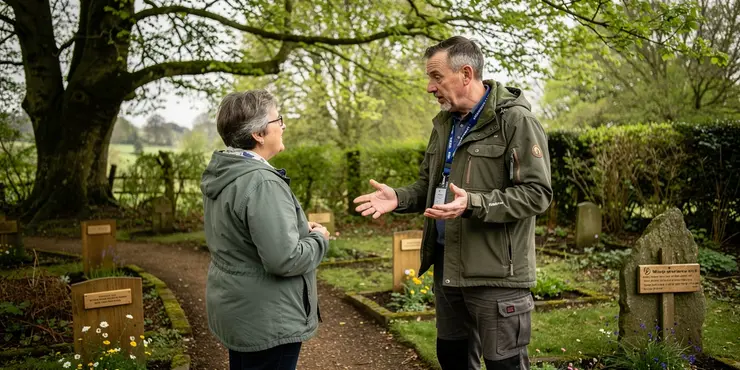
Woodland burial sites have grown in popularity as an eco-friendly alternative to traditional cemeteries. They offer a serene resting place that helps preserve nature. However, like any space, they have a finite capacity.
When a woodland burial site reaches full capacity, it cannot accommodate new burials. This can lead to concerns for those wishing to use the site in the future. It also poses logistical challenges for the management of the site.
Options for Expansion
One potential solution is to expand the existing site. This often requires additional land acquisition. The process can be complex due to planning regulations and environmental considerations.
Local councils and site managers must carefully consider the environmental impact of expansion. Community input and ecological assessments are typically sought before any decision is made. This ensures that the values of the natural burial ethos are preserved.
Utilising Nearby Sites
If expansion is not possible, nearby sites may be utilised. Collaborations with adjacent burial sites can offer more immediate solutions. These sites may serve as extensions or satellite locations.
This approach helps maintain the continuity of service for those within the community. It also alleviates the immediate pressure on the original woodland site. This option is often more feasible in areas with multiple woodland burials.
Alternative Solutions
Developing new woodland burial sites is another viable option. Identifying suitable land is key to maintaining the quality and environmental goals. This is a longer-term solution that requires innovative thinking and planning.
Some communities may also consider the re-use of older sections of the site. After a certain time, these areas may be used for new burials, ensuring sustainability and continuous use.
Informing the Community
Communication with the public is crucial when a site reaches full capacity. Potential users of the site need to be informed of the status and future plans. This can prevent confusion and ensure community involvement.
Transparency helps to build trust and understanding within the community. By keeping the public informed, woodland burial site operators maintain good relationships and uphold their commitment to conservation efforts.
Conclusion
As woodland burial sites reach capacity, thoughtful solutions are required. Expansion, collaboration, and new site development are key strategies. Engaging with the community ensures these sites continue to serve their purpose in preserving nature.
By planning and communicating effectively, the tranquility and ecological benefits of woodland burials can be maintained. This ensures that future generations can enjoy these natural sanctuaries.
Frequently Asked Questions
Once a woodland burial site is full, no new burials can take place until additional land is secured or existing plots become available.
Yes, site managers may attempt to acquire adjacent land to expand the burial site, but this depends on availability and local regulations.
Some sites may operate a waiting list for plots that become available through cancellations or expansions.
Typically, woodland burial plots are not reused, but policies may vary by site and region.
Yes, most woodland burial sites are maintained in perpetuity to preserve the natural setting and honor those interred there.
You may consider other nearby woodland burial sites or explore alternative burial options.
Yes, site regulations often include limits to ensure ecological balance and to accommodate future needs.
Contact the site management or check their official website for availability updates.
Woodland burial sites have limited space due to their natural conservation focus and physical plot limits.
Pricing may not change solely because of fullness, but demand and availability factors can affect future pricing.
Some sites may offer pre-purchase options for plots, depending on their policy and availability.
Many sites have an endowment or fund designed to cover maintenance costs indefinitely.
Facility expansion may not be possible once a site is full, but specific projects could be planned by management.
Yes, many woodland burial sites are integral to conservation efforts, supporting native wildlife and ecosystems.
Yes, environmental regulations and planning permissions must be considered in any expansion efforts.
Full sites are managed to sustain and protect local biodiversity, adhering to conservation guidelines.
Yes, memorial services and visits can continue even if no new burials are possible.
Options such as benches, plaques, or tree dedications may be available for those wishing to honor loved ones.
A management team or organization typically oversees site upkeep and conservation after it reaches capacity.
Long-term visions often focus on conservation, educational opportunities, and maintaining a peaceful, natural environment.

Ergsy Search Results
This website offers general information and is not a substitute for professional advice.
Always seek guidance from qualified professionals.
If you have any medical concerns or need urgent help, contact a healthcare professional or emergency services immediately.
Some of this content was generated with AI assistance. We've done our best to keep it accurate, helpful, and human-friendly.
- Ergsy carefully checks the information in the videos we provide here.
- Videos shown by Youtube after a video has completed, have NOT been reviewed by ERGSY.
- To view, click the arrow in centre of video.
- Most of the videos you find here will have subtitles and/or closed captions available.
- You may need to turn these on, and choose your preferred language.
- Go to the video you'd like to watch.
- If closed captions (CC) are available, settings will be visible on the bottom right of the video player.
- To turn on Captions, click settings.
- To turn off Captions, click settings again.