
Get Answers
Introduction to the Role of a Funeral Director
The funeral director plays a critical role in organising and overseeing funerals in the UK. They ensure that the traditional burial process is smooth and respectful. Their responsibilities extend from the initial point of contact until after the burial ceremony.
Many families rely on funeral directors for their expertise and guidance during an emotionally challenging time. Funeral directors provide a crucial service by managing the logistics and support necessary for a dignified funeral.
Initial Consultation and Planning
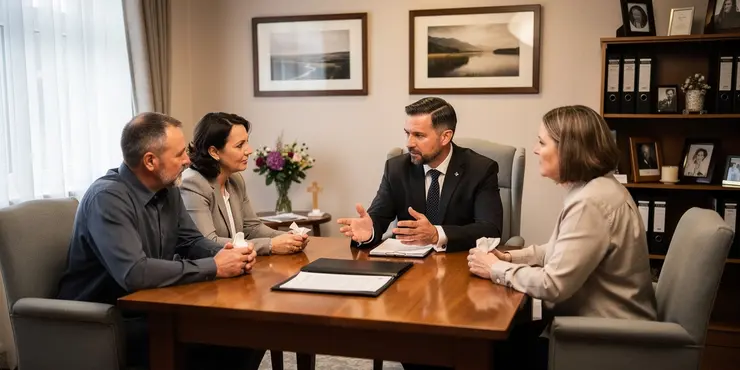
One of the first steps a funeral director takes is to meet with the family to discuss their wishes for the burial. During this consultation, the director gathers necessary information and discusses options available.
They help the family make decisions regarding the type of service, location, date, and any special requests. The funeral director also offers advice on legal and administrative requirements that need to be met.
Arranging and Coordinating the Funeral Service
Funeral directors are responsible for organising all aspects of the funeral service. This includes booking a venue, arranging transportation, and coordinating with religious leaders or officiants.
They work closely with florists, musicians, and other service providers to ensure everything is prepared. This ensures that the funeral service reflects the wishes of the deceased and their family.
Handling Legal and Administrative Tasks
Funeral directors assist with the necessary paperwork following a death. They help secure death certificates and facilitate paperwork required for burial permits.
They advise on registering the death with the appropriate authorities, ensuring legal compliance. This support relieves families from the burden of complex administrative tasks during their time of grief.
Providing Emotional Support and Guidance
Beyond organisational duties, funeral directors offer emotional support to grieving families. They provide a compassionate presence during the planning process.
Their experience and sensitivity can be comforting to those unsure of how to proceed. Funeral directors also guide families on coping with grief and how to honour their loved one’s legacy.
Managing the Burial Ceremony
On the day of the burial, the funeral director ensures that everything runs smoothly. They coordinate the procession and are present to direct all participants.
Their role includes overseeing the final committal, liaising with cemetery staff, and handling any unforeseen issues. The funeral director ensures that the event is conducted with dignity and respect.
Conclusion
The role of a funeral director is multifaceted, covering practical arrangements and emotional support. They are essential in ensuring a respectful and well-organised burial service.
Through their dedication and expertise, funeral directors help families navigate one of life's most challenging times. Their service and compassion are invaluable components of the traditional burial process in the UK.
Frequently Asked Questions
The primary role of a funeral director is to coordinate all aspects of the funeral service, ensuring that the wishes of the deceased and their family are respected and carried out with dignity.
A funeral director assists with pre-planning by helping individuals make informed decisions about funeral services, burial options, and associated costs.
The funeral director is responsible for the care, preparation, and transportation of the deceased's body, including embalming and dressing, if requested.
Funeral directors provide emotional support, guidance, and practical assistance to grieving families, helping them navigate decisions and logistical challenges during a difficult time.
Funeral directors handle paperwork such as death certificates, burial permits, and any necessary legal documentation related to the funeral and burial.
Funeral directors provide information about available burial sites and plots, helping families select a location that suits their preferences and budget.
Funeral directors arrange for the transportation of the deceased to and from the funeral home, as well as to the burial site, coordinating vehicles and logistics.
Funeral directors provide options and guidance to families in choosing a casket that aligns with their preferences and financial considerations.
Funeral directors work with families to plan the service, including selecting readings, music, and officiants, and coordinating the order of events.
Yes, funeral directors are knowledgeable about various religious and cultural customs, and they can assist in ensuring that these traditions are upheld during the service.
Funeral directors advise families on post-funeral matters such as receptions, thank-you notes, and the distribution of flowers or donations in memory of the deceased.
Funeral directors are trained to handle and resolve unexpected situations with professionalism to ensure the service proceeds smoothly.
Many funeral directors provide or can recommend grief support resources, including counseling services or support groups for those in mourning.
Funeral directors stay informed about local, state, and federal regulations regarding funerals and burials, ensuring all procedures meet legal requirements.
They coordinate with various service providers, such as florists, musicians, and clergy, to organize and execute the services requested by the family.
Funeral directors provide transparent pricing, offer various packages, and work within the family’s budget to manage and plan the costs associated with the funeral.
Yes, many funeral directors are experienced in handling the complex process of repatriating remains to another country, including necessary paperwork and logistics.
They help families incorporate personal touches, such as photo displays, personalized keepsakes, or videos, to honor the unique life and personality of the deceased.
Funeral directors may offer continued support through follow-up services, guidance on handling estates, or connecting families with long-term grief support resources.
Funeral directors educate families by explaining each step of the funeral process, helping them understand their options and make informed decisions.

Ergsy Search Results
This website offers general information and is not a substitute for professional advice.
Always seek guidance from qualified professionals.
If you have any medical concerns or need urgent help, contact a healthcare professional or emergency services immediately.
Some of this content was generated with AI assistance. We've done our best to keep it accurate, helpful, and human-friendly.
- Ergsy carefully checks the information in the videos we provide here.
- Videos shown by Youtube after a video has completed, have NOT been reviewed by ERGSY.
- To view, click the arrow in centre of video.
- Most of the videos you find here will have subtitles and/or closed captions available.
- You may need to turn these on, and choose your preferred language.
- Go to the video you'd like to watch.
- If closed captions (CC) are available, settings will be visible on the bottom right of the video player.
- To turn on Captions, click settings.
- To turn off Captions, click settings again.