
Get Answers
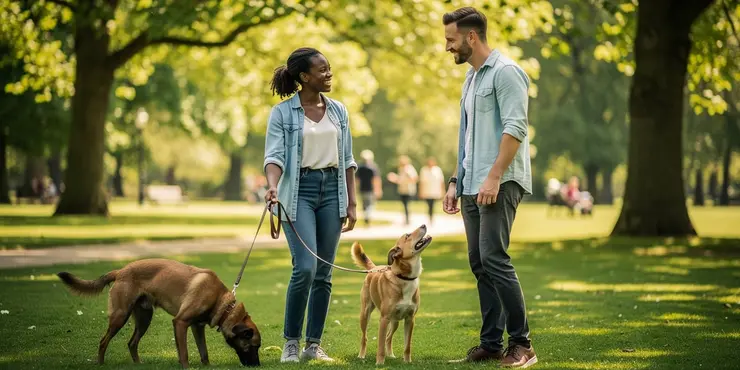
Does a leash make a dog harmless?
Not necessarily. A leash can help control a dog, but it does not guarantee that the dog will not bite, lunge, or scare someone.
In the UK, the key issue is still whether the dog was under proper control. A dog on a lead may be safer than one running loose, but the owner can still be responsible if they fail to manage it properly.
If a dog is barking, snapping, or pulling hard on the lead, it may still pose a real risk. The fact that it was tethered does not automatically remove danger.
What if the owner said the dog was friendly?
An owner saying “he’s friendly” does not make the situation safe. People can misjudge their dog’s behaviour, or a dog can act unpredictably in a stressful moment.
In public, you are entitled to take reasonable care for your own safety. If a dog is approaching you and you do not want contact, you do not have to rely on the owner’s reassurance alone.
This is especially important around children, older people, or anyone who feels nervous around dogs. A “friendly” dog can still jump up, knock someone over, or bite without warning.
What should you do in the moment?
If you feel uncomfortable, keep calm and create space. Step back slowly, avoid sudden movements, and do not reach toward the dog unless you want to interact.
You can politely ask the owner to keep the dog close or away from you. A simple, clear request is often the best approach, particularly if the dog is off lead or behaving excitedly.
If the dog has already caused an injury, seek medical help if needed and report the incident. In the UK, that may mean contacting the local council, the police, or the dog warden service depending on what happened.
Why this matters in the UK
UK law expects dog owners to keep dogs under proper control in public spaces. That means a lead alone is not always enough, and a friendly attitude from the owner is not a defence if the dog causes harm.
Whether in a park, on a pavement, or near your home, the real question is how the dog behaved and whether the owner acted responsibly. If they did not, the owner may still be liable even if the dog was leashed or described as friendly.
The safest assumption is simple: control matters more than words. A dog on a lead can still be a problem, and a “friendly” dog can still cause injury.
Frequently Asked Questions
A leash or a friendly statement does not guarantee safety. A dog can still bite, lunge, or cause injury, so you should treat the situation cautiously.
No. A leash can help control a dog, but it does not prevent aggression, fear, or sudden movement.
Not completely. Even friendly dogs can react unpredictably, especially if startled, stressed, or protective.
Yes. Keeping a respectful distance is still the safest approach unless the owner clearly invites contact and you feel comfortable.
A calm appearance helps, but it is still wise to stay alert. Dogs can change behavior quickly if something triggers them.
Usually no. An owner’s comment does not remove the need to supervise and control the dog appropriately.
A long or loose leash can reduce control and increase risk, so the dog may still be able to reach or jump at someone.
No. Children should only approach dogs with adult guidance and permission, because even friendly dogs can react unpredictably.
Barking can be a warning sign of stress or excitement. A leash does not eliminate the possibility of a bite or lunge.
Yes. A dog can knock someone over, scratch them, or create panic even if it does not bite.
It is better to ask for permission and watch the dog’s body language first. Friendly does not always mean comfortable with strangers.
Distracted supervision can increase risk because the owner may not react quickly if the dog pulls, jumps, or becomes aggressive.
No. A harness may improve control, but it does not guarantee the dog will not bite or behave unpredictably.
That can happen. Dogs may behave differently around strangers, so do not assume the dog will act the same with everyone.
No. Pay attention to the dog’s behavior, not just the owner’s words, and stay cautious if the dog seems tense or uneasy.
That is a sign the dog may not be under full control or may be reacting aggressively. Increase distance and avoid further interaction.
Yes. A leash can create a false sense of security, but the dog may still be able to reach or injure someone.
Playful behavior can still be rough or startling. If you are uncomfortable, it is okay to decline contact and step back.
No. There is always some risk with unfamiliar dogs, so it is safer not to make assumptions.
Trust your instincts, keep distance, and move away calmly. You do not have to interact with any dog if you feel uncomfortable.

Ergsy Search Results
This website offers general information and is not a substitute for professional advice.
Always seek guidance from qualified professionals.
If you have any medical concerns or need urgent help, contact a healthcare professional or emergency services immediately.
Some of this content was generated with AI assistance. We've done our best to keep it accurate, helpful, and human-friendly.
- Ergsy carefully checks the information in the videos we provide here.
- Videos shown by Youtube after a video has completed, have NOT been reviewed by ERGSY.
- To view, click the arrow in centre of video.
- Most of the videos you find here will have subtitles and/or closed captions available.
- You may need to turn these on, and choose your preferred language.
- Go to the video you'd like to watch.
- If closed captions (CC) are available, settings will be visible on the bottom right of the video player.
- To turn on Captions, click settings.
- To turn off Captions, click settings again.