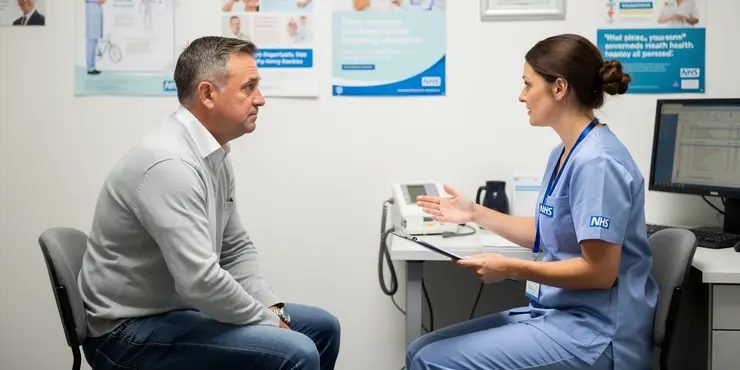

Speak To An Expert
Get clear, personalised advice for your situation.
Jot down a few questions to make the most of your conversation.
Understanding BPH
Benign Prostatic Hyperplasia (BPH) is a condition that affects the prostate gland in men, most frequently as they age. The prostate is a small gland located just below the bladder and in front of the rectum, and its primary function is to produce fluid that helps transport sperm. As men get older, it is common for the prostate gland to enlarge, which can potentially lead to complications.
Symptoms of BPH
BPH can cause a range of urinary symptoms which might be uncomfortable and inconvenient. Common symptoms include a frequent need to urinate, especially at night, difficulty starting urination, a weak or interrupted urine stream, and the feeling that the bladder is not completely empty after urination. While these symptoms can significantly impact a man’s quality of life, BPH itself is not cancerous and does not necessarily lead to cancer.
When is BPH a Serious Condition?
BPH can become serious if it leads to complications. One such complication is urinary retention, which is the sudden inability to urinate, potentially requiring emergency medical treatment. Repeated urinary tract infections (UTIs) and bladder damage are possible if the condition is left untreated. In rare cases, BPH can lead to kidney damage due to the increased pressure on the bladder. Therefore, men experiencing symptoms of BPH should consult a healthcare provider for assessment and to discuss potential treatment options.
Treatment and Management
Treatment for BPH will depend on the severity of the symptoms and the individual’s health. For mild symptoms, lifestyle changes such as reducing caffeine and alcohol consumption, and bladder training exercises, might be recommended. Pharmacological treatments include medications that relax the muscles of the prostate and bladder neck, or those that shrink the prostate. In more serious cases, surgical options may be necessary to remove or reduce the size of the prostate tissue.
Living with BPH
Although BPH is a common condition among older men, it is manageable. Those diagnosed with BPH should maintain regular check-ups with their doctors to monitor the condition and adjust treatments as necessary. It’s important for men experiencing any urinary symptoms to seek medical advice promptly to prevent complications. With the right management plan, most men can lead a normal life without significant disruptions.
Conclusion
In conclusion, while BPH is not inherently a serious condition, it can cause discomfort and lead to further health issues if not adequately managed. Awareness and early intervention are key. Men should be encouraged to discuss any changes in their urinary habits with their healthcare provider to ensure timely treatment and the best possible outcomes.
Understanding BPH
BPH stands for Benign Prostatic Hyperplasia. It happens in the prostate gland in men. This gland is small and is found below the bladder and in front of the rectum. The prostate makes fluid that helps move sperm. As men get older, their prostate can get bigger. This can cause problems.
Symptoms of BPH
BPH can make it hard to pee. Some symptoms are needing to pee often, especially at night, trouble starting to pee, a weak pee stream, or feeling like your bladder is not empty. It's important to remember BPH is not cancer, and it doesn't turn into cancer.
When is BPH a Serious Condition?
BPH can become serious if it causes problems. One problem is not being able to pee at all. This might require emergency help. Other problems can include getting infections often or damage to the bladder. Rarely, it can hurt the kidneys. Men who have symptoms should see a doctor to get checked and talk about treatments.
Treatment and Management
Treatment for BPH depends on how severe the symptoms are. For mild symptoms, men can try cutting down on caffeine and alcohol. They can also try bladder training exercises. Medicines can help too. Some medicines relax the prostate and bladder muscles, while others make the prostate smaller. If symptoms are severe, surgery might be needed to help.
Living with BPH
BPH is common in older men but can be managed. Men should visit their doctor regularly to check their condition and change treatments if needed. If men notice urinary symptoms, they should see a doctor quickly to stop problems. With the right help, men can live normally.
Conclusion
In conclusion, BPH is not very serious, but it can cause discomfort if not treated. It's important to know the symptoms and get help early. Men should talk to their doctor about any changes in how they pee. This helps get the best care and outcomes.
Frequently Asked Questions
BPH stands for Benign Prostatic Hyperplasia, a non-cancerous enlargement of the prostate gland common in older men.
BPH itself is not life-threatening, but it can cause uncomfortable urinary symptoms and affect quality of life.
BPH is most common in men over the age of 50.
Symptoms include frequent urination, weak urine stream, urgency, leaking or dribbling, and nocturia (frequent urination at night).
Yes, if untreated, BPH can lead to urinary tract infections, bladder stones, or kidney damage.
Treatment options include lifestyle changes, medications, minimally invasive therapies, and surgery.
Doctors diagnose BPH through a medical history review, physical examination, and tests like a digital rectal exam and PSA test.
No, BPH is not cancer. It is a benign condition, though symptoms can be similar, which is why diagnosis is important.
Yes, reducing caffeine and alcohol, regular exercise, and scheduled urination can help manage symptoms.
No, surgery is typically considered after medication and other less invasive treatments don't provide relief.
Common medications include alpha blockers and 5-alpha reductase inhibitors.
Yes, a healthy diet low in fat and high in fruits and vegetables may help alleviate symptoms.
Some men with BPH may experience erectile dysfunction, partly due to treatment side effects.
There is no sure way to prevent BPH, but maintaining a healthy lifestyle may reduce risk.
Treatment depends on the severity of symptoms; mild cases might only require monitoring.
Men over 50 should discuss regular screenings with their doctor, especially if they experience symptoms.
Yes, alcohol can irritate the bladder and worsen symptoms.
The PSA test helps rule out prostate cancer, as high PSA levels can occur with both BPH and cancer.
Yes, regular physical activity can help manage symptoms and improve health.
Yes, procedures like transurethral microwave thermotherapy (TUMT) and transurethral needle ablation (TUNA) can help.
BPH means Benign Prostatic Hyperplasia. This is when the prostate gland gets bigger, but it is not cancer. It often happens to older men.
BPH is not going to hurt your life, but it can make peeing a bit tricky and might make life less fun.
BPH happens a lot in men who are older than 50.
If you have this, it might make you pee a lot. You might feel like you need to rush to the bathroom. You might pee a little bit by accident, or have a weak flow. You might need to pee a lot at night.
Yes, if you don't take care of BPH, it can cause problems. It can make you get sick with a urinary tract infection. You can also get hard lumps called bladder stones or hurt your kidneys.
There are different ways to help. You can change how you live, take medicine, try small treatments, or have an operation.
If you find reading hard, there are apps and tools that can read text out loud. Drawing pictures can also help you understand better.
Doctors find out if someone has BPH by asking about their health, doing a check-up, and some tests like a test where they feel the back part of the bladder and a blood test called PSA.
No, BPH is not cancer. BPH means it's not a bad sickness like cancer, but it can feel the same. This is why it's important to see a doctor to find out for sure.
Yes, drinking less caffeine and alcohol, doing exercise regularly, and going to the toilet at set times can help you feel better.
No, doctors usually think about surgery only if medicines or other simple treatments don't help you feel better.
Some common medicines are called alpha blockers and 5-alpha reductase inhibitors.
Yes, eating healthy food can help you feel better. Try to eat less fat and have more fruits and vegetables.
Some men with a big prostate might have trouble when having sex. This can happen because of the medicine they take for it.
We can't stop BPH for sure, but living a healthy life might help.
How we help depends on how bad the symptoms are. If symptoms are not bad, we might just need to watch and wait.
Men over 50 should talk to their doctor about getting tests often, especially if they don't feel well.
Yes, drinking alcohol can make your bladder hurt and make bladder problems worse.
The PSA test checks for signs of prostate cancer. It helps doctors see if there might be cancer or if it's just a common problem called BPH. Both can cause high PSA levels.
To make reading easier, you can try using text-to-speech tools that read the text out loud or highlighting tools to focus on each sentence.
Yes, doing exercise regularly can help you feel better and be healthier.
Yes, there are some treatments that can help. They are called transurethral microwave thermotherapy (TUMT) and transurethral needle ablation (TUNA).

Ergsy Search Results
This website offers general information and is not a substitute for professional advice.
Always seek guidance from qualified professionals.
If you have any medical concerns or need urgent help, contact a healthcare professional or emergency services immediately.
Some of this content was generated with AI assistance. We've done our best to keep it accurate, helpful, and human-friendly.
- Ergsy carefully checks the information in the videos we provide here.
- Videos shown by Youtube after a video has completed, have NOT been reviewed by ERGSY.
- To view, click the arrow in centre of video.
- Most of the videos you find here will have subtitles and/or closed captions available.
- You may need to turn these on, and choose your preferred language.
- Go to the video you'd like to watch.
- If closed captions (CC) are available, settings will be visible on the bottom right of the video player.
- To turn on Captions, click settings.
- To turn off Captions, click settings again.