
Get Answers
Understanding Benign Prostatic Hyperplasia (BPH)
Benign Prostatic Hyperplasia (BPH) is a common condition that affects a significant number of men as they age. It involves the enlargement of the prostate gland, which can lead to uncomfortable urinary symptoms such as difficulty in starting urination, a weak urine stream, and increased frequency of urination, especially at night. BPH is not cancerous and doesn’t increase the risk of prostate cancer, but it can significantly impact quality of life.
Common Surgical Procedure for BPH in the UK
One of the most common surgical procedures for BPH is Transurethral Resection of the Prostate (TURP). TURP has been the standard surgical treatment for BPH for many years in the UK and remains prevalent due to its effectiveness. The procedure involves removing a part of the prostate that is causing the urinary obstruction.
The TURP Procedure
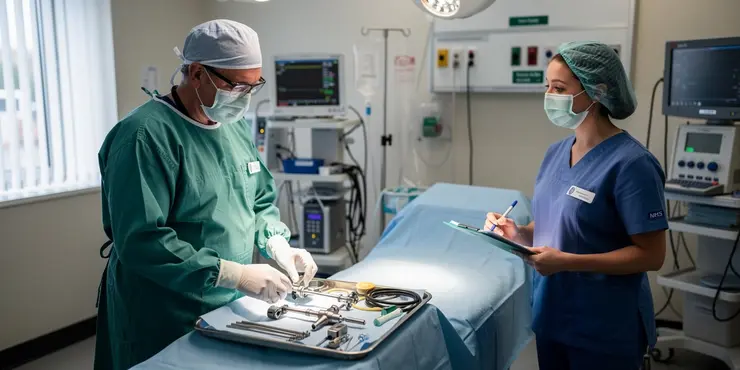
During TURP, the surgeon uses a resectoscope, which is a specialized instrument, to access the prostate through the urethra. This instrument allows the surgeon to remove prostate tissue with precision, without making any external cuts, which is why the procedure is classified as minimally invasive. The removal of excess prostate tissue helps to relieve urinary symptoms by widening the passageway through the prostate.
Benefits and Recovery
TURP is a highly effective treatment for alleviating the symptoms of BPH. Most patients experience a significant improvement in their symptoms and quality of life after the procedure. The recovery period typically involves a short hospital stay and catheter use to assist with urination immediately after surgery. Full recovery can be expected within a few weeks, during which it is advised to avoid strenuous activities to ensure proper healing.
Risks and Considerations
As with any surgical procedure, TURP carries some risks, including bleeding, infection, and temporary urinary symptoms. There is also a risk of retrograde ejaculation, where semen enters the bladder instead of exiting through the penis during orgasm. Patients are encouraged to discuss the potential risks and benefits with their healthcare provider to make an informed decision.
Conclusion
TURP remains the most common surgical procedure for BPH in the UK due to its effectiveness in relieving urinary symptoms caused by an enlarged prostate. It is important for patients to have a detailed discussion with their healthcare providers to understand the procedure, potential side effects, and outcomes to determine the best treatment option for their specific condition.
What Is Benign Prostatic Hyperplasia (BPH)?
Benign Prostatic Hyperplasia (or BPH) is when a man’s prostate gets bigger as he gets older. This can make it hard to pee. You might have trouble starting to pee, a weak pee stream, or need to pee a lot, especially at night. BPH is not cancer and does not make you more likely to get prostate cancer, but it can make life harder.
A Common Surgery for BPH in the UK
One surgery doctors do a lot for BPH is called Transurethral Resection of the Prostate, or TURP. It has been used in the UK for many years. TURP works well. It helps by taking out the part of the prostate causing problems with peeing.
How TURP Works
In TURP, a doctor uses a special tool called a resectoscope. This tool goes in through the urethra (the tube you pee from) to reach the prostate. The doctor then cuts out some of the prostate to make more room for the pee to flow. There are no cuts on the outside, so it is less invasive.
Benefits and Getting Better
TURP works well to help men pee better if they have BPH. After the surgery, most men feel much better and have a better life. You will need to stay in the hospital for a short time. A tube, called a catheter, helps you pee right after the surgery. You should feel fully better in a few weeks. Try not to do anything too hard during this time, so you heal well.
Risks to Think About
Just like any surgery, TURP has some risks like bleeding, infection, and problems peeing at first. Sometimes, when a man ejaculates, the semen might go into the bladder instead of coming out of the penis—this is called retrograde ejaculation. Talk to your doctor about these risks and how TURP can help you to make a good decision.
Final Thoughts
TURP is the main surgery in the UK for men with BPH because it helps ease peeing problems. It is very important to talk with your doctor to know what will happen in the surgery, the risks, and if it's the right choice for you.
Frequently Asked Questions
BPH stands for Benign Prostatic Hyperplasia, which is a non-cancerous enlargement of the prostate gland common in older men.
Common symptoms include frequent urination, difficulty starting urination, weak urine stream, and the need to urinate frequently at night.
The most common surgical procedure for BPH is Transurethral Resection of the Prostate (TURP).
TURP involves removing parts of the prostate through the urethra to relieve pressure on the urinary tract.
The benefits of TURP include significant improvement in urine flow and relief from symptoms of BPH.
Potential risks include bleeding, infection, incontinence, erectile dysfunction, and retrograde ejaculation.
Recovery time can vary, but most patients can expect a four to six-week period for a full recovery.
Yes, alternatives include medication, minimally invasive therapies like Urolift or Rezum, and other surgical methods like laser surgery.
Yes, TURP is generally considered safe and effective, though all surgeries carry some risks.
TURP is generally performed under spinal or general anesthesia.
The TURP procedure usually takes about 60 to 90 minutes.
TURP usually requires a short hospital stay, but some patients may be discharged the same day.
Most health insurance plans do cover TURP, but it's important to confirm with your specific provider.
TURP is highly effective in relieving urinary symptoms caused by BPH in the majority of patients.
Yes, many men experience significant improvements in quality of life following TURP due to reduced urinary symptoms.
Preparation for TURP may include blood tests, a physical exam, and stopping certain medications. Your doctor will provide detailed instructions.
Post-operative care may include using a urinary catheter for a short period, drinking plenty of fluids, avoiding heavy lifting, and attending follow-up appointments.
In some cases, TURP can be repeated if symptoms return, but alternative treatments might also be considered.
Most patients experience long-term relief from symptoms after TURP, though some may develop complications or require additional treatment.
Good candidates for TURP include men with significant urinary symptoms from BPH who have not responded well to medication.
BPH means Benign Prostatic Hyperplasia. It is when the prostate gland gets bigger, but it is not cancer. This happens a lot in older men.
Here are some things that might happen:
- You may need to pee a lot.
- It might be hard to start peeing.
- The pee might come out slowly.
- You might need to get up at night to pee often.
Consider using these tips:
- Set reminders to go to the bathroom.
- Keep a bathroom light on at night.
- Talk to a doctor if this bothers you.
The most common surgery for BPH is called Transurethral Resection of the Prostate, or TURP.
TURP is a way to help if you have trouble peeing. Doctors take out small parts of the prostate, which presses on the tube that carries pee out of the body. This helps you pee more easily.
Getting TURP can help you pee better and feel more comfortable if you have problems with your prostate.
There are some things that might go wrong. These include bleeding, getting an infection, having trouble with peeing, trouble with erections, and something called retrograde ejaculation.
If you want help with reading, you can use audiobooks or apps that read text out loud. These can make it easier to understand.
Getting better can take time. Most people need 4 to 6 weeks to feel all better.
Yes, there are other ways to help, like medicine, gentle treatments like Urolift or Rezum, and special surgeries using lasers.
Yes, TURP surgery is usually safe and works well. But, like all surgeries, it can have some risks.
TURP is a type of surgery. You are given medicine so you don't feel pain. This is called anesthesia.
The TURP surgery usually lasts for 1 to 1 and a half hours.
You might need to stay in the hospital for a short time after TURP, but some people can go home the same day.
Most health insurance will pay for TURP. But you should check with your own health insurance to be sure.
TURP helps most people feel better when they have trouble peeing because of BPH.
Yes, many men feel much better after having TURP. They have fewer problems when they go to the bathroom. This makes their life better.
Getting ready for a TURP can include having blood tests, a check-up by the doctor, and stopping some medicines. Your doctor will tell you exactly what to do.
After surgery, you might need some special care. You could have a small tube called a urinary catheter for a little while. It's important to drink lots of water. Try not to lift heavy things. Don't forget to go to your doctor appointments to check how you are doing.
Sometimes, the TURP surgery might need to be done again if problems come back. But there are other treatments you can try, too.
Most people feel better for a long time after their TURP surgery. But a few might have problems or need more help from the doctor later.
Good candidates for TURP are men who have trouble peeing because of BPH, even after trying medicine.

Ergsy Search Results
This website offers general information and is not a substitute for professional advice.
Always seek guidance from qualified professionals.
If you have any medical concerns or need urgent help, contact a healthcare professional or emergency services immediately.
Some of this content was generated with AI assistance. We've done our best to keep it accurate, helpful, and human-friendly.
- Ergsy carefully checks the information in the videos we provide here.
- Videos shown by Youtube after a video has completed, have NOT been reviewed by ERGSY.
- To view, click the arrow in centre of video.
- Most of the videos you find here will have subtitles and/or closed captions available.
- You may need to turn these on, and choose your preferred language.
- Go to the video you'd like to watch.
- If closed captions (CC) are available, settings will be visible on the bottom right of the video player.
- To turn on Captions, click settings.
- To turn off Captions, click settings again.